Tower Crane Safety Compliance & ACD in Multi-Crane Sites
- By Admin
- 27 January 2026
On large construction projects, tower crane safety compliance is no longer limited to operator skill or routine inspections. As project scale increases, multiple cranes begin operating within overlapping airspace. At this stage, compliance expectations shift from manual controls to system-driven risk management.
Regulators, project consultants, and safety auditors increasingly evaluate how collision risks are identified, documented, and actively controlled on multi-crane sites. This is where compliance-focused planning, supported by anti-collision systems and structured zoning, becomes a critical requirement rather than an optional safety enhancement.
This article explains how safety compliance is assessed on complex crane sites, the role of ACD systems in meeting these expectations, and the common gaps that place projects at operational and legal risk.
Why Safety Compliance Becomes Complex in Multi-Crane Construction Sites
Single-crane projects typically rely on defined operating envelopes and visual coordination. However, multi-crane environments introduce variables that significantly increase risk:
 Overlapping slewing zones
- Differing crane heights and jib lengths
- Changing site layouts as structures rise
- Limited visibility in dense urban developments
From a compliance perspective, these conditions require documented controls rather than informal coordination. Safety frameworks increasingly expect contractors to demonstrate how collision risks are anticipated and prevented before incidents occur.
Tower Crane Safety Regulations and Compliance Expectations
While safety regulations vary by region, most frameworks follow a common compliance logic:
 Risk identification for crane-to-crane interaction
- Preventive controls rather than reactive measures
- Continuous monitoring during operation
- Documented evidence of system configuration and updates
On high-risk sites, compliance is assessed not only on the presence of safety measures, but on whether those measures are appropriate to site complexity. This is where generic safety plans often fall short.
Role of ACD Systems in Meeting Compliance Requirements

Modern tower crane safety compliance increasingly relies on system-level controls rather than operator judgment alone. On complex construction sites, modern anti-collision systems used on tower cranes play a critical role in enforcing operating boundaries and reducing collision risk through real-time monitoring.
Anti-collision systems support compliance by:
On multi-crane projects, these systems are often reviewed during safety audits to verify that collision risks are actively managed.
Common Compliance Gaps Observed on Multi-Crane Projects
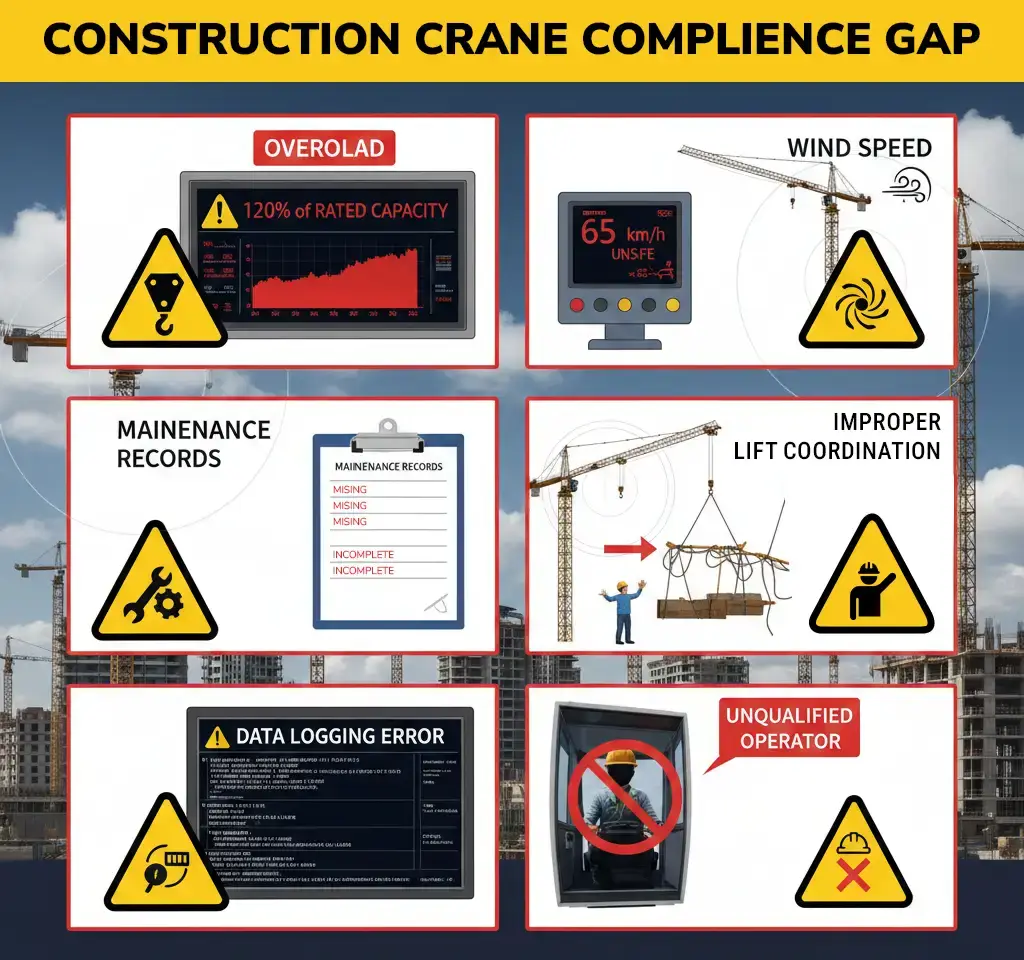
Despite the availability of safety systems, compliance failures often occur due to operational gaps rather than equipment limitations. Common issues include:
These gaps typically emerge during inspections or after near-miss incidents, increasing both project risk and liability exposure.
How Compliance-Focused ACD Configuration Reduces Risk
Compliance is not achieved by installing a device alone. It depends on how effectively systems are configured to reflect real site conditions. Effective risk reduction depends not only on system installation but also on correct ACD implementation in tower crane operations, particularly on sites with overlapping crane movements.
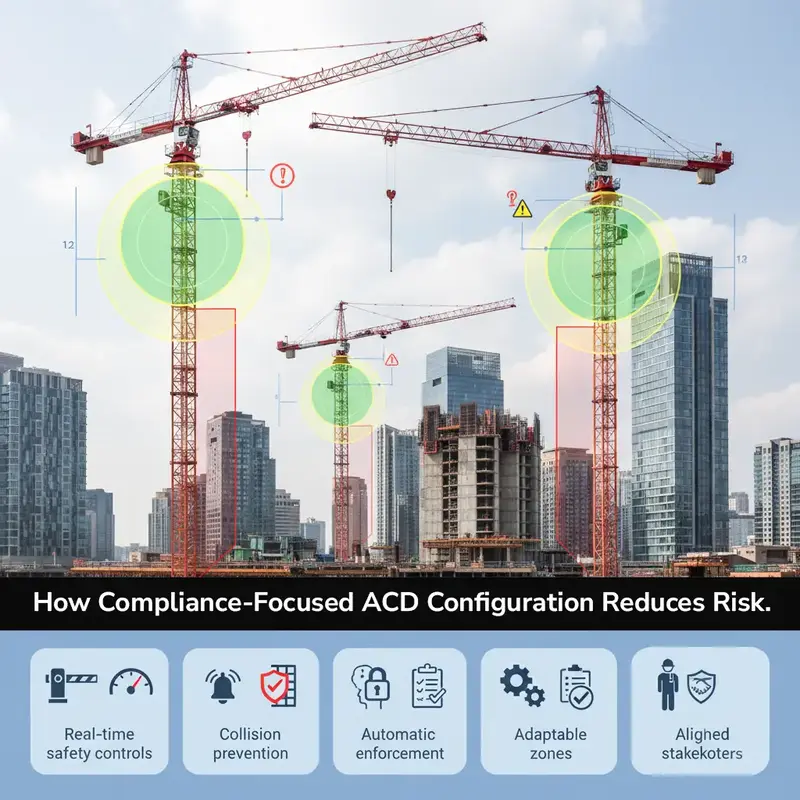
Proper ACD configuration supports compliance by:
This approach aligns operational safety with regulatory expectations, reducing dependency on manual intervention.
What Safety Auditors and Consultants Look for on High-Risk Crane Sites
During audits, safety professionals typically assess:
 Whether collision risks were formally identified
- How crane interaction zones are controlled
- Evidence of system configuration and updates
- Operator awareness of site-specific limits
Sites that rely solely on procedural controls often face compliance challenges when project complexity increases. System-based controls provide clearer, verifiable evidence of risk management.
Final Takeaway - Compliance Is a System, Not a Single Measure
Tower crane safety compliance on multi-crane projects is no longer evaluated in isolation. It reflects how effectively risks are anticipated, controlled, and documented throughout the project lifecycle.
By integrating structured zoning, system-driven controls, and continuous monitoring, contractors can meet compliance expectations while maintaining operational efficiency on complex construction sites.

