Commercial tower project, Gurgaon
Tower Crane Rental Planning for High-Rise Construction Projects
- By Admin
- 28 May 2026
High-rise construction projects rarely fail because of crane availability.
They fail because the crane was planned incorrectly for the actual lifting conditions on site.
Across commercial towers, mixed-use developments, data centers, and urban residential projects in India, one issue appears repeatedly:
“The crane selected on paper performs very differently once the project reaches active lifting stages.”
This usually happens because planners ignore:
 working radius
- oversailing restrictions
- crane positioning
- future lifting stages
In high-rise construction, tower crane rental planning is not just an equipment decision anymore. It directly affects:
- project timelines
- lifting productivity
- safety margins
- operational cost
Why Crane Rental Planning Matters in High-Rise Construction
Unlike low-rise projects, high-rise construction depends heavily on continuous vertical lifting.
Tower cranes handle:
 reinforcement bundles
- shuttering systems
- precast elements
- steel assemblies
- HVAC equipment
- concrete buckets
- façade materials
As the structure rises, lifting conditions continuously change:
- radius increases
- wind exposure increases
- lifting cycle time changes
- material flow becomes more complex
On a commercial tower project in Lower Parel, Mumbai, a contractor initially selected a standard flat-top crane based only on early-stage lifting requirements. By the time the structure crossed the 18th floor, long-radius lifting delays started affecting slab cycles regularly.
The issue was not crane failure.
It was incomplete planning during the rental stage.
The Biggest Mistake in Crane Rental Selection
Most teams compare cranes like this:
But experienced planners evaluate:
Because in real projects:
A well-positioned 12T crane often performs better than a poorly planned 16T crane.
Step 1: Start With Radius, Not Capacity
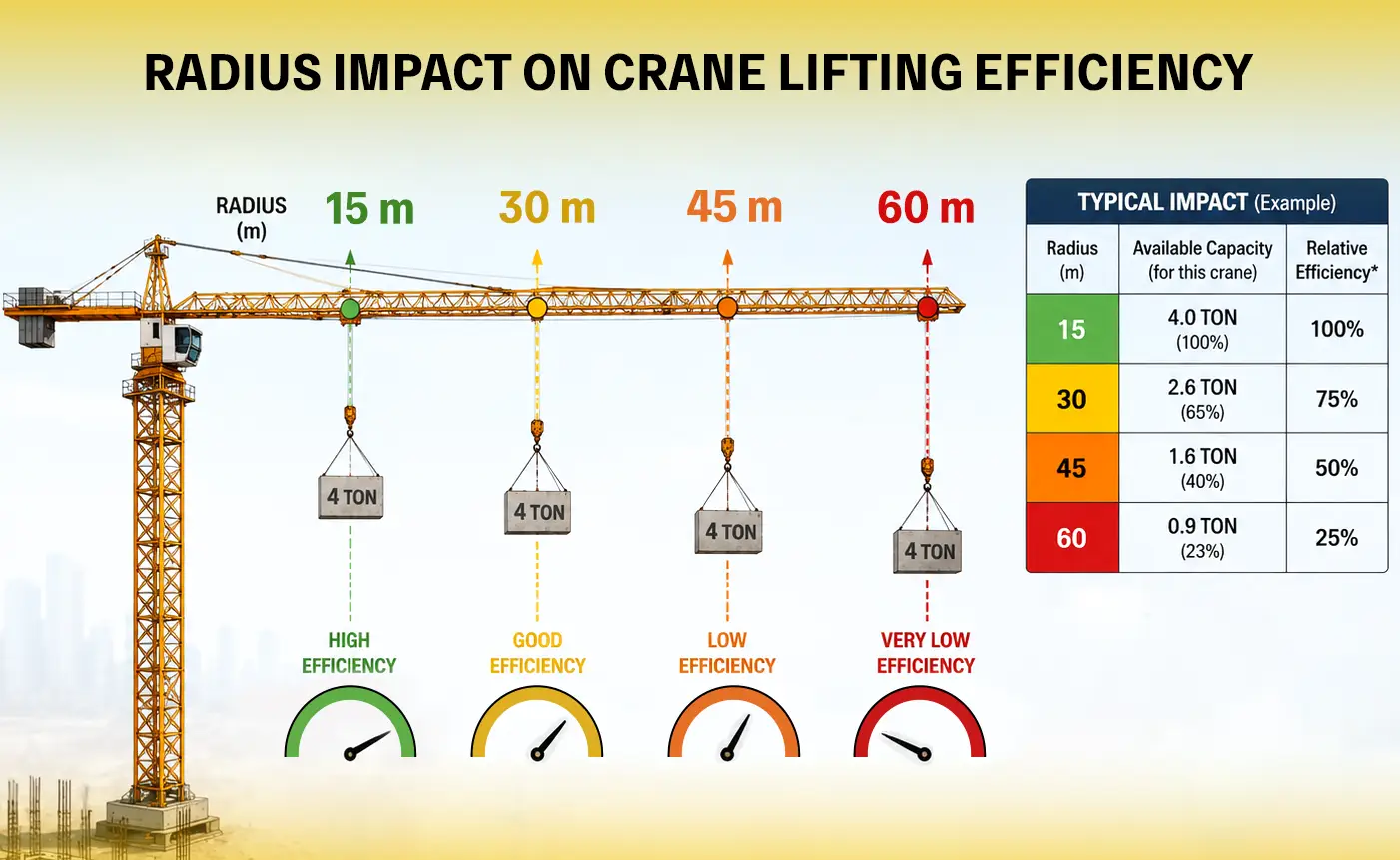
Radius affects lifting performance more than most contractors expect.
Example:
Crane Capacity |
Radius |
Actual Capacity |
|---|---|---|
| 12T | 12m | 12T |
| 12T | 35m | ~4-5T |
This becomes critical in high-rise projects where:
- material unloading zones shift
- façade lifting happens at long radius
- tower location cannot easily change
Before finalizing crane rental, planners should evaluate:
- maximum working radius
- average daily lifting radius
- future building height impact
- lifting frequency at upper floors
Step 2: Match Crane Type With Site Conditions
Different high-rise projects require different crane configurations.
In constrained city projects, many contractors now evaluate luffing crane deployment during the rental planning stage because controlled boom movement reduces swing clearance issues significantly.
This becomes especially important in:
- Mumbai
- Bangalore
- Noida
- Gurgaon
- data center corridors
Projects involving high-rise residential towers, commercial buildings, or infrastructure developments often compare flat-top, heavy-duty, and luffing tower crane options based on lifting radius, site constraints, and future construction stages before finalizing deployment.
Step 3: Plan Crane Positioning Around Workflow
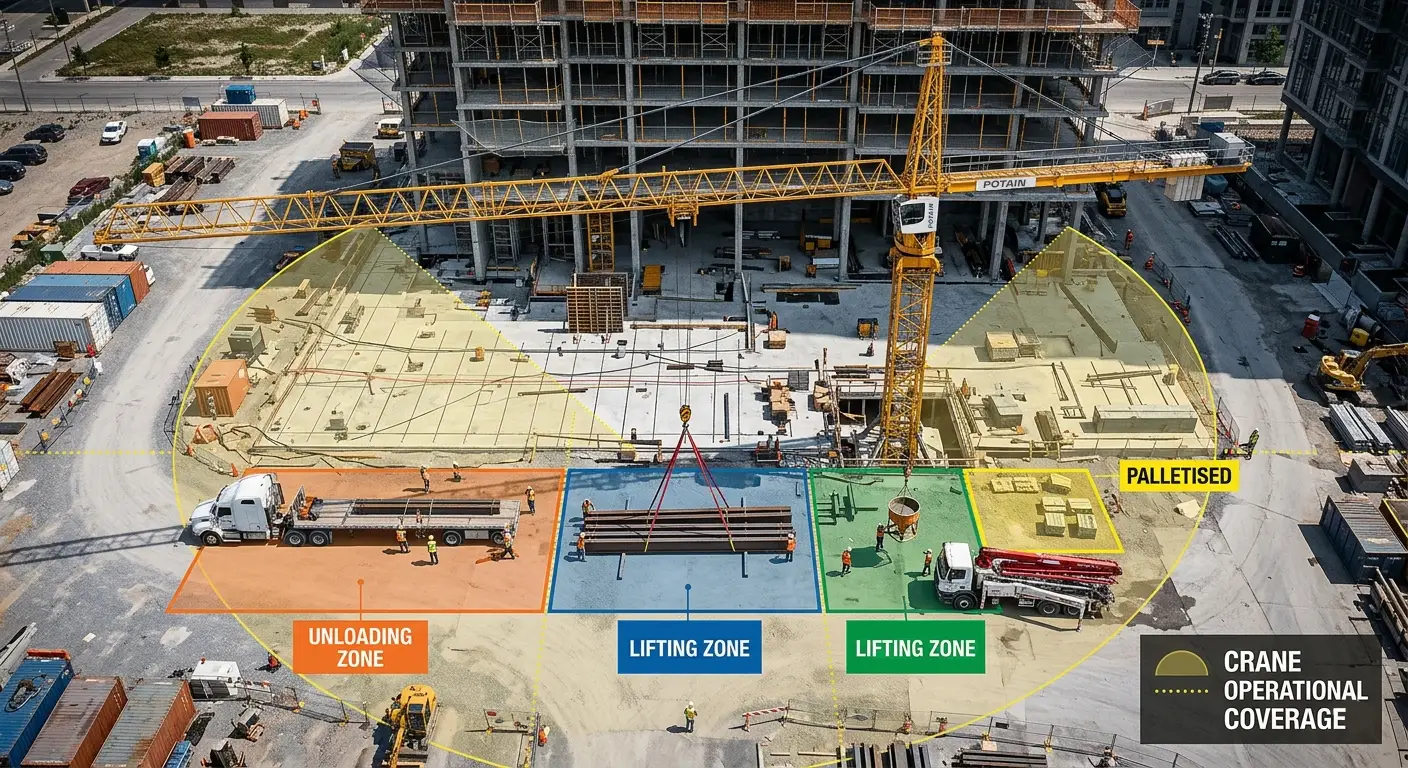
One of the most overlooked decisions is crane positioning.
Poor placement creates:
- unnecessary long-radius lifts
- crane waiting time
- slower slab cycles
- inefficient material movement
Good placement improves:
- lifting speed
- crew coordination
- crane utilization
- safety margins
On a residential high-rise project in Pune, repositioning the crane closer to the core structure reduced average lifting radius by nearly 8 meters.
Result:
- faster lifting cycles
- reduced crane idle time
- improved concreting workflow
No crane upgrade was needed.
Step 4: Plan for Future Construction Stages
Many rental decisions are based only on early-stage construction.
But high-rise lifting conditions change significantly after:
- podium completion
- façade installation
- MEP lifting stages
- rooftop equipment installation
This is why experienced teams evaluate:
- future hook height
- climbing requirements
- upper-floor lifting radius
- late-stage heavy equipment movement
Projects involving repetitive heavy lifting or precast assemblies often assess heavy-duty tower crane deployment early to avoid productivity bottlenecks during later construction phases.
Real Site Scenario: Crane Planning Issue in Urban High-Rise
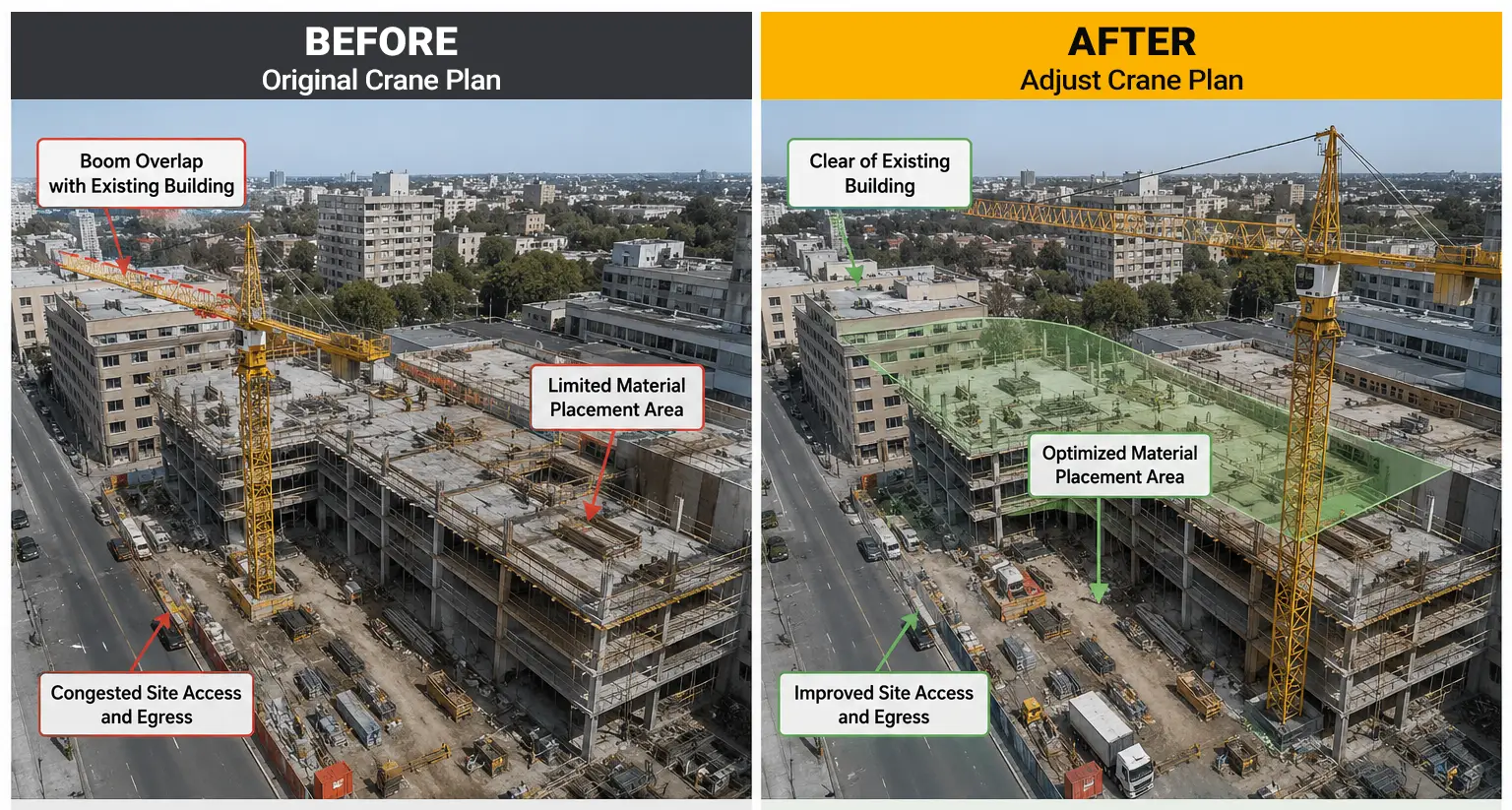
Initial Problem:
- crane positioned near unloading area
- long-radius lifting beyond 38m
- slower lifting cycles at upper floors
Planning Adjustment:
- crane repositioned closer to vertical lifting path
- secondary staging zone introduced
- lifting workflow reorganized
Outcome:
The crane remained the same.
Only the planning changed.
Common Mistakes During Tower Crane Rental Planning
These issues rarely appear during procurement discussions, but they become major execution problems later.
How Better Crane Planning Improves Project Performance
Well-planned crane deployment helps improve:
On most high-rise projects, planning improvements alone can significantly improve lifting productivity without increasing crane count.
Commercial Insight: Why Early Crane Planning Matters
Projects that delay crane planning often face:
This is why experienced contractors finalize lifting zones, working radius, and future height requirements before confirming crane rental decisions.
Final Insight
In high-rise construction, tower crane rental planning directly impacts project execution quality.
The most successful projects are not always using the biggest cranes.
They are using:
Projects that plan crane deployment strategically consistently achieve:

