Industrial precast facility (Gujarat)
Heavy Duty Tower Cranes: Capacity, Uses & Selection Guide
- By Admin
- 18 May 2026
Most construction delays in high-load projects don't happen because the crane is underpowered.
They happen because the crane is operating at the wrong radius, with the wrong configuration, or under unrealistic load assumptions.
If your project involves:
Then a standard tower crane setup will start creating bottlenecks very quickly.
This is where heavy duty tower cranes become critical, not just for lifting capacity, but for maintaining consistent performance under real site conditions.
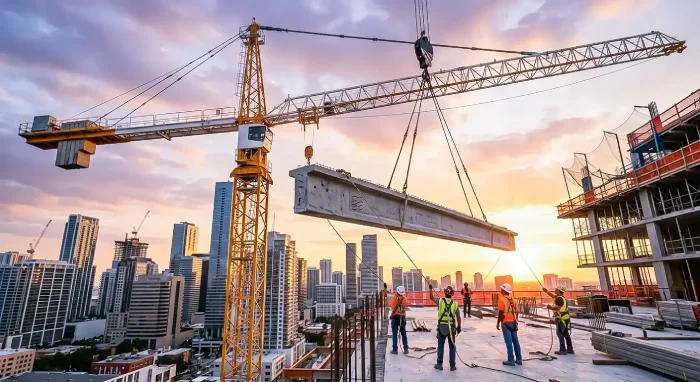
When Do You Actually Need a Heavy Duty Tower Crane?
Not every project needs a 10-20 ton crane. But when load and radius combine, capacity requirements increase rapidly.
You should strongly consider a heavy-duty tower crane if your project includes:
 Precast wall panels, beams, or slabs above 4-8T
- Steel structure erection with large assemblies
- Data center construction with heavy equipment lifts
- Industrial or infrastructure projects with repetitive heavy loads
Real Insight (Mumbai - Precast Housing Project):
A contractor initially used a 6T crane for panel lifting. At 32-35m radius, lifting slowed significantly.
After switching to a 12T heavy-duty crane, cycle time improved by ~30% without changing manpower.
This is the difference between capacity on paper and performance on site.
What Defines a Heavy Duty Tower Crane?
Heavy duty cranes are not just about higher tonnage. Their real value comes from mid-radius performance, which is where most construction lifting actually happens.
Key Characteristics:
Why Mid-Radius Matters More Than Max Load
Most contractors make this mistake:
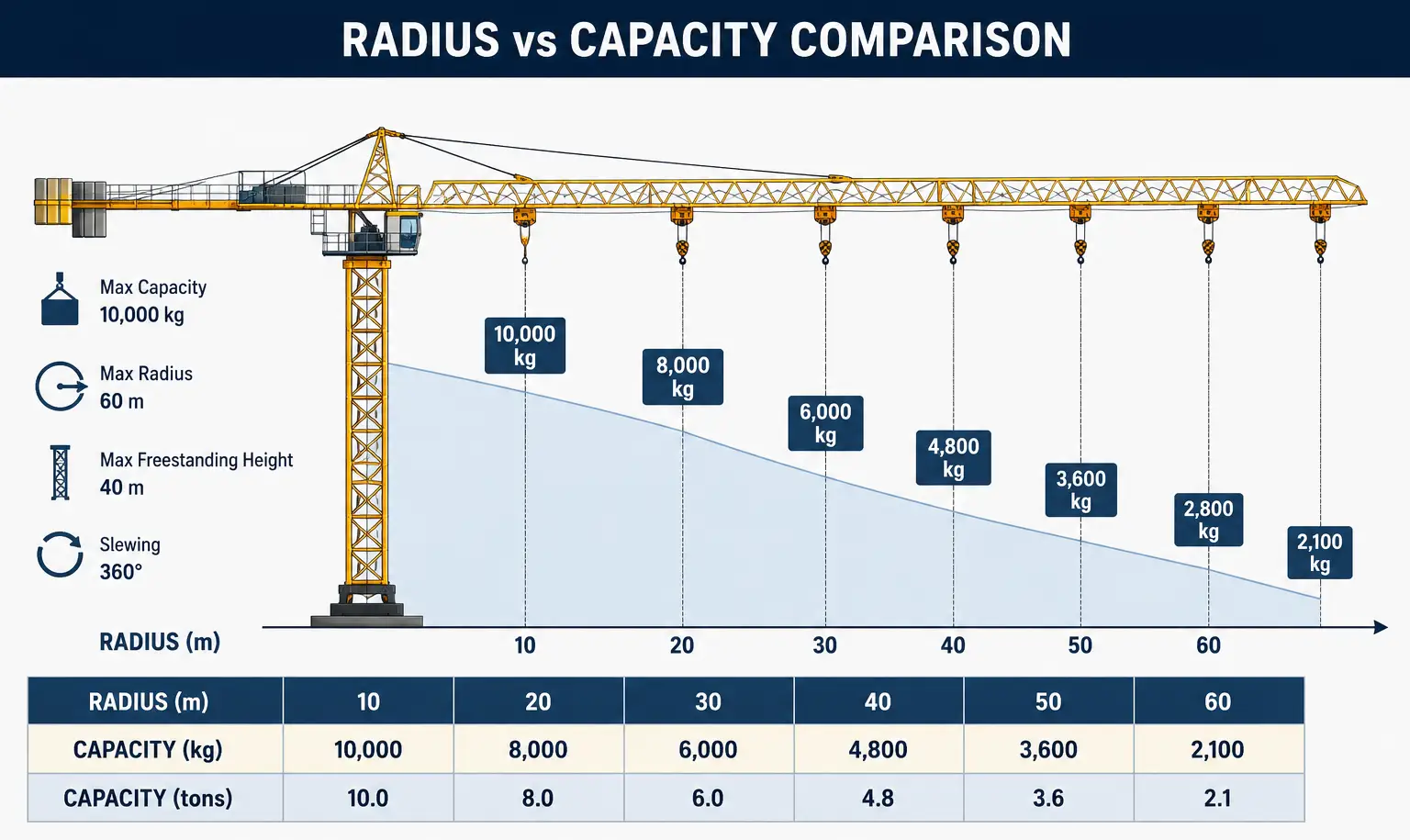
They check max capacity (e.g., 16T) but ignore capacity at working radius.
Example:
- 16T crane at 10m → 16T capacity
- Same crane at 35m → may drop to 4-5T
If your precast beam is 6T → you're already in trouble.
Common Uses of Heavy Duty Tower Cranes
How to Select the Right Heavy Duty Tower Crane
This is where most decisions go wrong.
1. Start With Load + Radius (Not Crane Size)
Always calculate:
- Heaviest element weight
- Maximum working radius
Then check load chart at that radius
2. Understand Site Layout
Ask:
- Where is the casting yard?
- Where is the installation happening?
- What is the average lifting distance?
A poorly placed crane:
- Increases radius
- Reduces capacity
- Slows operations
3. Check Mid-Radius Capacity
Ideal selection range:
- 4-6T capacity at 25-35m radius
- 1.5-2.5T at tip (for flexibility)
4. Evaluate Crane Type Along With Capacity
Heavy duty cranes are available in:
- Flat-top configurations → open sites
- Luffing crane configurations → tight or urban sites
Selection depends on site constraints, not just load
Real Site Case: Capacity vs Planning Mistake
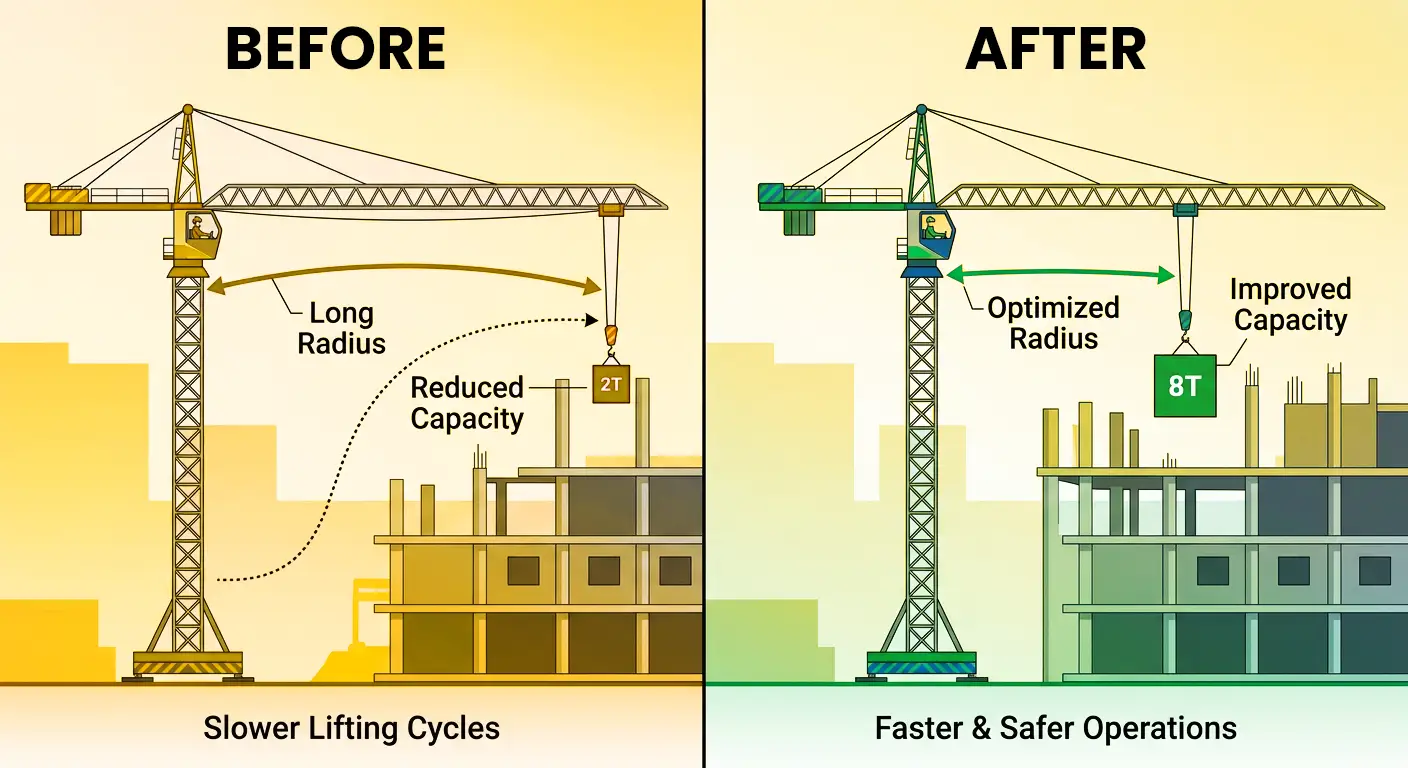
Initial Setup:
- 10T crane selected
- Crane placed far from casting yard
- Operating radius: ~40m
Problem:
- Capacity dropped below required lifting weight
- Crane cycle time increased
- Additional mobile crane required
Solution:
- Repositioned crane closer
- Reduced radius to ~30-32m
Outcome:
- 22% faster lifting cycles
- Eliminated need for additional crane
- Improved safety margins
No new crane. Just better planning.
Common Mistakes to Avoid
These mistakes don't always cause immediate failure, but they slow projects significantly.
Commercial Insight: Capacity vs Configuration
Many contractors assume:
“Higher capacity crane = better performance”
In reality:
A well-configured 12T crane can outperform a poorly placed 16T crane
That's why planning teams usually:
Only then do they evaluate suitable crane options for rental or purchase based on actual requirements.
How Heavy Duty Cranes Improve Project Performance
When selected and configured correctly, they deliver:
On most large projects, this translates to:
15-30% improvement in execution efficiency(based on site planning observations across precast and industrial projects)
Final Insight: Capacity Alone Is Not Enough
Heavy duty tower cranes are essential for modern high-load construction, but their real impact depends on how they are selected and deployed.
Projects that focus only on crane capacity often face:
- Delays
- Inefficiencies
- Safety risks
Projects that align:
- Load
- Radius
- Configuration
- Site layout
consistently achieve:

