The monitoring system must be compatible with the crane model and configuration used on site.
Tower Crane Overload Protection: How SLI Prevents Accidents?
- By Admin
- 21 March 2026
Tower cranes handle some of the most demanding lifting operations in modern construction. From lifting steel structures and reinforcement bundles to positioning precast concrete panels, these cranes operate close to their maximum capacity on many projects.
In such environments, even a small error in load estimation or lifting radius can create dangerous situations. Crane overloading remains one of the most common causes of crane instability and structural stress on construction sites.
To address this risk, modern construction projects increasingly rely on tower crane overload protection systems that monitor lifting conditions in real time. Among these safety technologies, the Safe Load Indicator (SLI) plays a crucial role in preventing cranes from operating beyond their safe limits.
As discussed in our detailed guide on safe load indicators in tower cranes, these systems continuously track load weight, lifting radius, and crane configuration to help operators maintain safe working conditions.
Understanding how SLI systems function as overload protection devices helps contractors, project planners, and crane operators improve both safety and operational efficiency on construction sites.
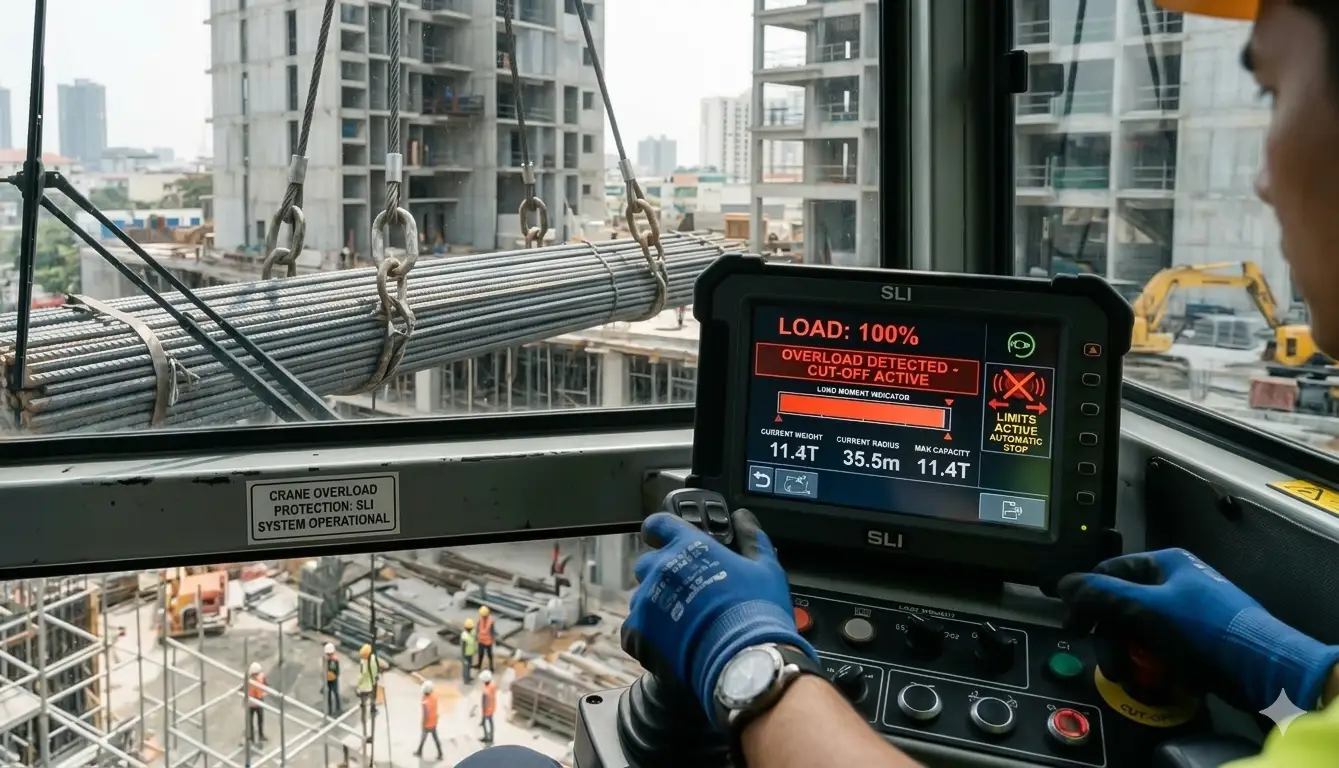
Why Tower Crane Overloading Is a Major Safety Risk
Tower cranes are engineered with specific load charts that define the maximum lifting capacity under different working conditions. These load charts consider variables such as:
However, real construction environments rarely operate under perfectly predictable conditions.
Several factors can unexpectedly increase the stress on a crane structure.
Because of these variables, relying only on manual calculations or operator experience can expose cranes to overload risks. This is where crane overload protection systems become essential.
How Safe Load Indicators Work as Overload Protection Systems
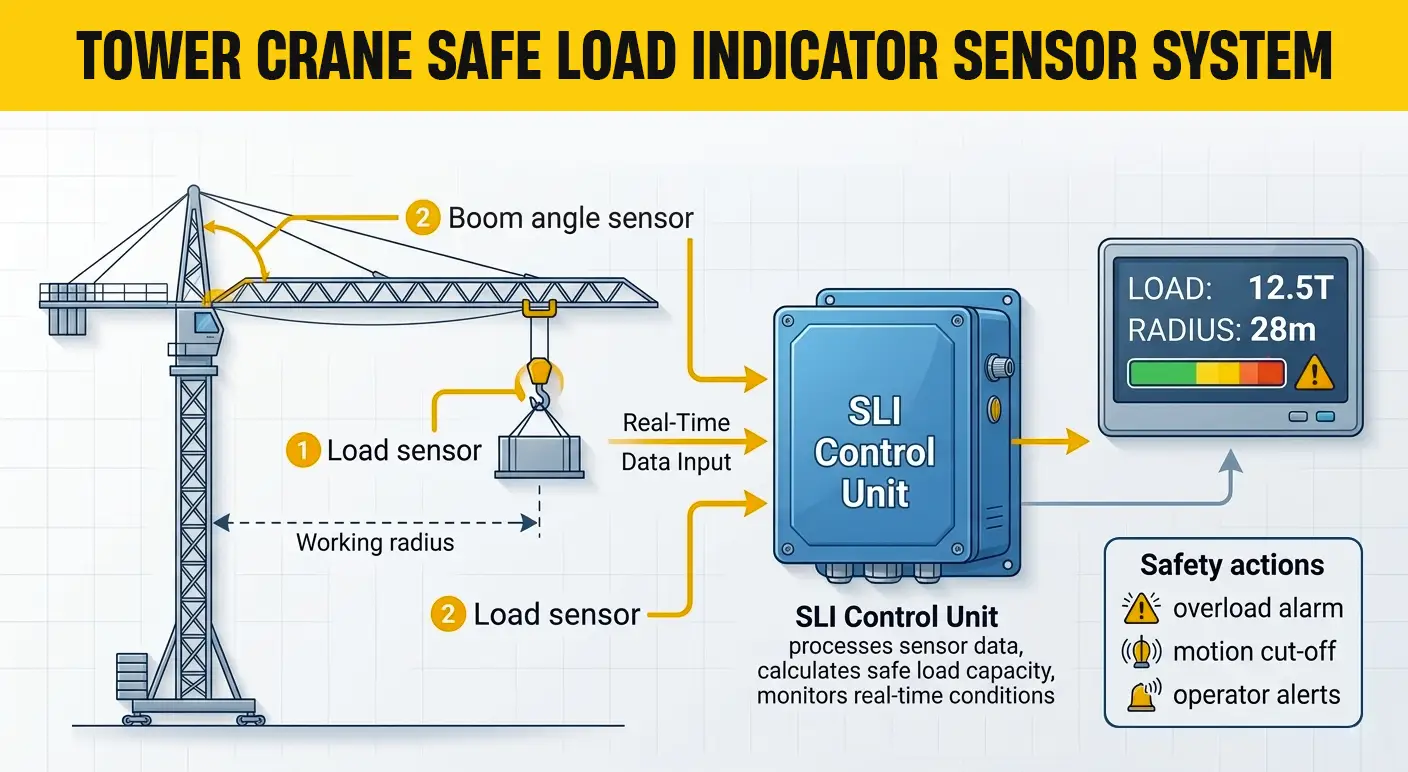
A Safe Load Indicator is designed to monitor crane lifting conditions continuously and compare them with the crane's safe operating limits.
The system collects data from sensors installed on key crane components and processes that data through a control unit.
The result is a real-time safety monitoring system that alerts operators when lifting conditions approach unsafe limits.
If the system detects that the load is approaching the crane's limit, it triggers visual and audible warnings to alert the operator.
Many modern overload protection systems can also restrict lifting movements automatically if dangerous conditions are detected.
Real Construction Situations Where SLI Prevents Crane Overloading
On active construction sites, lifting operations involve constantly changing conditions. Several real-world scenarios demonstrate why overload protection systems are critical.
Lifting Heavy Precast Concrete Elements
Precast components such as staircases, facade panels, and structural beams are commonly lifted by tower cranes.
Although their weight is estimated during planning, variations in reinforcement or embedded fixtures can increase the actual load.
An SLI system verifies the real load weight before lifting begins and prevents cranes from exceeding their safe lifting capacity.
Long Radius Material Handling
Urban construction projects often require cranes to lift materials across long distances due to limited site access.
As the working radius increases, the crane's lifting capacity decreases significantly. Load monitoring systems track this change in real time and warn operators if loads exceed permissible limits.
Uneven or Dynamic Loads
Some construction materials, such as bundled pipes or prefabricated assemblies, may have uneven weight distribution.
These loads can shift during lifting, creating unexpected stress on crane components. SLI systems help detect these conditions early.
Wind-Affected Lifting Operations
Wind conditions can significantly affect crane lifting stability, especially when lifting large panels or formwork assemblies.
Real-time load monitoring allows operators to identify unsafe conditions before lifting operations become dangerous.
Industry Insight: Why Overload Protection Is Becoming Mandatory
Construction safety regulations around the world are evolving to reduce risks associated with crane operations.
Many infrastructure and high-rise projects now require cranes to be equipped with load monitoring and overload protection systems as part of site safety protocols.
In India, large construction contractors and infrastructure developers increasingly specify SLI systems in crane safety requirements. These systems support compliance with project safety audits and operational guidelines.
Contractors also recognize that preventing crane accidents helps avoid costly delays, equipment damage, and potential legal liabilities.
Because of these factors, many project teams now install tower crane safe load indicator systems to improve safety monitoring during lifting operations.
Companies evaluating crane safety solutions often look for reliable systems such as safe load indicators for cranes used in construction projects, particularly when operating tower cranes on high-rise or infrastructure sites.
Case Study: Preventing Crane Overload During Structural Lifting
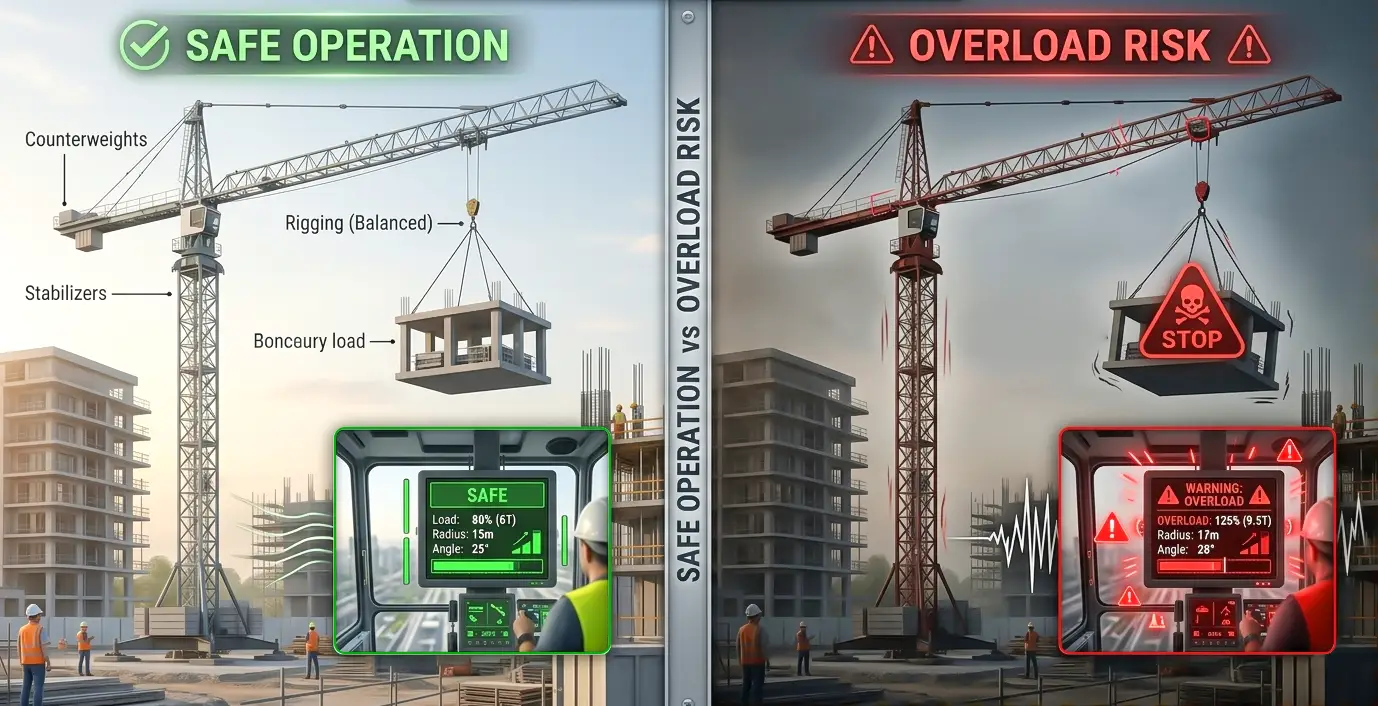
During the construction of a commercial building project, a tower crane was used to lift prefabricated steel sections to upper floors.
The lifting plan estimated the steel assembly weight at approximately 4 tons. However, additional connection plates added during fabrication increased the actual load weight.
As the crane operator began lifting the structure and extended the boom to reach the installation point, the Safe Load Indicator system detected that the load was approaching the crane's maximum permissible capacity at that radius.
The system immediately triggered a warning alarm on the operator display.
The lifting operation was paused, and the steel assembly was divided into smaller components for safer lifting.
This example illustrates how tower crane overload protection systems help prevent potentially dangerous lifting situations before structural stress occurs.
Benefits of Using Tower Crane Overload Protection Systems
Construction projects that integrate load monitoring technologies benefit from several operational and safety advantages.
Selecting the Right Overload Protection System
Choosing a reliable load monitoring system is essential for maintaining safe crane operations.
Several factors should be considered when evaluating overload protection systems.
Sensor Accuracy
High-quality sensors ensure accurate load measurements under varying operating conditions.
Operator Interface
The display should clearly show load data so operators can quickly understand lifting conditions.
Durability for Construction Environments
Crane safety systems must withstand dust, vibration, and changing weather conditions on construction sites.
Reliable overload protection systems are designed to perform consistently even in demanding project environments.
The Future of Crane Safety Monitoring
As construction projects become larger and more technically demanding, safety monitoring technologies are evolving rapidly.
Advanced crane safety systems are increasingly integrated with digital monitoring platforms that allow project teams to track crane performance and lifting conditions more effectively.
This shift reflects a growing emphasis on data-driven safety management in construction operations.
Projects that adopt advanced crane monitoring systems not only reduce accident risks but also improve overall site efficiency and operational reliability.
Conclusion
Tower crane overloading remains a critical safety risk on construction sites. Changes in load weight, lifting radius, and environmental conditions can quickly push cranes beyond their safe operating limits.
Safe Load Indicator systems play a crucial role in preventing these situations by monitoring lifting conditions in real time and alerting operators before unsafe loads occur.
By acting as a reliable tower crane overload protection system, SLI technology helps construction teams maintain safe lifting operations while improving compliance with modern safety standards.

