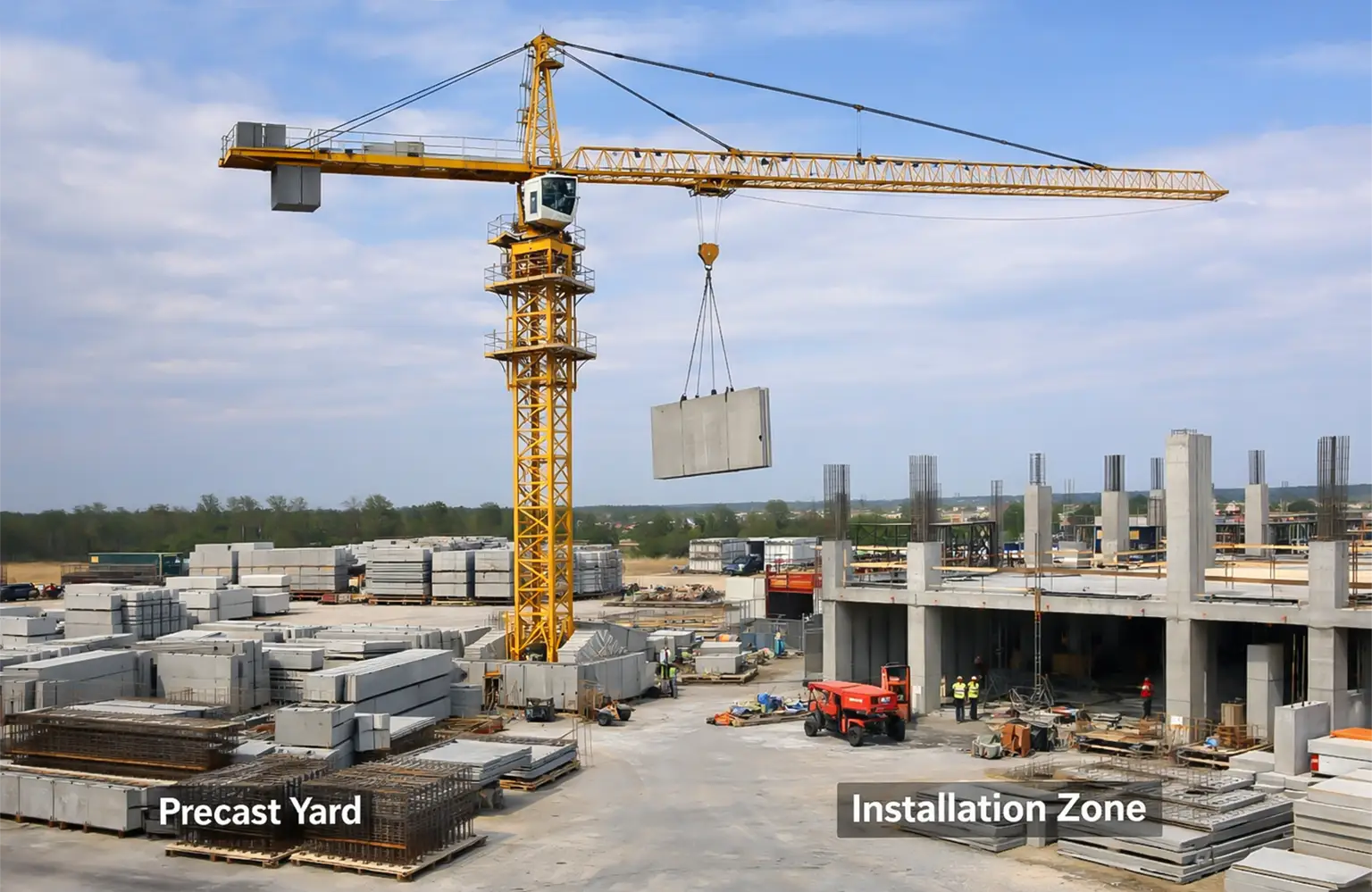
- One crane covers full site
- Efficient for repetitive panel lifting
- Used widely in Mumbai & Ahmedabad
Tower Crane Configuration for Precast Lifting Operations 2026
- By Admin
- 17 April 2026
Precast construction projects are not limited by production capacity. They are often limited by how efficiently elements are lifted and placed on site. While selecting the right crane is important, configuration is what determines real performance.
Across precast housing, metro, and industrial projects in India, one consistent issue appears:
“Even with the right crane, poor configuration leads to delays, unsafe lifts, and reduced productivity.”
This guide focuses on how to configure tower cranes for precast lifting operations, including real site scenarios, planning logic, and decision-making factors used by project engineers.
If you are evaluating crane options or planning deployment, this complements the broader selection approach covered in our tower cranes for precast construction guide, where crane types and capacity planning are explained in detail.
Why Configuration Matters More Than Crane Selection
In precast lifting, elements such as panels, beams, and slabs are:
 Heavy and often near capacity limits
- Sensitive to radius changes
- Affected by wind and dynamic movement
Even a correctly selected crane can underperform if:
- Positioned incorrectly
- Operating at inefficient radius
- Not aligned with site workflow
On a precast residential project in Navi Mumbai, a contractor used a 10T crane but faced delays because the crane was placed too far from the casting yard. After repositioning, lifting cycle time improved by 25% without changing equipment.
Key Elements of Tower Crane Configuration for Precast
1. Crane Positioning Based on Site Workflow
Configuration begins with placement, not capacity.
A well-configured crane should cover:
- Casting yard
- Storage zones
- Installation area
Best Practice:
Position the crane to minimize long-radius lifts.
Example:
Instead of lifting panels at 40m radius, repositioning to operate within 28-32m significantly improves capacity and safety.
2. Radius Planning for Precast Lifting
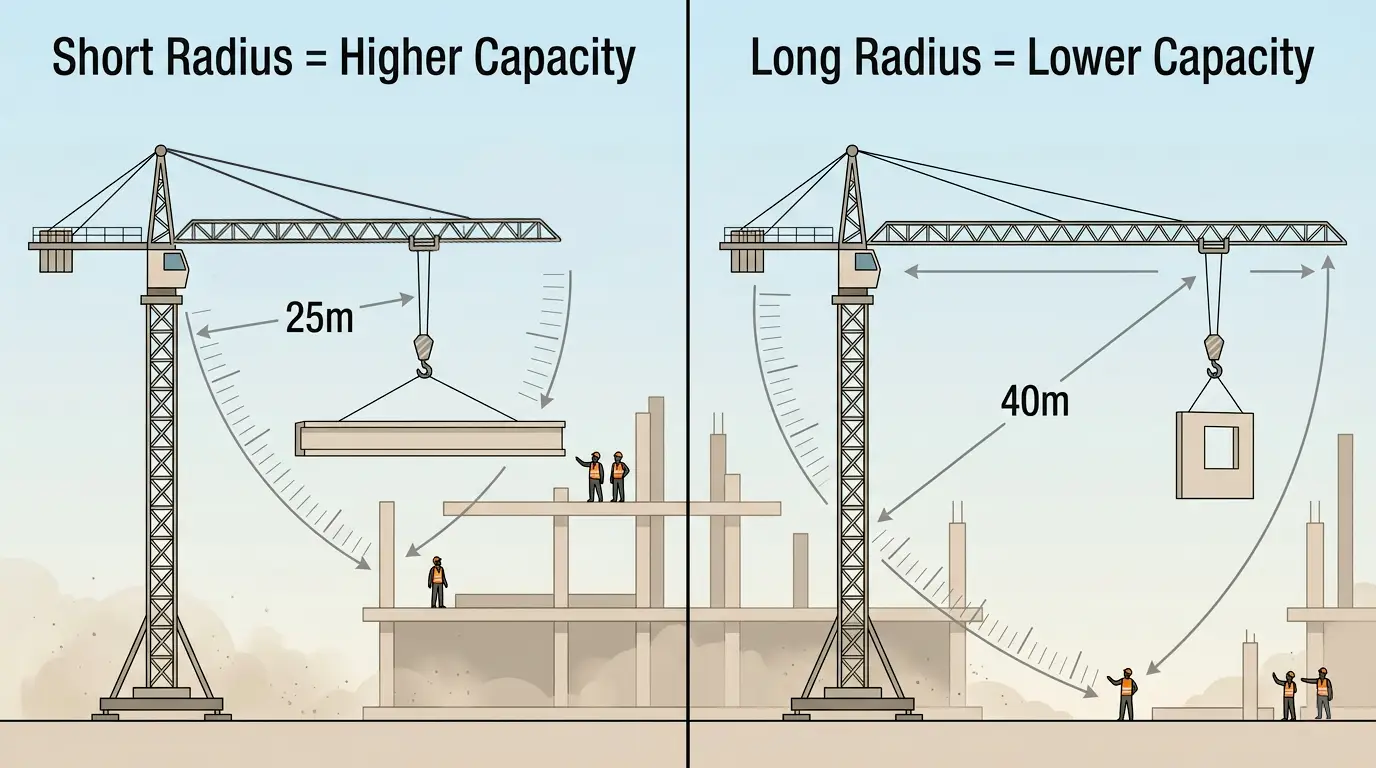
Radius directly affects lifting capacity.
Typical precast lifting conditions:
- Panels: 2-4T at 30-38m
- Beams: 5-10T at 25-35m
If your crane operates near max radius frequently:
- Load capacity drops
- Cycle time increases
- Risk increases
This is why many planners now prefer mid-radius optimized configurations rather than maximum outreach setups.
3. Matching Load Charts with Real Site Conditions
Load charts are theoretical. Site conditions are not.
Factors affecting real performance:
- Load imbalance (precast panels rarely uniform)
- Hook movement
- Wind pressure
- Rigging variations
On a Pune precast project, a 6T panel behaved like an 8T load due to uneven weight distribution. The SLI system triggered warnings earlier than expected, highlighting the importance of real-world configuration.
4. Choosing Between Flat-Top and Luffing Configurations
Configuration is not only placement, it includes crane type suitability.
Flat-Top Cranes
Best when:
- Open site layout
- Repetitive lifting
- Precast housing projects
Luffing Cranes
Best when:
- Space is restricted
- Multiple cranes operate nearby
- Urban or data center construction
For projects with tight boundaries or airspace restrictions, many planners now evaluate luffing crane configurations for controlled lifting environments, especially where oversailing must be avoided.
Real Site Workflow Configurations Used in India
B. Dual Crane Setup (High Volume Projects)
- One crane for yard
- One for erection
- Reduces waiting time
C. Zoned Configuration (Complex Sites)
- Separate lifting zones
- Avoids crane interference
- Used in metro and data center projects
Case Study: Improving Precast Lifting Efficiency
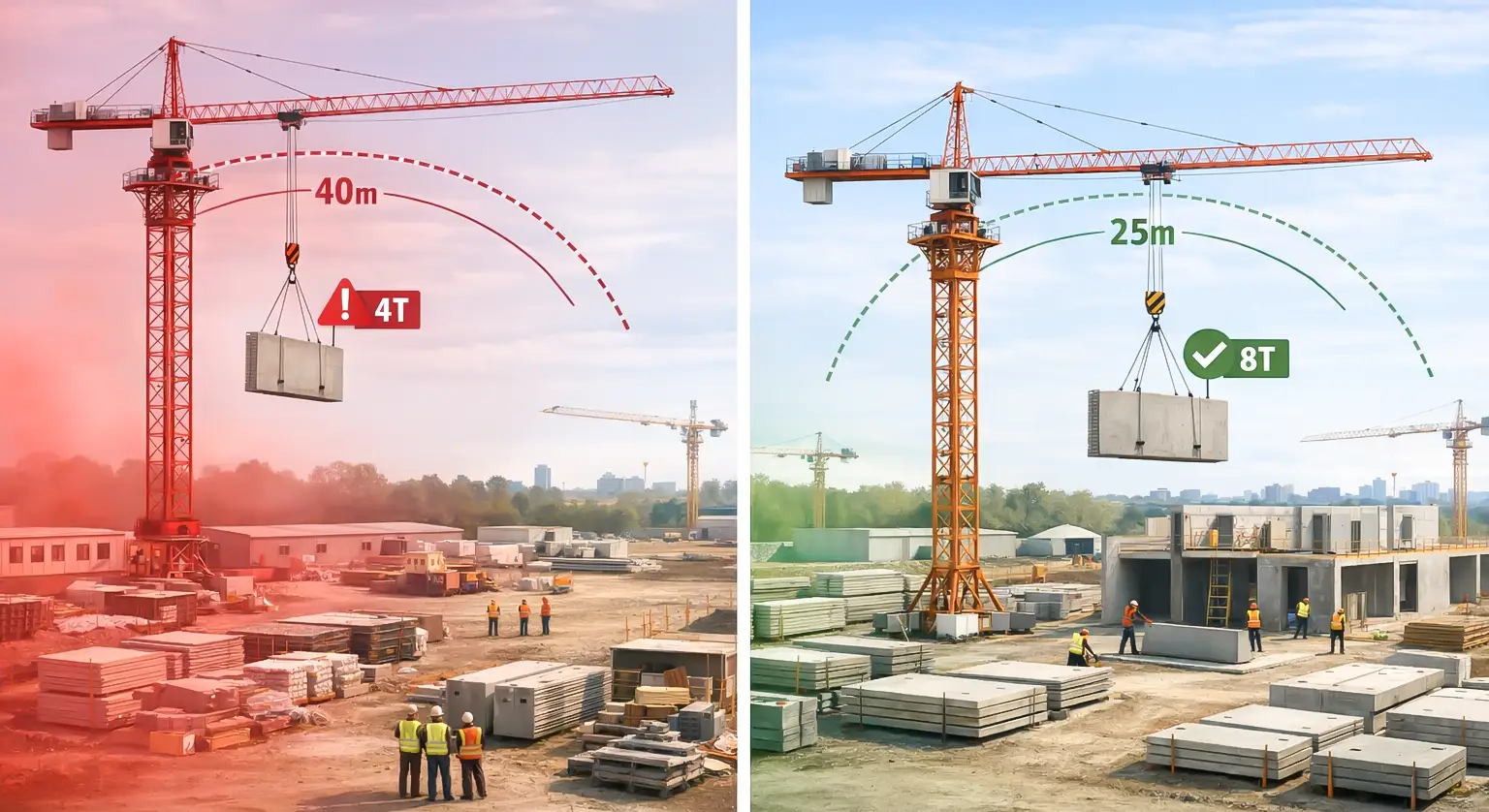
At a Gurgaon commercial precast site, delays were occurring due to:
- Long lifting radius (~42m)
- Crane idle time waiting for material
Configuration Fix:
Outcome:
No new equipment was added, only configuration changed.
Common Configuration Mistakes to Avoid
Based on real project observations:
These issues often lead to hidden inefficiencies rather than visible failures, which is why many projects fail to optimize performance.
Commercial Consideration: Configuration vs Crane Selection
Many contractors focus only on crane type, but in practice, configuration matters more than capacity.
A well-placed 10T crane can often perform better than a poorly positioned 16T crane. That's why planning teams first finalize site layout, lifting sequence, and coverage zones before deciding the equipment.
Once this is clear, they typically evaluate suitable tower crane models based on project requirements, especially when comparing rental and purchase options. On tighter or high-density sites, planners often prefer luffing crane configurations where controlled movement and restricted swing are critical.
How Proper Configuration Impacts Project Outcomes
A well-planned configuration directly improves:
 Lifting speed
- Crane utilization
- Site coordination
- Safety compliance
- Project timelines
On most precast projects, configuration improvements alone can deliver 15-30% efficiency gains.
In projects where precast lifting involves tight timelines or heavy elements, early configuration planning combined with the right crane selection becomes critical for avoiding delays and cost overruns.
Final Insight: Configuration Is the Real Performance Driver
Tower cranes are critical in precast construction, but their effectiveness depends on how they are configured on site.
While crane selection defines capability, configuration defines performance.
Projects that invest time in planning crane positioning, radius optimization, and workflow alignment consistently achieve:

