One heavy-duty crane covering:
- Casting yard
- Storage area
- Erection zone
Ideal for:
- Compact sites
- Housing projects
Precast construction in India is growing faster than ever, especially across data centers, metro rail works, affordable housing, and steel-structure buildings. But the real challenge is not producing precast elements, it's lifting and placing them safely and efficiently.
From my visits to precast yards in Mumbai, Pune, Ahmedabad, Noida (Yamuna Authority), and Chennai, one pattern was clear:
“Every precast project succeeds or fails based on whether the tower crane is correctly selected and planned.”
Precast elements, whether slabs, wall panels, beams, or façade sections are heavier, bulkier, and more handling-sensitive than normal RCC components. And this makes tower crane choice far more critical than general building construction.
In this detailed guide, we break down:
 Which tower cranes work best for precastLifting capacity & outreach calculationsReal on-site challenges from Indian precast projectsCase studiesHow tower cranes improve speed and reduce costWhen to use HD cranes, luffing cranes, or flat-top cranesHow to plan crane positioning for precast sitesIndustry-backed insights from contractor experiences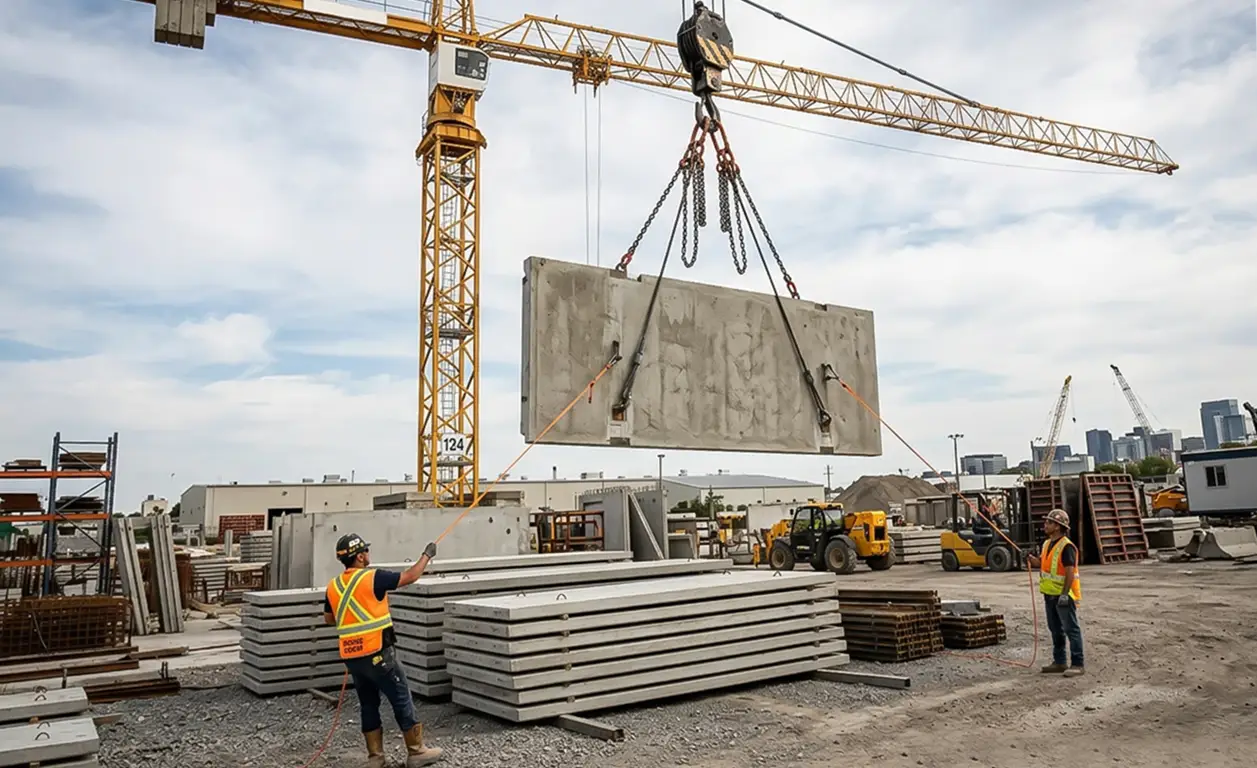
Most contractors assume any tower crane can lift precast. But precast elements are usually:
Unlike traditional construction where loads are lighter and repetitive, precast lifting often involves:
During a precast housing project in Thane (2024), a contractor shared that switching from a 6-ton crane to a 12-ton heavy-duty flat-top crane increased productivity by 32% and reduced installation time by 18 days.
Depending on the project site, below are the most suitable crane types:
Best for:
Why they work:
Real On-Site Insight:
At a precast industrial park project in Jamnagar, using a 16-ton HD crane reduced the number of mobile crane deployments by 70%.
Best for:
Advantages:
Case Example:
A Noida data center project (2025) used two luffing cranes because normal flat-tops could not work due to airspace and building proximity restrictions.
Best for:
Benefits:
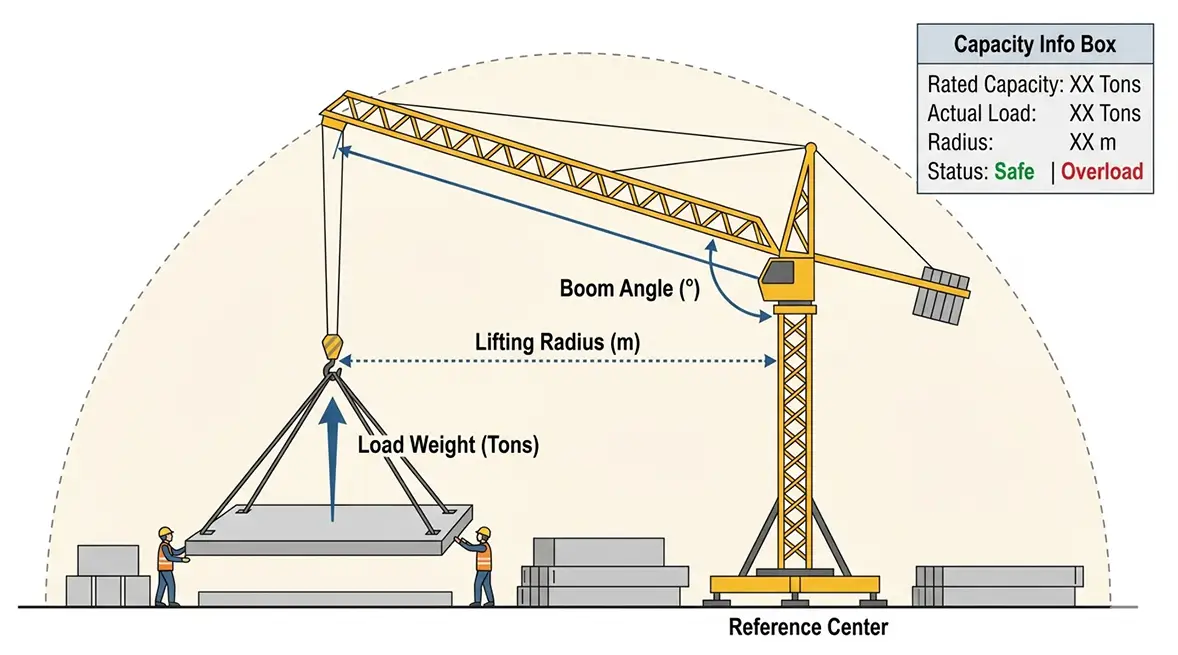
Choosing a crane for precast must begin with realistic calculations. Key factors:
From my interaction with supervisors at a precast township in Panvel (2025), the 3 biggest crane advantages were:
Panels could be placed every 15-18 minutes with a planned workflow.
Assembly teams became leaner and more skilled.
Fewer mobile crane hires, less equipment idle time.
Controlled lifting reduces panel cracks & accidents.
Precast projects usually adopt one of the following layouts:
One heavy-duty crane covering:
Ideal for:
Two cranes, one for yard & one for erection.
Ideal for:
Kind of a must when the precast quantity is high.
Placed on the boundary to avoid obstructing heavy machinery.
Useful for:
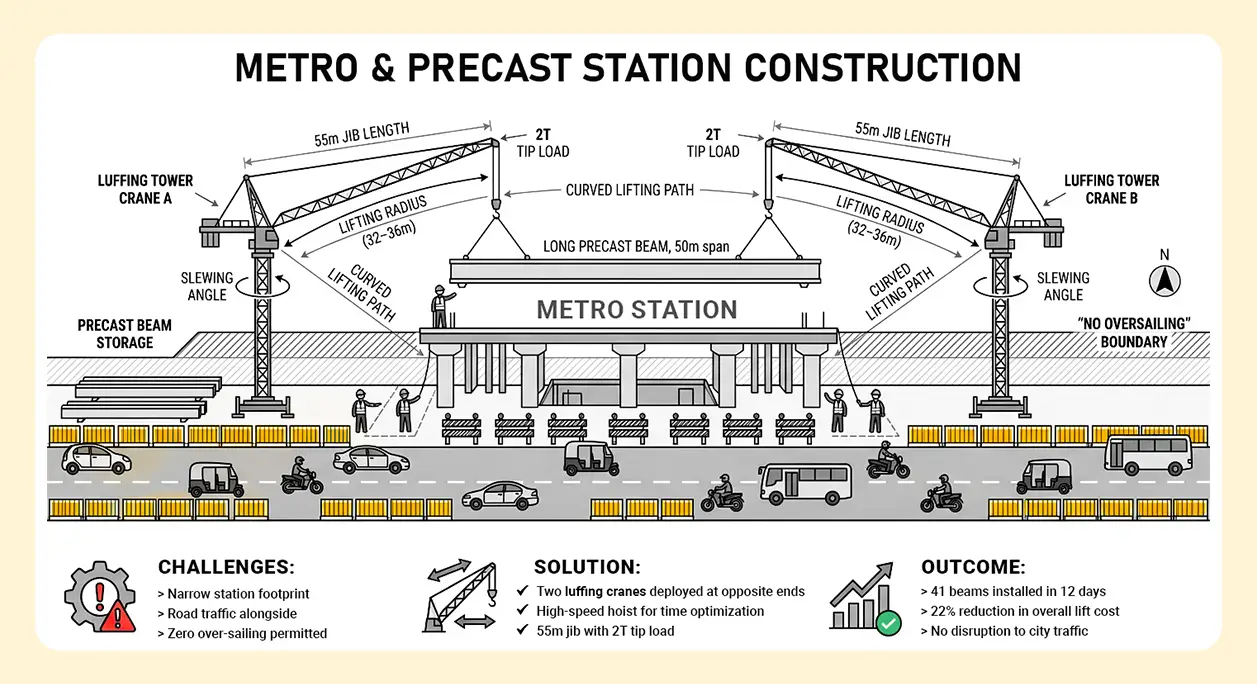
At a metro station project in Nagpur, precast beams (7T each) needed installation at 32-36m radius.
Challenges:
Solution:
Solution:
If your precast or heavy-structure project requires:
You can explore detailed models, load charts and availability here in our tower cranes for sale, rent and used cranes section, which lists all HD, luffing and flat-top models suitable for precast work.
Heavy-duty flat-top or luffing cranes with 10-20T capacity and high mid-radius performance.
Match the weight of your heaviest precast element + radius.
Always check mid-radius load charts, not just max capacity.
Yes, 70-80% of lifting can shift to tower cranes, reducing daily hiring costs.
Most sites require 30-40m depending on yard distance.
Yes, ACD, SLI, cameras and biometric access can be integrated based on requirement.

