A precast panel weighed more than planned due to added reinforcement.
The load cell detected the extra weight → SLI alerted early → lift paused → accident prevented.
Safe Load Indicators (SLI) have become a mandatory safety requirement across many construction projects, especially those involving tower cranes. While operators and planners understand that SLI systems prevent crane overloading, fewer people recognize that sensor accuracy is what decides whether the SLI works perfectly… or fails during a critical lift.
During visits to metro-rail pier construction sites in Mumbai and Noida, crane operators often pointed out that inaccurate sensors, not the SLI control unit, were the reason behind most false alarms or delayed overload warnings. In one instance, a slightly misaligned angle sensor displayed a “safe” load even when the crane was already approaching its maximum working radius.
This highlights a crucial reality:
“A Safe Load Indicator is only as reliable as the sensors installed on the crane.”
Understanding how torque sensors, load cells, encoders, angle sensors and radius sensors work is essential for safety teams, site engineers, and rental fleet owners. Modern SLI systems used across Indian tower crane projects rely directly on these sensors to support compliance, operator confidence, and safe lifting decisions.
For a broader overview of how SLIs maintain tower crane safety, you can refer to our detailed tower crane safe load indicator compliance guide, which explains regulatory requirements and system functions in depth.
If you're looking for certified SLI systems designed with high-accuracy sensors for tower cranes, explore our Safe Load Indicator solutions.
View Safe Load Indicator Systems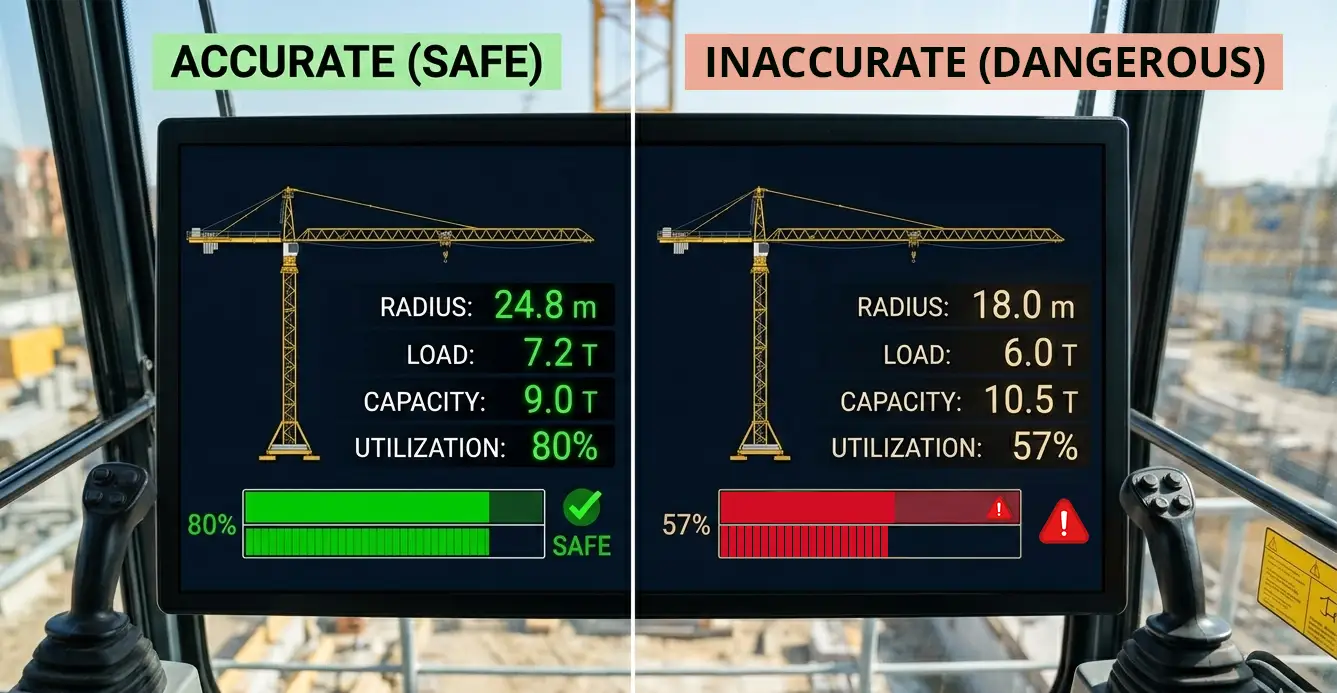
Tower cranes operate with constantly changing variables: wind impact, load distribution, radius extension, and dynamic site conditions. Operators rely heavily on the SLI screen to make real-time decisions about whether a lift is safe.
If a sensor is even slightly inaccurate:
On a commercial high-rise project in Andheri, a contractor reported that a faulty boom angle sensor created repeated “false long-radius warnings.” This slowed crane productivity by nearly 20%. Once the sensor was recalibrated, operations returned to normal.
These field examples show why SLI sensor precision directly impacts both crane safety and project productivity.
Below are the most commonly used sensors in tower crane SLI systems, along with practical insights and use-cases.
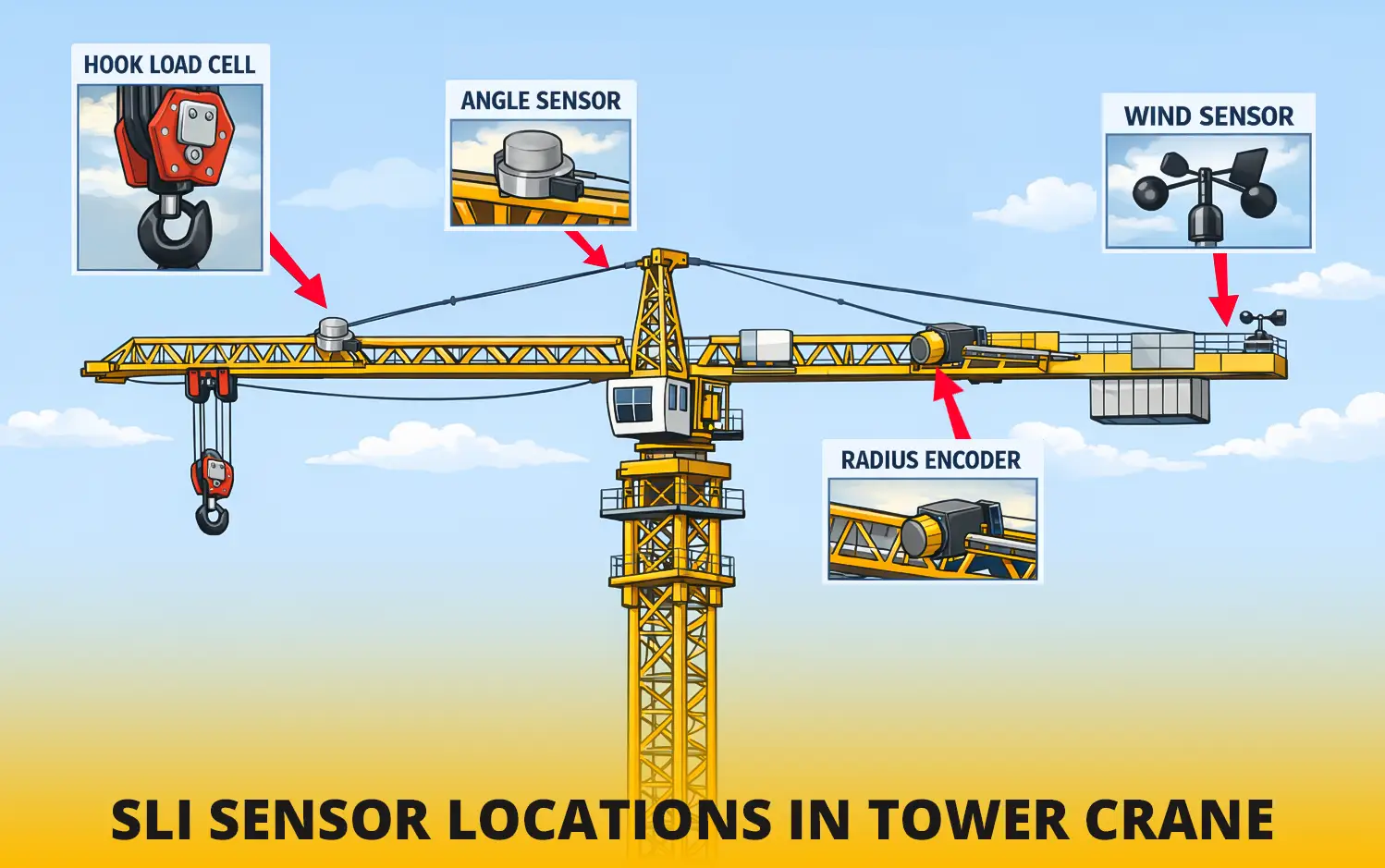
These sensors monitor the boom's inclination, which directly affects safe lifting radius.
Radius sensors measure the horizontal distance between crane mast and load hook.
These sensors calculate the moment load = weight x radius, giving a more accurate stability picture.
Wind can destabilize long or wide loads such as façade panels and steel assemblies.
These aren't traditional “sensors” but serve critical safety purposes:
They are crucial on sites where multiple tower cranes operate simultaneously.
SLI sensors ensure:
 Real load = Allowed loadRadius stays within crane chart limitsBoom angle remains within safe rangeWind does not exceed safe lifting conditionsEarly alerts before dangerous thresholds
When sensors function correctly, cranes avoid:
These functions complement the insights discussed in our guide on tower crane overload protection and how SLIs prevent accidents in real site conditions.
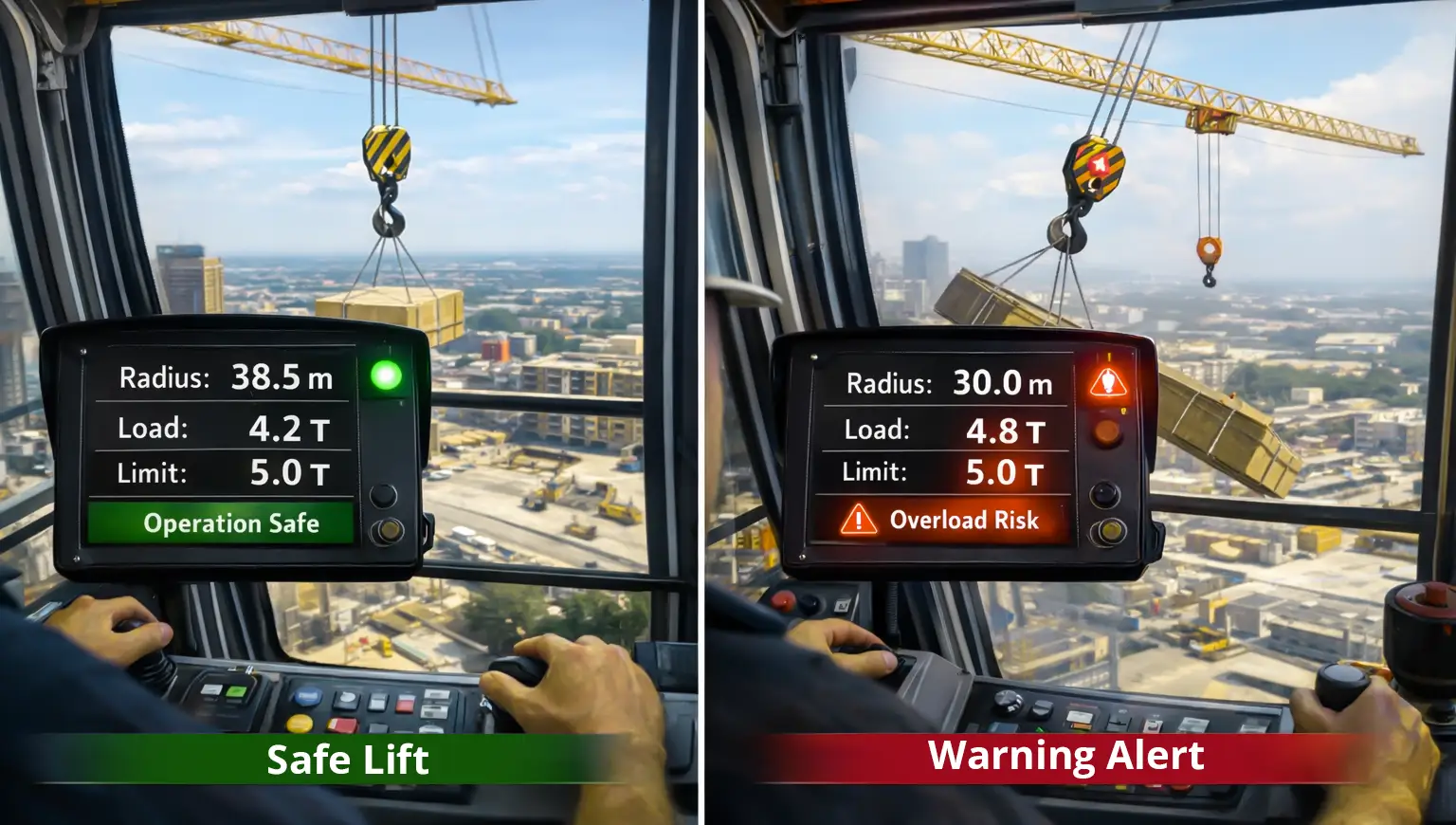
A precast panel weighed more than planned due to added reinforcement.
The load cell detected the extra weight → SLI alerted early → lift paused → accident prevented.
The planned radius was 48 m, but the sensor detected 52 m due to boom extension.
The operator stopped the lift just in time, preventing excessive boom deflection.
The wind sensor triggered a warning at 14 m/s.
Large panel lifting was postponed, avoiding dangerous load sway.
These examples prove that sensor accuracy is the foundation of safe lifting operations.
SLI sensors require systematic maintenance.
Ideal intervals:
Many safety managers prefer ISO-certified SLI sensors because they maintain accuracy for longer and show less drift in extreme conditions.
Tower crane safety depends not just on having an SLI system, but on how accurately its sensors read real-time load conditions. Every decision an operator makes raising, lowering, trolleying, or slewing, relies on correct sensor inputs.
Accurate sensors enable:
More confident liftingFewer false alertsReduced structural stressBetter compliance with contractor safety normsLower downtime during peak activitySafer lifting in wind or long-radius conditionsFor contractors looking to upgrade their crane safety systems, choosing a reliable SLI with high-precision sensors is essential.
You can explore our SLI system for tower cranes in India, which offers advanced sensor integration for safe lifting across construction projects.
When sensors are calibrated well and maintained regularly, cranes perform safely, operators gain confidence, and projects stay on schedule without compromising on safety.

