Commercial steel building, Pune
Tower Crane Planning for Steel Structure Buildings Guide
- By Admin
- 21 May 2026
Steel structure projects move fast, but only when lifting operations are planned correctly.
Unlike conventional RCC construction, steel buildings depend heavily on continuous crane movement for columns, trusses, beams, and prefabricated assemblies. If crane planning is inaccurate, erection speed slows immediately, even when fabrication and manpower are ready.
Across industrial sheds, logistics parks, commercial steel structures, and PEB projects in India, one issue appears repeatedly:
“Most delays in steel erection are caused by crane radius and positioning problems, not fabrication delays.”
This is why tower crane planning becomes critical in steel structure construction, especially when projects involve long-span beams, repetitive lifting cycles, or restricted urban layouts.
Why Steel Structure Projects Need Different Crane Planning
Steel construction creates very different lifting conditions compared to precast or RCC projects.
Typical challenges include:
 Long and uneven assemblies
- Dynamic load movement during lifting
- High wind sensitivity
- Continuous lifting cycles throughout erection phases
- Multiple installation points across wide layouts
On a logistics park project near Bhiwandi, a contractor initially planned lifting using a standard flat-top crane positioned near the storage zone. However, repeated long-radius lifts slowed beam installation significantly. After repositioning the crane closer to the erection line, lifting efficiency improved without changing crane capacity.
- The issue was not the crane itself.
- It was the planning.
On large steel projects, even small crane planning mistakes can increase erection time, create equipment bottlenecks, and force additional mobile crane deployment, directly affecting project cost and timelines.
Key Factors in Tower Crane Planning for Steel Buildings
1. Radius Planning Matters More Than Maximum Capacity
One of the most common mistakes in steel projects is selecting cranes based only on headline tonnage.
In reality:
- A 16T crane may lift efficiently at 15m radius
- The same crane may lose substantial capacity at 35-40m radius
Steel beams and trusses are often lifted at mid-to-long radius because erection zones continuously shift during project progress.
- Working radius
- Mid-radius lifting capacity
- Future erection phases
…before finalizing crane deployment.
2. Crane Positioning Should Follow Erection Workflow
Steel projects move in sequences.
Columns → beams → trusses → roof systems.
If crane positioning does not align with erection flow:
- Material waiting time increases
- Crane idle time rises
- Installation teams slow down
A better approach is positioning the crane to reduce repeated long-radius movement across multiple phases.
Projects involving repetitive heavy lifting often evaluate heavy duty tower crane configurations where stable mid-radius performance becomes more important than peak lifting numbers.
3. Wind Conditions Affect Steel Lifting More Than Expected
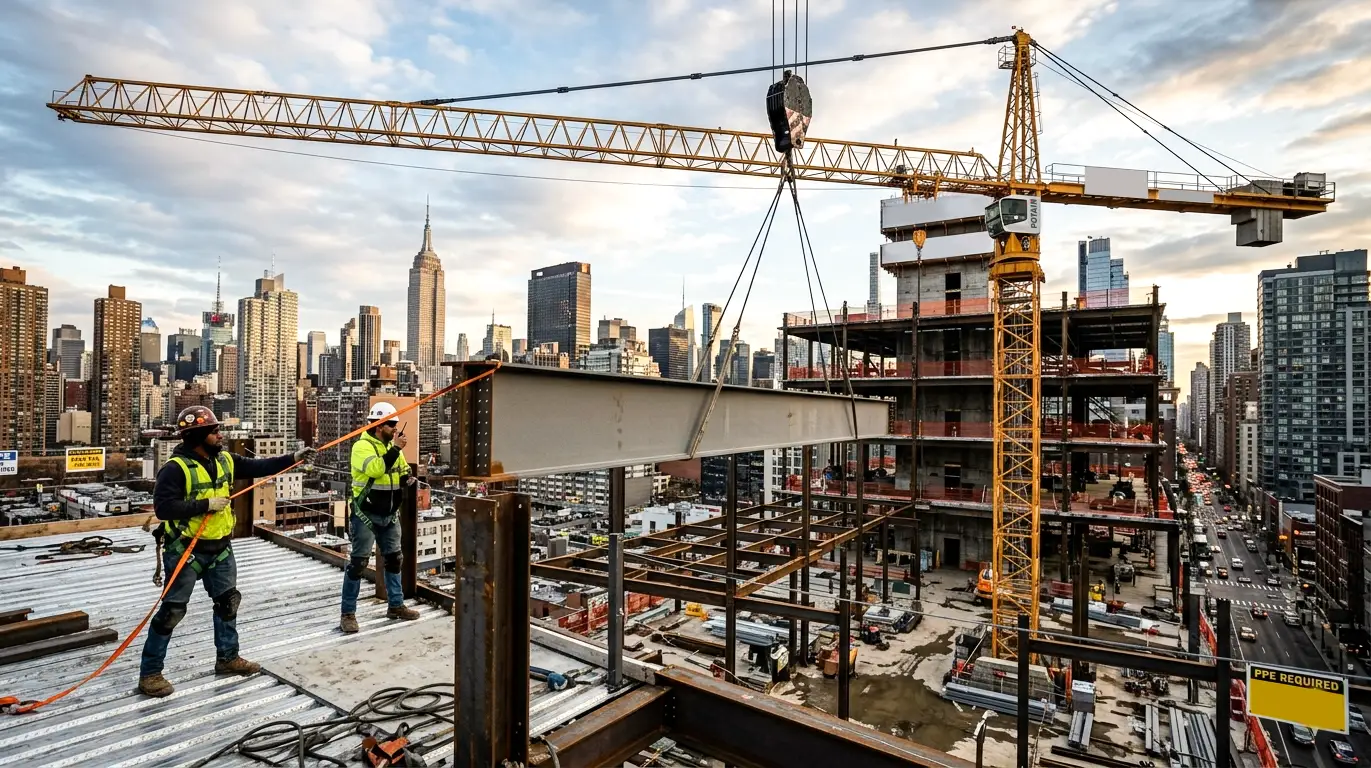
Steel assemblies behave differently from compact concrete loads.
Large trusses and long beams:
- Create swing movement
- Increase dynamic loading
- Become unstable during wind gusts
This becomes a major issue in:
- Coastal projects
- Open industrial corridors
- High-rise steel structures
On a warehouse project in Gujarat, beam installation was repeatedly paused during afternoon wind conditions because the original lifting plan underestimated sway movement at higher radius.
This is why crane planning should always consider:
- Wind exposure
- Lift timing
- Beam orientation during lifting
not just weight calculations.
Choosing the Right Tower Crane for Steel Structure Projects
The correct crane depends on:
What Contractors Usually Evaluate Before Finalizing a Crane
Most steel structure contractors compare:
This is why crane selection for steel projects is usually based on workflow efficiency and lifting stability rather than headline capacity alone.
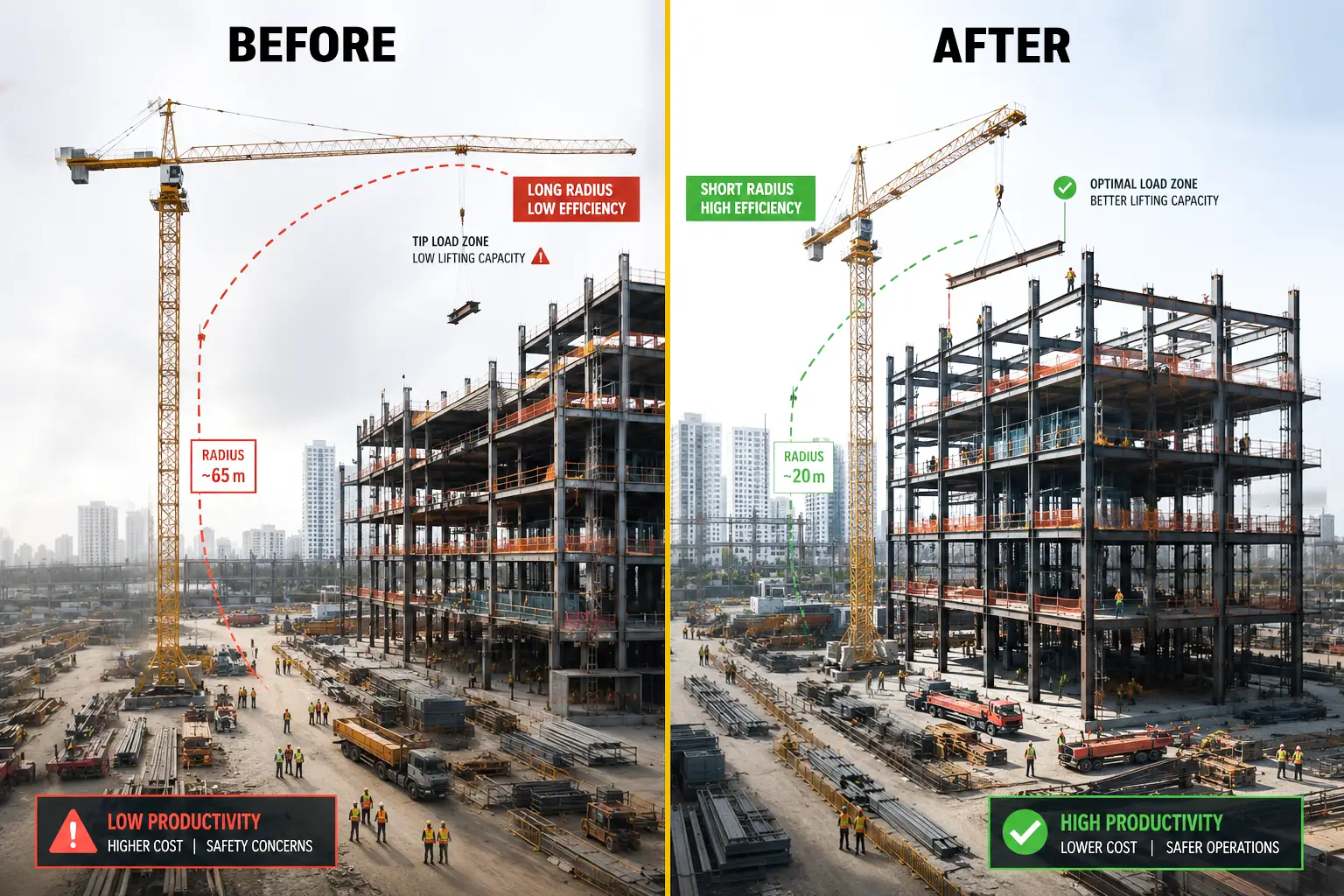
Real Site Scenario: Steel Structure Planning Mistake
Initial Problem:
- Crane placed near material unloading zone
- Beam installation happening beyond 38m radius
- Lifting cycles slowed significantly
Planning Adjustment:
- Crane repositioned closer to erection sequence
- Secondary staging area introduced
- Average working radius reduced
Outcome:
- Faster steel erection
- Reduced crane idle time
- Improved lifting control during beam placement
No additional crane was added.
Only the lifting workflow changed.
Common Mistakes in Steel Structure Crane Planning
These issues rarely look serious during project kickoff, but they become major productivity bottlenecks later.
How Proper Crane Planning Improves Steel Erection Efficiency
When crane deployment aligns with actual erection flow, projects benefit from:
On most steel structure projects, planning improvements alone can significantly reduce lifting inefficiencies without increasing equipment count.
Final Insight
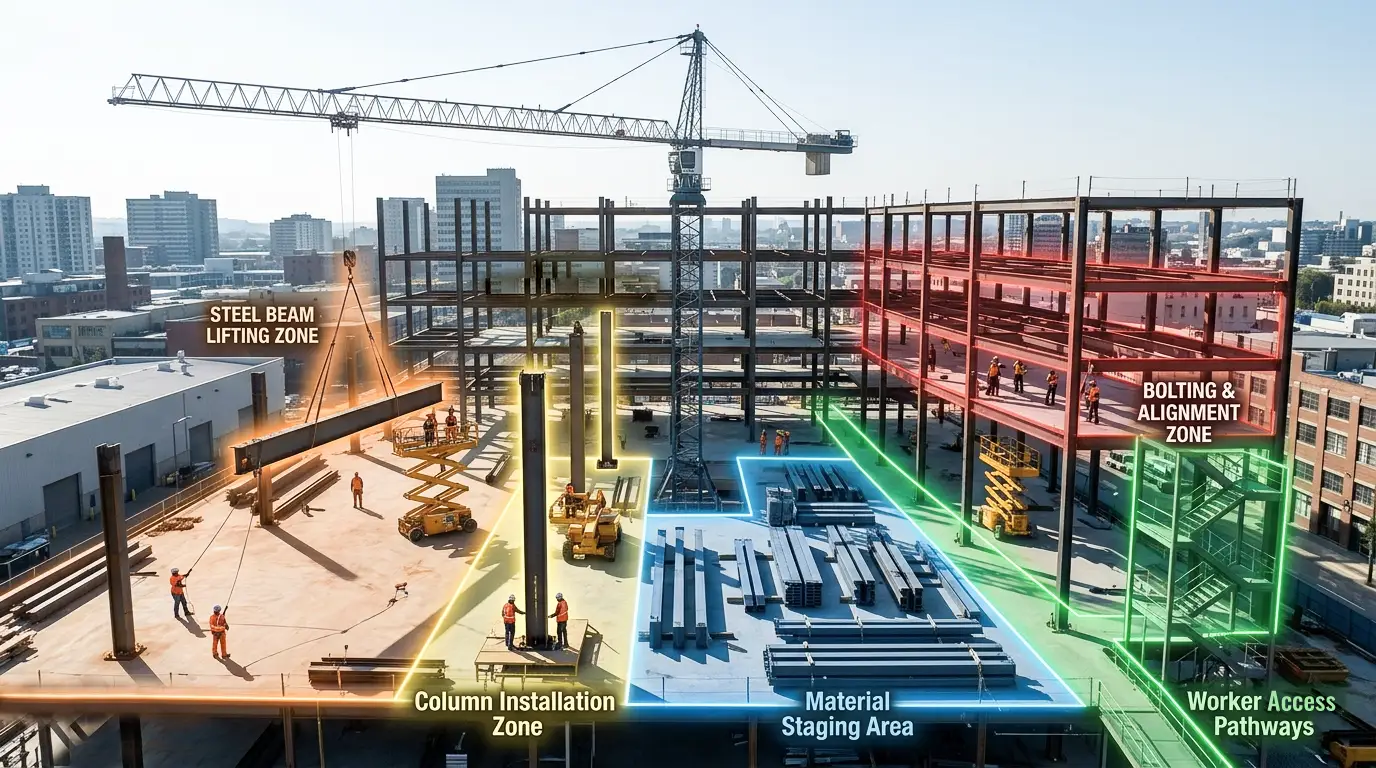
Tower cranes play a central role in steel structure construction, but performance depends far more on planning than on crane size alone.
Projects that focus only on crane capacity often encounter:
- Slower erection cycles
- Long-radius inefficiencies
- Workflow disruptions
Projects that align:
- Crane positioning
- Radius planning
- Erection sequence
- Site movement
…consistently achieve smoother and faster steel installation.
In modern steel construction, crane planning is no longer just an equipment decision. It is a project execution strategy.

