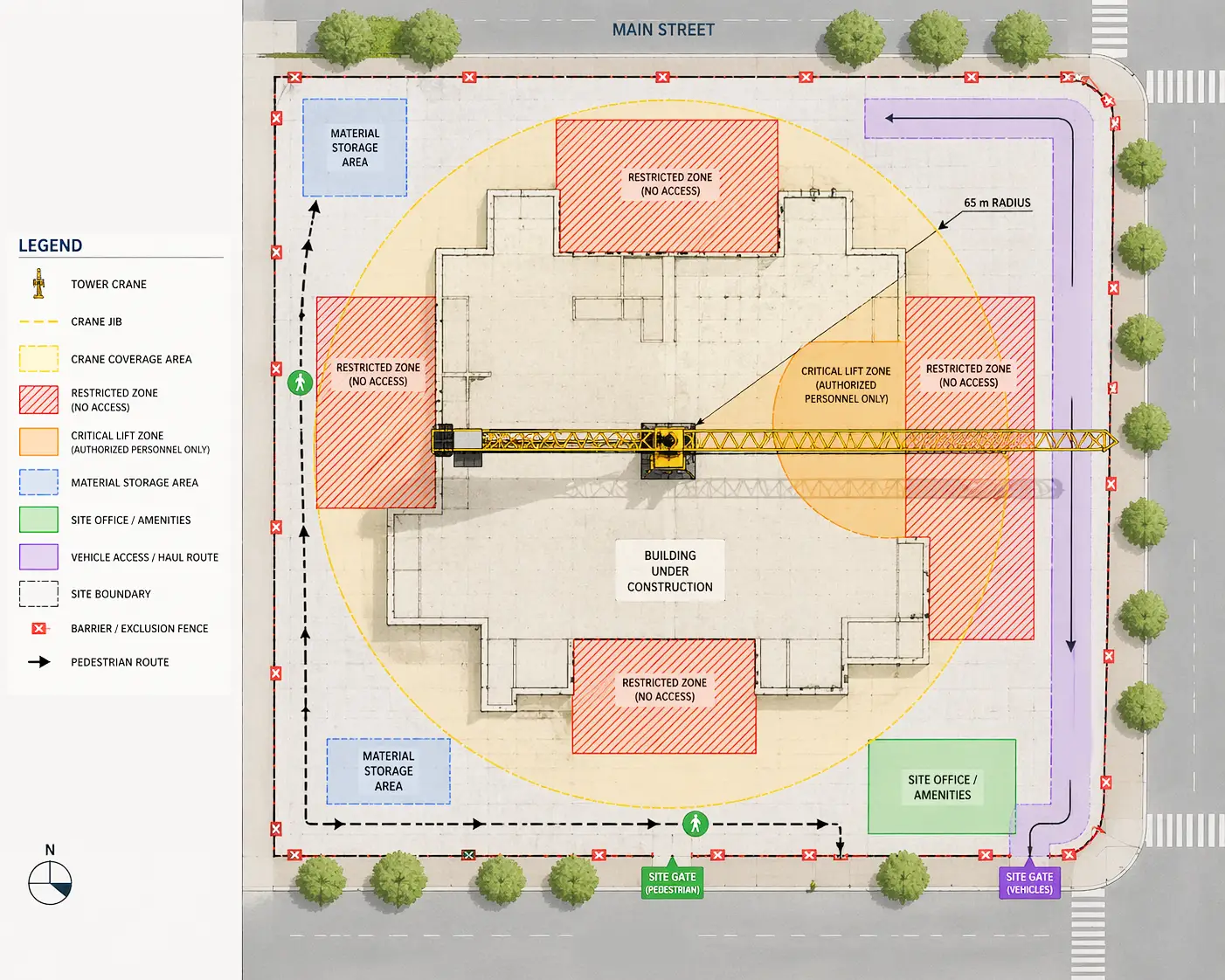
- Restricted site boundary
- No oversailing allowed
- Dense structural layout
Luffing Tower Cranes for Data Centers & Urban Projects 2026
- By Admin
- 27 April 2026
Data center construction and dense urban development projects are no longer defined only by speed, they are defined by constraints.
Limited space, zero oversailing rules, adjacent structures, and strict compliance requirements make crane selection a critical planning decision. In such environments, standard flat-top cranes often fail to meet operational and regulatory requirements.
From multiple project discussions across Noida data center hubs, Mumbai high-rise developments, and Bangalore tech parks, one pattern is clear:
“Luffing tower cranes are not a preference in these projects, they are often a necessity.”
This guide explains when luffing cranes are required, how they are planned, and how project teams use them to manage complex lifting conditions in real construction environments.
When Luffing Tower Cranes Become Mandatory
In many modern construction projects, crane selection is driven by constraints rather than capacity alone.
Luffing tower cranes are typically deployed when:
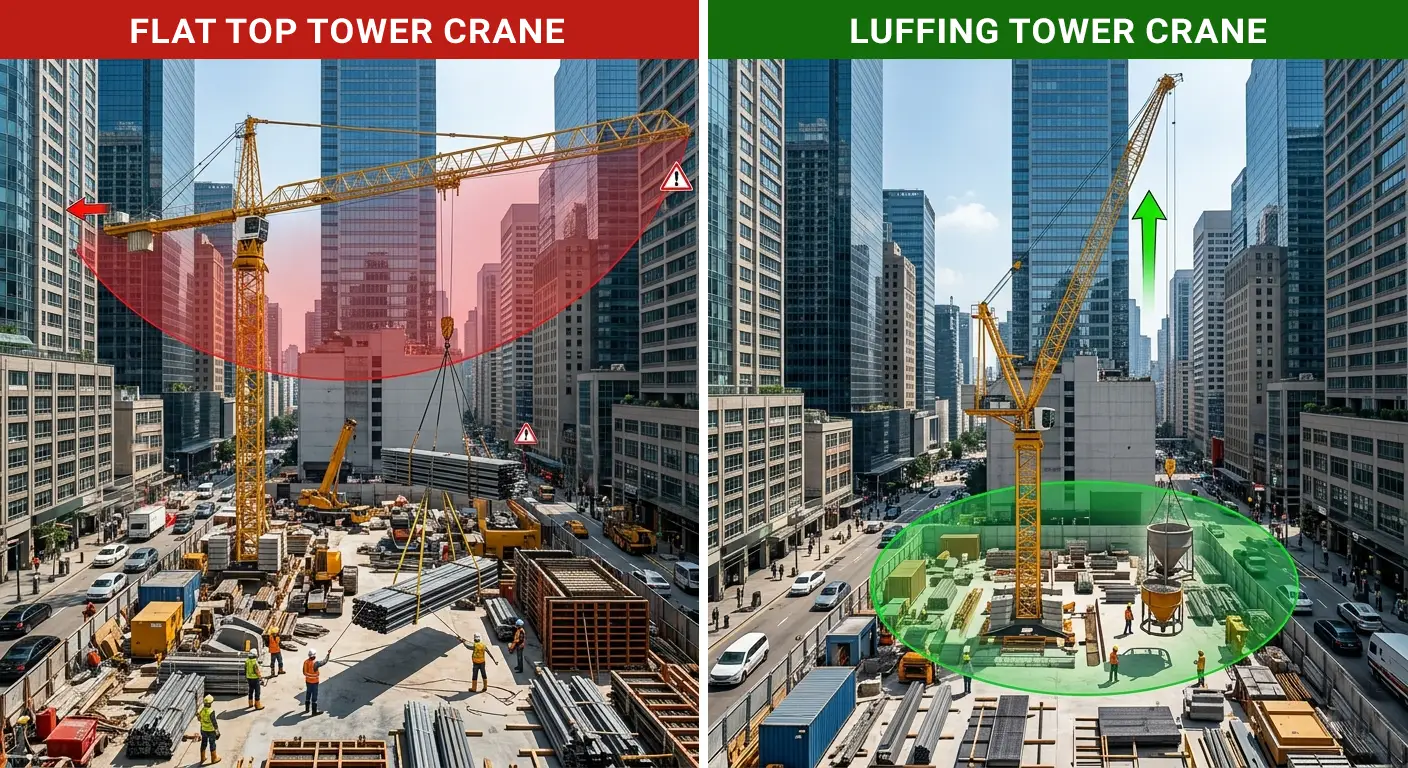
Why Flat-Top Cranes Fail in These Conditions
Many contractors initially plan with flat-top cranes due to familiarity or cost advantages.
However, in constrained projects, this often leads to:
On a Mumbai commercial high-rise project, a contractor had to replace a flat-top crane mid-project due to oversailing restrictions, resulting in both time and cost overruns.
How Luffing Cranes Solve Urban & Data Center Constraints
Luffing tower cranes are designed specifically for controlled lifting environments.
Key Functional Advantages
These features allow project teams to:
- Maintain compliance
- Optimize crane positioning
- Reduce operational risk
Capacity Planning for Data Center Lifting
While constraints drive crane type selection, capacity planning determines performance.
Typical lifting requirements in data center projects include:
Component |
Approx Weight |
Typical Radius |
|---|---|---|
| HVAC Units | 3-6T | 20-30m |
| DG Units | 5-12T | 18-28m |
| Steel Modules | 2-8T | 25-35m |
What Planners Must Evaluate
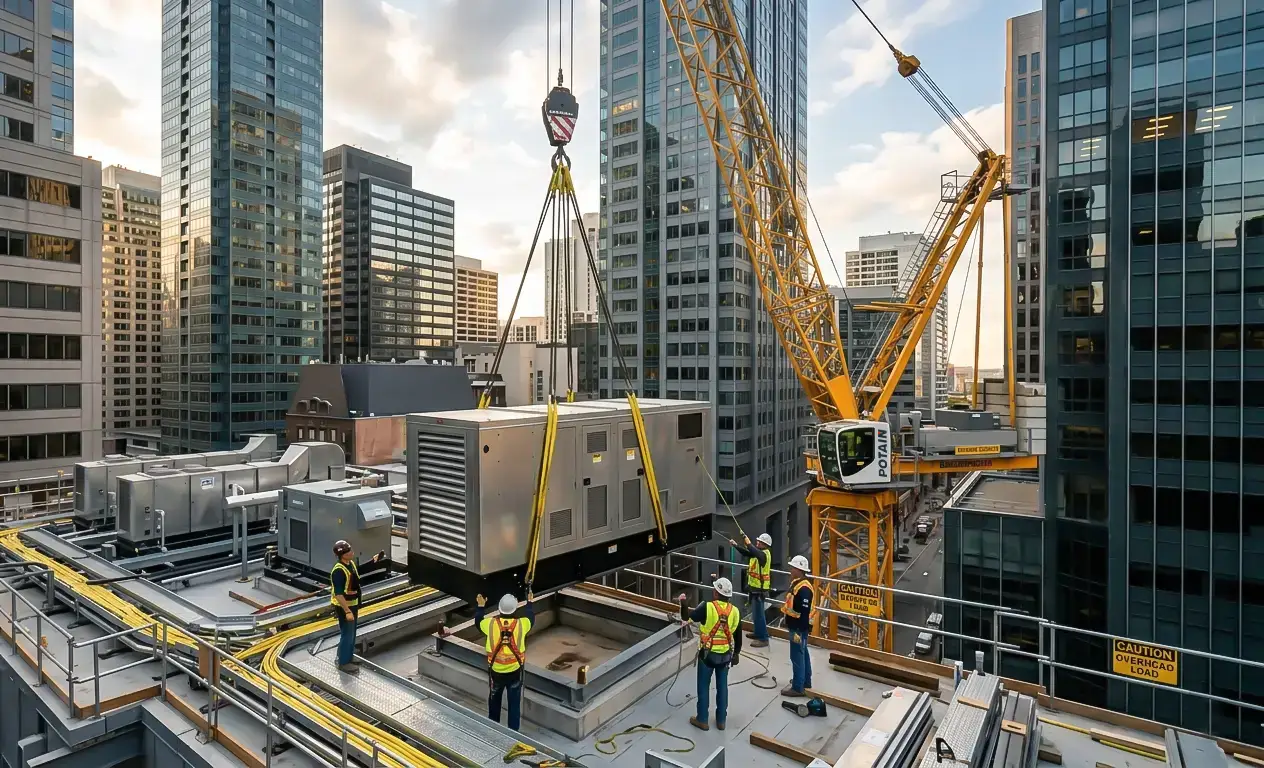
On a Noida data center project, selecting a luffing crane with stronger mid-radius capacity improved lifting efficiency by nearly 22% compared to initial estimates.
Real Site Case: Data Center Deployment (India)
At a large-scale data center project in Noida:
Solution
- Deployment of two luffing cranes
- Optimized boom angles for vertical lifting
- Coordinated lifting zones
Outcome
- Zero compliance violations
- Smooth multi-crane coordination
- Faster installation cycles
This highlights why luffing cranes are becoming standard in high-density infrastructure projects.
Configuration Strategy (Specific to Luffing Cranes)
Unlike flat-top cranes, luffing crane performance depends heavily on boom angle strategy and positioning.
Key Planning Factors
 Boom angle optimization for each lift
- Controlled radius zones
- Crane placement near vertical lifting paths
Instead of maximizing reach, planners focus on:
Minimizing horizontal movement and maximizing vertical efficiency
Cost vs Constraint: The Real Decision Factor
Luffing cranes are often more expensive than flat-top cranes.
However, in constrained environments, they help avoid:
 Project delays
- Compliance penalties
- Reconfiguration costs
- Safety risks
This makes them a cost-efficient choice in high-restriction projects, even if initial investment is higher.
Commercial Insight: How Teams Finalize Crane Selection
In real project scenarios, crane selection follows a clear sequence:
- Define site constraints and restrictions
- Plan lifting zones and crane placement
- Evaluate capacity requirements
Once these parameters are clear, project teams typically review available tower crane options that match both capacity and site conditions, especially when comparing rental and deployment flexibility for urban projects.
In high-density or restricted environments, planners often lean toward luffing crane solutions where controlled movement and compliance are critical to project execution.
When You Should Choose a Luffing Tower Crane
You should strongly consider a luffing crane if your project involves:
In projects with strict oversailing restrictions or limited site access, early crane selection becomes critical. Many delays occur not due to crane availability, but due to late-stage changes in crane type or configuration.
Final Insight: Constraint-Driven Crane Selection
In modern construction, crane selection is no longer just about lifting capacity, it is about site adaptability and compliance.
Luffing tower cranes provide a practical solution for projects where:
Projects that align crane selection with real constraints, rather than assumptions, achieve:

