Generally suitable for:
- Mid-rise residential projects
- Smaller workforce requirements
- Lower daily traffic demand
Advantages include:
- Lower installation cost
- Reduced space requirements
- Simpler deployment
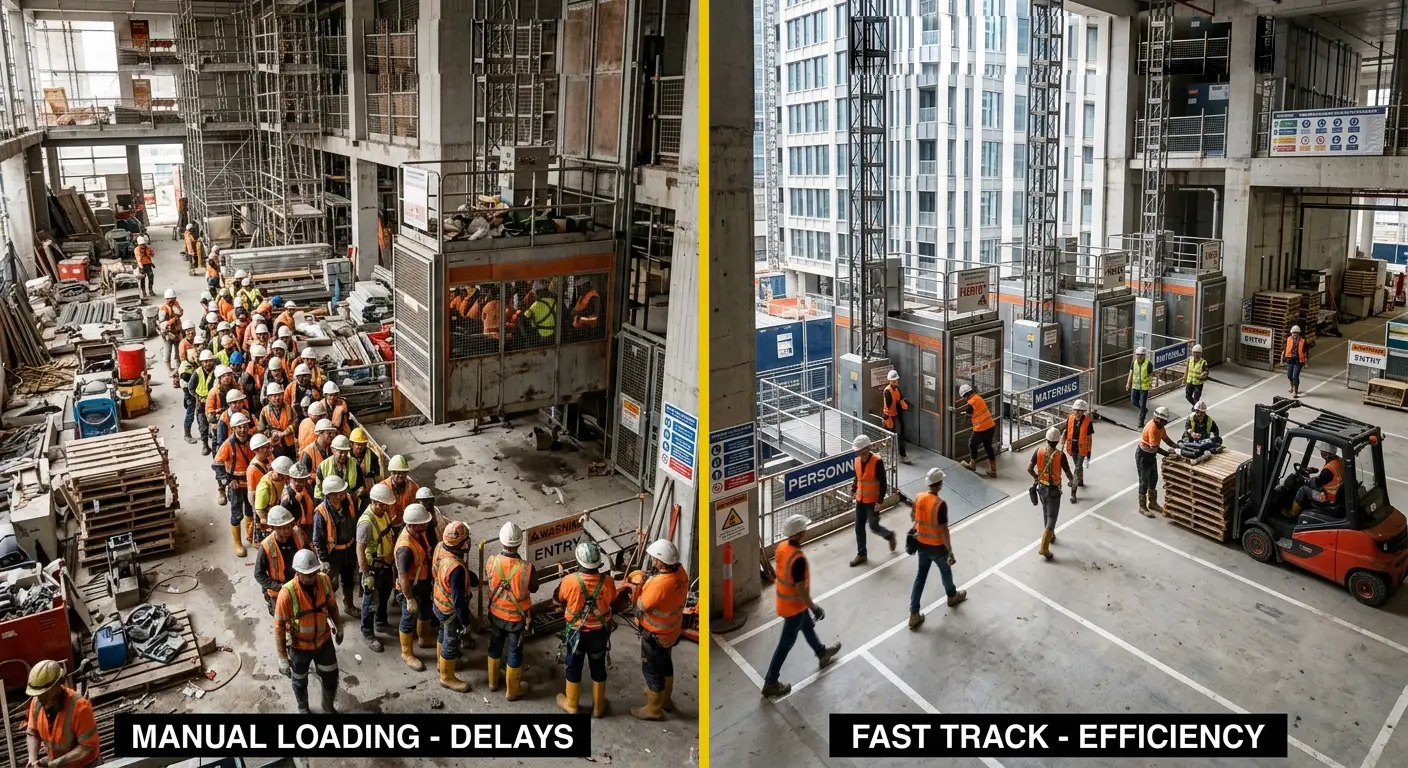
On most high-rise construction projects, managers closely monitor tower crane productivity, concrete cycles, and material availability. Yet one factor often becomes a major bottleneck as buildings rise above 15-20 floors: workforce movement.
By the time a project reaches upper levels, hundreds of workers may be travelling between ground level and active work zones several times a day. Even short delays in vertical transportation can impact productivity, coordination between trades, and daily construction targets.
This is why construction passenger hoists have become a critical planning consideration rather than simply a site access requirement.
From residential towers in Mumbai and Pune to commercial developments in Bangalore and Noida, project teams are increasingly evaluating passenger hoist capacity, cage configuration, and deployment strategy much earlier in the planning process. The objective is simple: keep workers moving efficiently, maintain workflow continuity, and prevent vertical transportation from slowing project progress.
Most projects install passenger hoists during the structural phase, but the real test comes much later.
As buildings rise and more trades become active, vertical transportation demand increases significantly.
Typical challenges include:
 Increased workforce movementMultiple contractors working simultaneouslyLonger travel times to upper floorsShift-change congestionMaterial movement through hoist systems
On a residential tower project in Pune, site supervisors reported that worker queues became a daily issue once the project crossed the twentieth floor. The original hoist selection was based on early construction requirements rather than expected workforce growth. Waiting times increased and productivity across several trades was affected.
The lesson was clear: passenger hoist planning should account for future project phases, not just current site conditions.
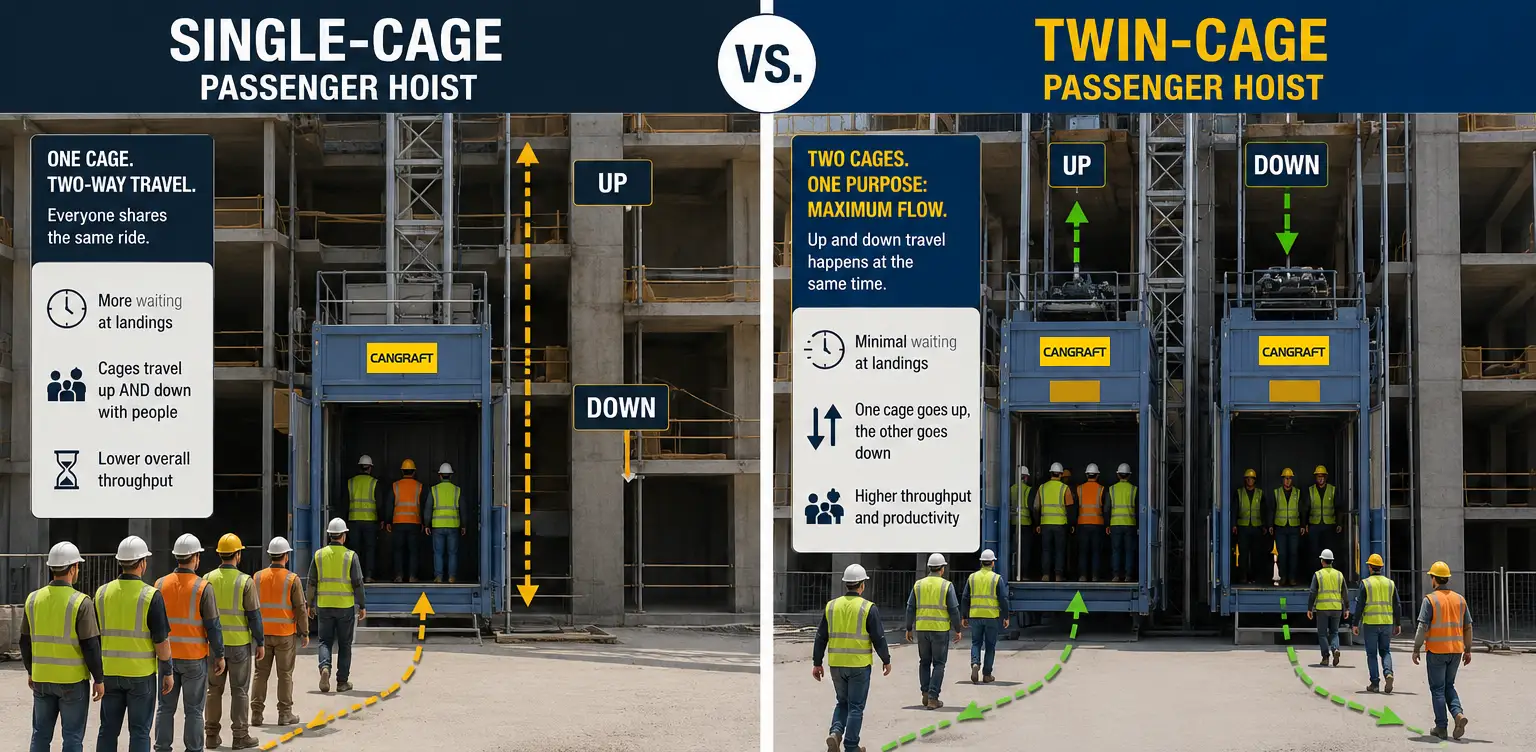
One of the most important planning decisions is selecting the right cage configuration.
Generally suitable for:
Advantages include:
Often preferred for:
Benefits include:
Many high-rise projects adopt twin cage systems not because they require additional lifting capacity, but because they need more efficient workforce movement.
Passenger hoist requirements evolve as the project progresses.
Primary focus:
A standard configuration may be sufficient.
This is where demand usually increases.
Multiple teams begin operating simultaneously:
Travel frequency increases further as testing, inspections, and final installations take place across multiple levels.
Projects that plan for these later stages early generally avoid costly upgrades or deployment changes.
Many contractors ask this question after congestion has already started affecting productivity.
Common indicators include:
On large commercial projects, adding a second hoist often improves site efficiency more effectively than increasing labour strength because workers spend less time waiting and more time working.
Before finalising a rental or purchase decision, project teams typically evaluate:
Projects that assess these factors early usually avoid costly upgrades and deployment changes later in construction.
Passenger hoists should never be planned independently.
They need to integrate with:
Projects that align passenger hoist deployment with overall site logistics generally experience smoother workforce movement and fewer operational bottlenecks.
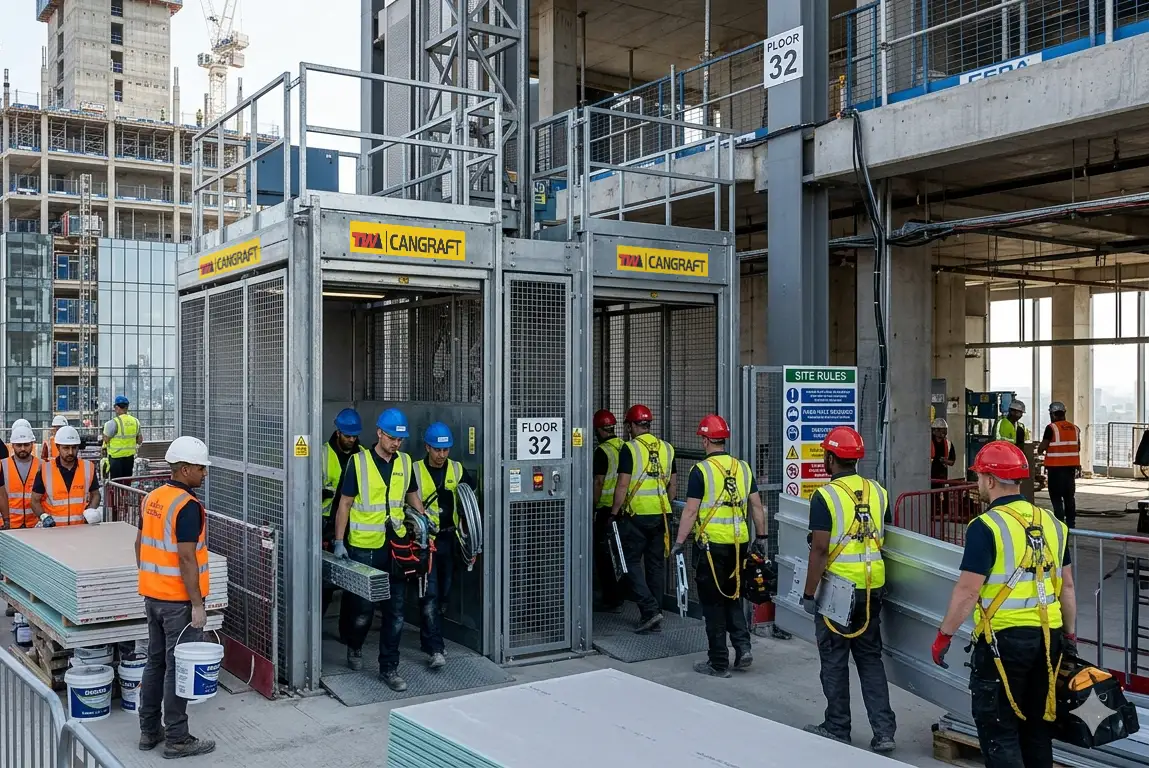
The improvement came from planning capacity around workforce demand rather than simply relying on the original setup.
The decision between renting and purchasing a passenger hoist depends on several project factors.
Rental solutions are often considered for:
Ownership may be more suitable for:

