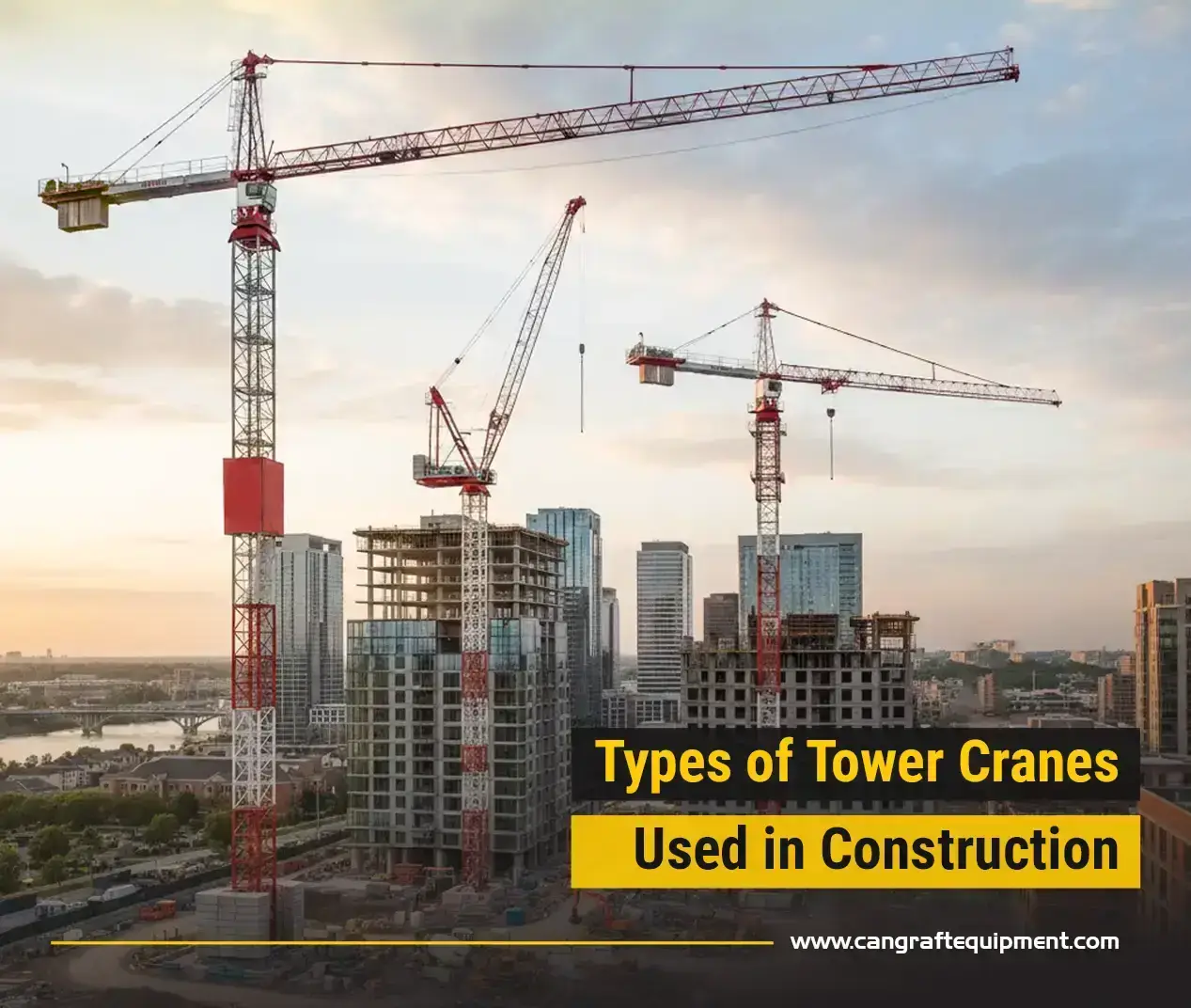
Types of Tower Cranes in Construction | Comparison & Selection Guide
- By Admin
- 31 December 2025
Selecting the right lifting equipment starts with understanding the types of tower cranes available today. Each site from tight urban plots to open industrial yards demands different reach, height, and load capabilities.
This guide walks you through the major crane categories, compares their performance, and offers cost and selection insights to help you make the right choice for your project.
What Are Tower Cranes?
A tower crane is a tall, fixed lifting machine used to lift steel, shuttering, precast slabs, reinforcement, machinery, and concrete buckets on construction sites. They offer high lifting height, strong load capacity, and 360° rotation, making them essential for modern infrastructure.
Types of Tower Cranes
Here are the most widely used types of tower cranes in construction today:
1. Luffing Jib Tower Crane
A crane with a hinged luffing jib that moves up and down instead of trolleying. Ideal for:
- Tight, congested job sites
- Urban construction
- Multi-crane operations where swing radius must be minimized
2. Flat Top Tower Crane
A crane without a tower top or tie bars, reducing assembly time and making multi-crane operation safer. Great for:
- Close-proximity job sites
- Metro rail corridors
- Projects needing fast erection or dismantling
3. Self-Erecting / Mobile Tower Crane
A transportable crane that unfolds hydraulically and needs minimal setup. Best for:
- Small to medium-sized sites
- Rapid deployment
- Projects with frequent shifts in location
4. Hammerhead Tower Crane
A classic equipment with a horizontal jib that moves loads using a trolley mechanism. Best for:
- Open construction sites
- High-speed material handling
- Projects with predictable load movement
If you want models and technical data, explore Hammerhead Tower Cranes
Hammerhead vs Luffing Crane
Users searching this comparison want clarity about space, lifting, speed, and suitability.
Feature |
Hammerhead |
Luffing |
|---|---|---|
| Space Required | Large swing radius | Minimal swing radius |
| Ideal For | Open sites | Congested urban sites |
| Load Movement | Horizontal trolley | Up-down luffing |
| Wind Handling | Stable | Excellent for windy zones |
| Setup | Faster | Slightly complex |
Flat Top vs Luffing Crane
This comparison helps users understand practical advantages:
Feature |
Flat Top Crane |
Luffing Crane |
|---|---|---|
| Tower Top | No top → easy assembly | Has a minimal top section |
| Multi-Crane Sites | Excellent | Good but requires planning |
| Ideal For | Metro, bridges, mid-rise | Dense urban high-rise |
| Wind Resistance | Good | Very strong |
| Swing Radius | Medium | Very small |
Cost of Tower Crane in India
Users searching this want a realistic cost bracket before enquiring.
Approx Tower Crane Prices (India, 2025) -

Hammerhead Crane:
₹45 lakh - ₹2.5 croreLuffing Crane:
₹80 lakh - ₹3.5 croreFlat Top Crane:
₹55 lakh - ₹3 croreSelf-Erecting/Mobile Crane:
₹35 lakh - ₹90 lakh
Rental Prices (Monthly) -
- 5-10 ton: ₹1.5-3 lakh/month
- 12-25 ton: ₹3-7 lakh/month
Tower Crane in Construction - Applications
Tower cranes are used for:
Their usage ensures faster material movement, lower labor cost, and improved safety.
Which Tower Crane Is Best?
There is no single “best” crane, it depends on the site constraints and lifting needs.
Best Crane by Scenario:
 Open site, high lifting speed → Hammerhead
- Urban congested project → Luffing
- Metro, rapid jobs, multi-crane setup → Flat Top
- Small, quick-shift sites → Self-Erecting

