
Even if a crane can lift a 5-tonne load, it may still be unsuitable for your project. This is often due to the radius at which the lift will occur. In general, cranes have a reduced capacity at the end of their boom.
Potain tower cranes (top slewing/self-erecting) come in a variety of models to suit the lifting requirements of your project. To choose the right crane for your site, you should consider the capacity chart, tip capacity, boom length, hook height, mast design, foundations, and access for installation. The brand alone is not sufficient to select the correct crane. 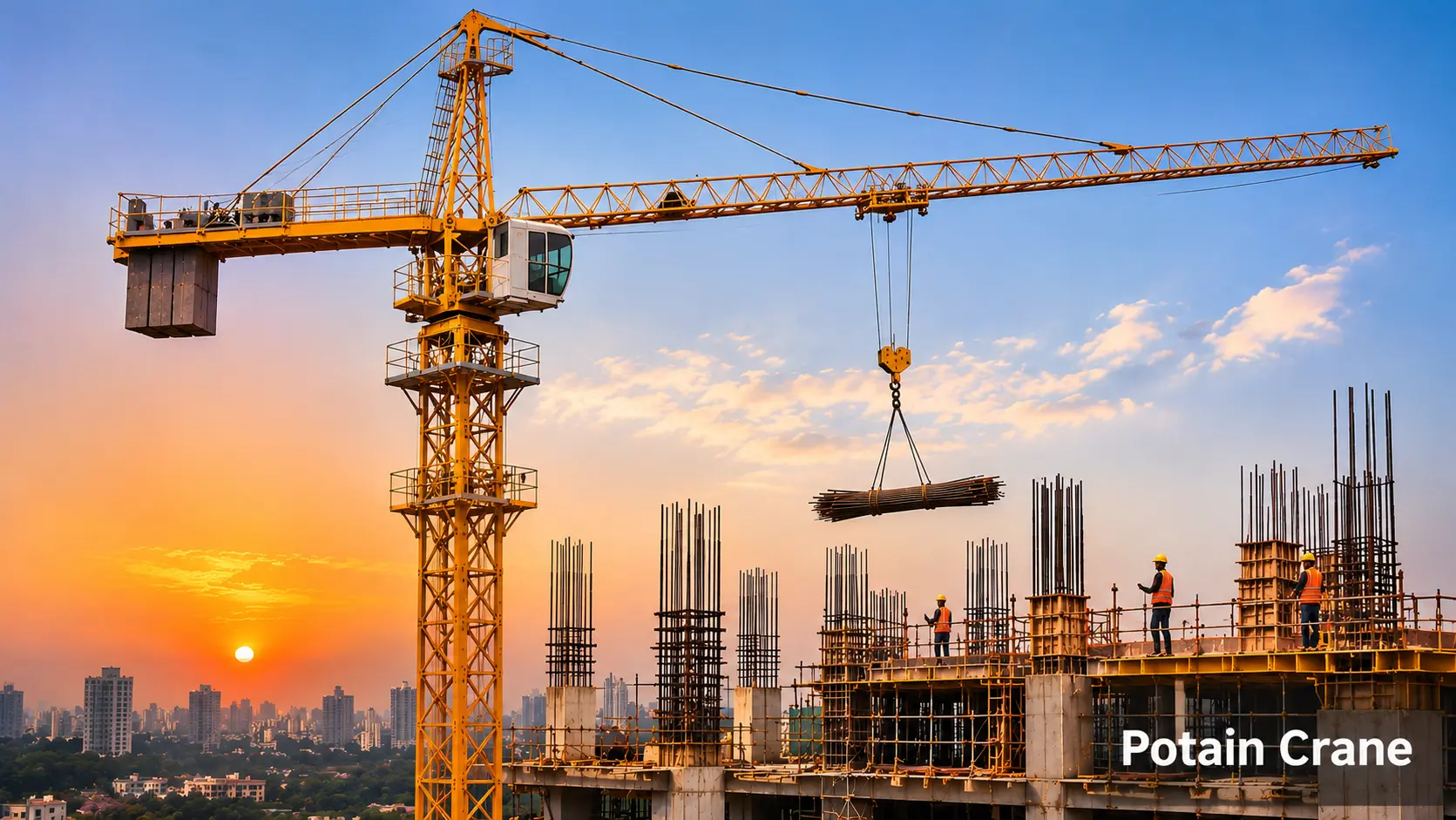
Which Potain Tower Crane Model Family Fits Your Project?
Depending on your project requirements, there are several different model families to consider within this brand. Consider which model family can carry out the required lifts, given height constraints and site layout. Refer to the manufacturer's catalogues to identify the exact model and setup.
For projects in India, MCT cranes may be suitable. From Manitowoc’s case study, the MCT 85 is capable of lifting to a maximum capacity of 5 tonnes, with a 52 m boom with a tip capacity of 1.1 T. The MCT 205 (from launch information) is capable of lifting up to 10 tonnes with a 65 m boom, with a tip capacity of 1.75 T. This data is taken from published examples and may differ between different models.
With luffing boom Potain tower cranes, consider the overall working area and stowed position. Luffing boom cranes allow for the boom to be lifted and lowered to alter the radius of operation. This may be beneficial in situations where horizontal booms cause issues with overhanging.
See the comparison between luffing and hammerhead cranes below:
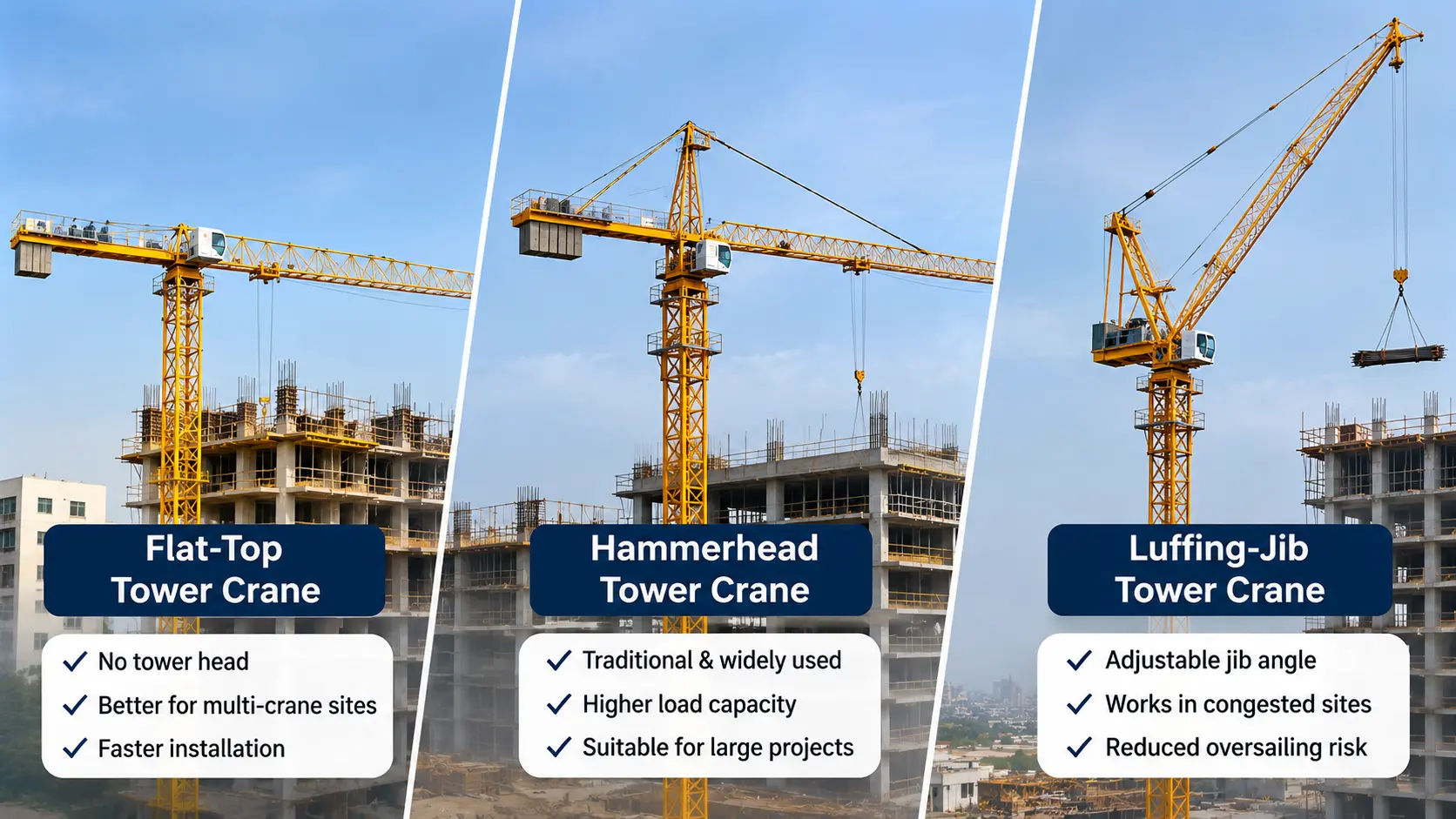
For a closer look at the operational differences, read our luffing crane vs hammerhead crane comparison
How Should You Read Potain Tower Crane Specifications?
Consider the capacity chart. The maximum capacity represents the highest lifting capacity for a certain setup. The tip capacity indicates the maximum weight that can be lifted at the end of the boom.
The working capacity will vary depending on several factors, including radius, boom type, mast design and working conditions. Therefore, when considering the suitability of the crane, ensure that the exact capacity chart for this crane is considered.
This information is taken from published data from Manitowoc regarding these cranes. To ensure accuracy in planning, ensure that the variant- and serial-number-specific documentation has been accessed for the crane proposed for your project.
- Radius: Is it capable of lifting at the correct pickup and delivery points?
- Tip capacity: What can be lifted at the furthest required radius?
- Hook height: Final height of the building and clearance.
- Mast & Anchors: Ensure mast size, anchor design, and foundations are compatible.
- Hoisting system: Consider reeving, speeds, power source, and correct capacity chart.
In Pune, if reinforcing bars are to be lifted from a yard to a core a few storeys above, the lifting may be simple around the mast but challenging at the outer edge of the boom.
Ensure that the capacity at this radius is considered, not just the overall 5-tonne capacity.
Does Your Construction Site Change Which Potain Crane You Need?
It can. Even if two buildings are the same height, differences in site layout, surrounding buildings, required lifting routes, and setup access may mean that different cranes are more suitable. Consider site layout to narrow down the most suitable model(s). This is especially important if multiple cranes are being used or climbing internally.
At Godrej Forest Grove, Mamurdi, close to Pune, 14 residential towers used 14 Potain cranes. They used internal climbers and had a final hook height of approximately 70-80 m. Each crane had a boom length of 25-30 m. Therefore, even though they had a short boom, this was by design due to them being internal climbers.
Crane & Transit Considerations
In a busy commercial site in Central Pune, nearby buildings may prevent full rotation of a horizontal boom. Consider luffing booms. However, ensure that overhang permissions, crane height, anchors, working areas, and stowed position are all considered.
If there are multiple cranes, consider marking out boom routes, counter boom clearances, stages in internal climbing, rotation areas, and communication methods.
Never allow ‘just one more lift’ to be the coordination plan.
Should You Rent or Buy a Used Potain Tower Crane?
Depending on the project, hiring a crane may be more suitable. If the contractor does not want to hold an asset for a long time, renting is a good option. However, if projects are repeated and there is established maintenance, second-hand equipment may be suitable. Be sure to ensure that the crane meets the required specifications, is in good condition, has appropriate documentation, and that the required parts are available.
There is no set price for Potain Tower Cranes in India. The price will depend on the model, capacity, boom type, age, condition, mast section, accessories, transit, set up, internal climbing, and service requirements.
See our Tower Crane Pricing Guide (India).

If hiring a crane, ensure you know what is included in the price. Inclusions may include setup, internal climbing, operator organization, regular maintenance, breakdown assistance, and dismantling. Despite a low monthly price, costs could increase significantly if key elements are not included.
When purchasing second-hand cranes, ask:
- Model, Serial Number, Year, Specification.
- Handbooks, Latest Capacity Chart, Inspection History & Maintenance History.
- Mast Section, Bolts, Anchoring Frames & Internal Climbing Equipment—are they in good condition and compatible?
- Competent people should inspect the hoist, trolley, rotation, brakes, ropes, limits, and structure.
- Safety features, for example SLI and the required anti-collision system, are in good condition.
- Clearly defined responsibilities for refurbishing, spares, transit, and installation.
Depending on the model and project availability, we can advise on second-hand and rental requirements. See our second-hand tower crane options and our tower crane sales and rentals for further details. Contact us for more information.
What Should Site Teams Check Before Crane Mobilization?
Before the crane arrives, check foundation design, ground bearing capacity, erection and dismantling space, electrical supply, access, lift planning, and crane clearances. These points require coordination between the contractor, structural engineer, crane supplier, and site safety team.
Rule 80 of India's Building and Other Construction Workers' Central Rules, 1998, addresses trained operators, adequate ground bearing capacity, firm and level bases, safe erection space, clearances, and communication where multiple tower cranes operate. Confirm the applicable legal requirements for the project's jurisdiction. 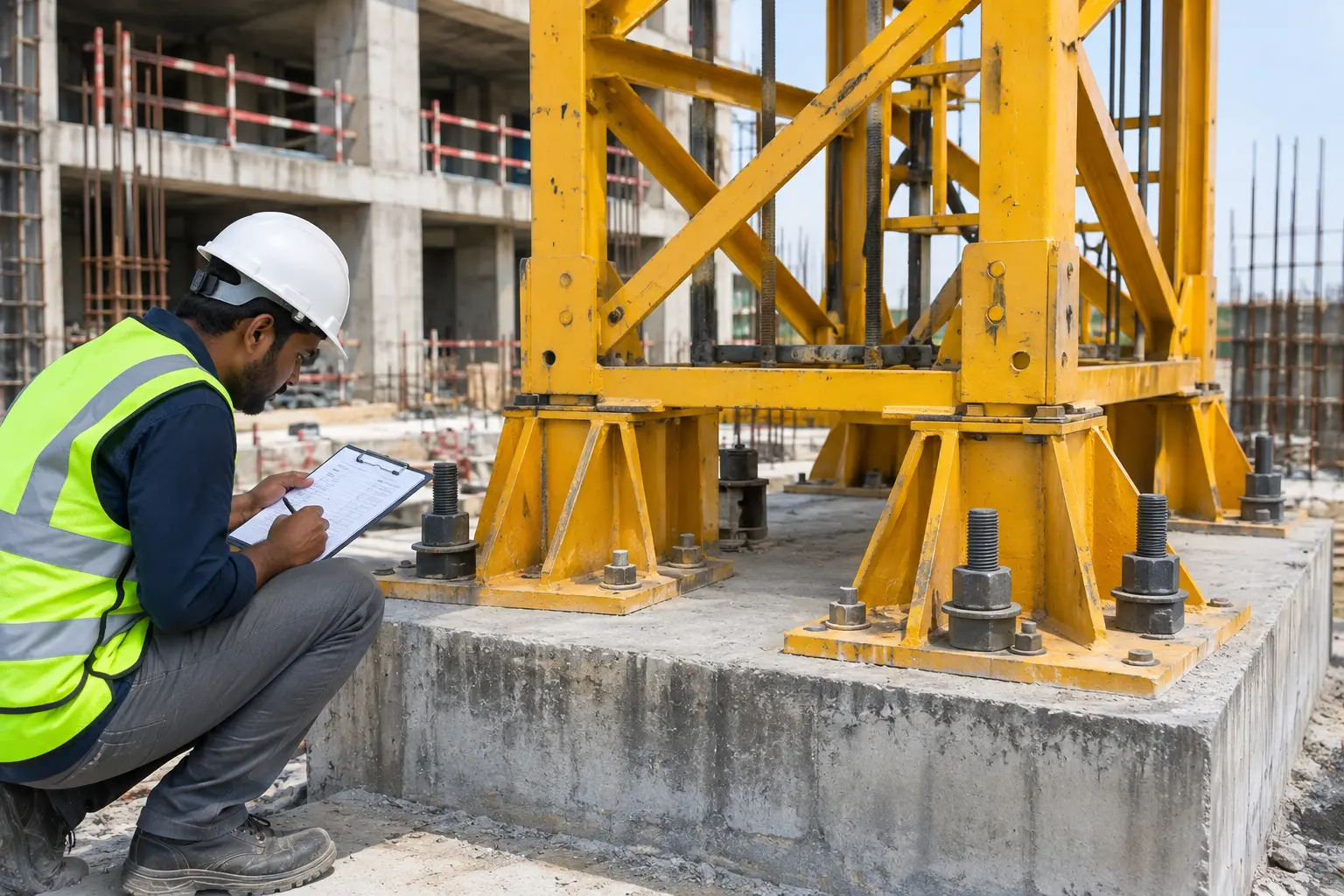
For a Potain tower crane in Pune, monsoon mobilization deserves particular attention. Check drainage around the foundation, transporter access, exposed electrical connections, water accumulation, and stored components. Recheck the crane and foundation after significant site changes, following the manufacturer's instructions and the site's inspection procedure.
Keep foundation and tie-in approvals, manufacturer documents, current load charts, inspection records, erection method statements, competency records, and emergency arrangements in the site file.
Key Takeaways
Select by load chart and tip capacity, not maximum capacity alone.
Compare the exact model, jib, mast and climbing configuration.
Check site footprint, neighbouring structures and crane overlap.
Verify records and physical condition before buying used equipment.
Include erection, maintenance, transport and safety systems in rental comparisons.
A Potain tower crane should fit the lift plan, rather than force the site team to redesign every lift around the machine.
For Potain rental or used-equipment enquiries, contact Cangraft Equipment Pvt. Ltd. on +91 88004 95428 or send your project requirements. Cangraft is based in Pune and supports crane rental enquiries across India.

