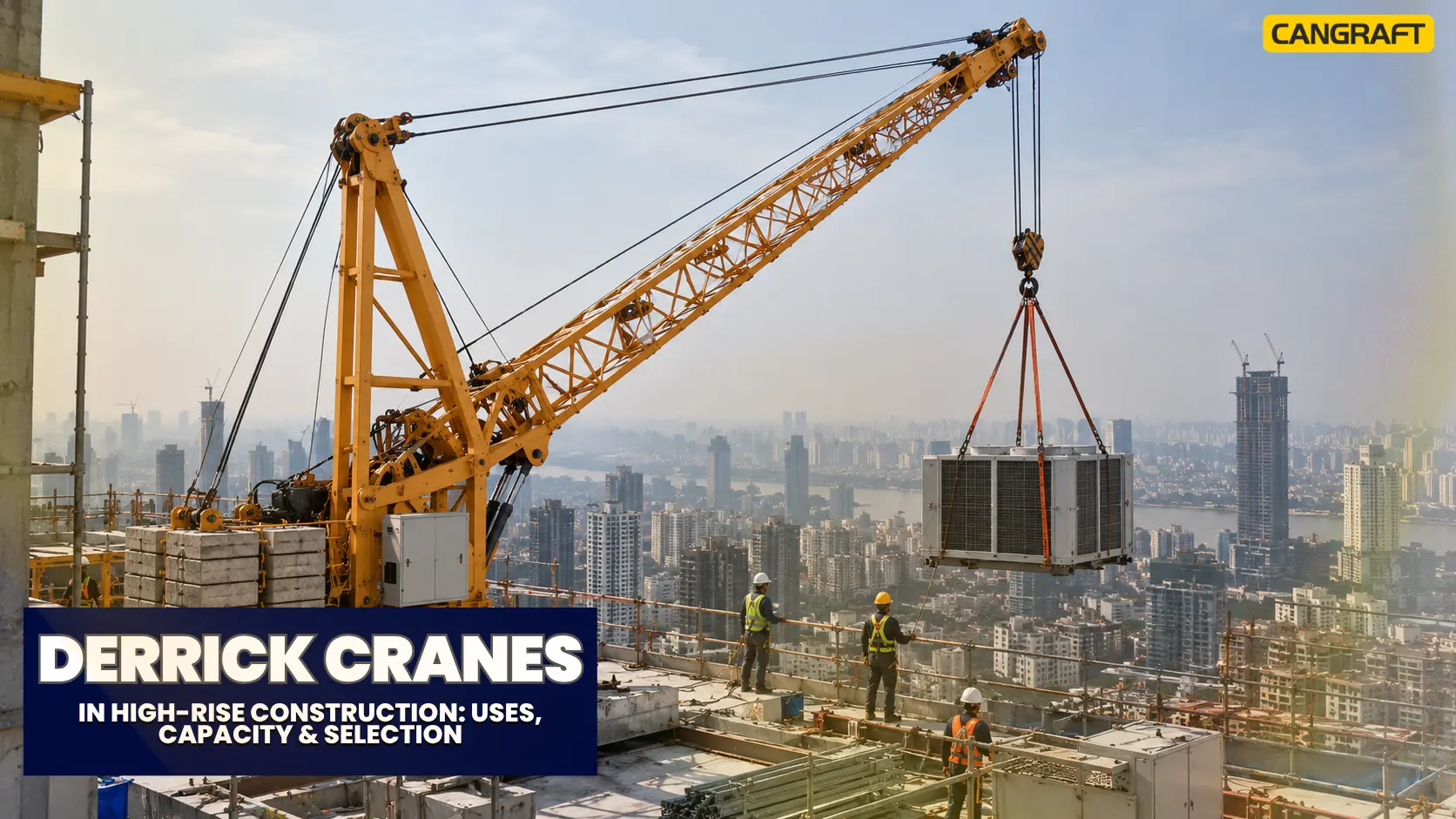
Not every construction project can rely on a conventional tower crane until the final stage.
On high-rise buildings, most of the challenging operations come into play when the main structure is complete and rooftop equipment and structural components still need to be installed. Also, to take down the main crane.
This is where derrick cranes become an important part of the construction planning.
A Derrick Crane is a specialized lifting machine that works well on rooftops and in tight spaces where standard cranes won't fit.
However, choosing the right derrick crane requires careful planning. The decision must be made based on its load weight, working range, installation location, supporting structure, and safety limits.
Understanding these factors helps contractors, developers, and project planners determine whether a derrick crane meets their construction requirements. This guide explains how derrick cranes work in simple terms.
What is a Derrick Crane?
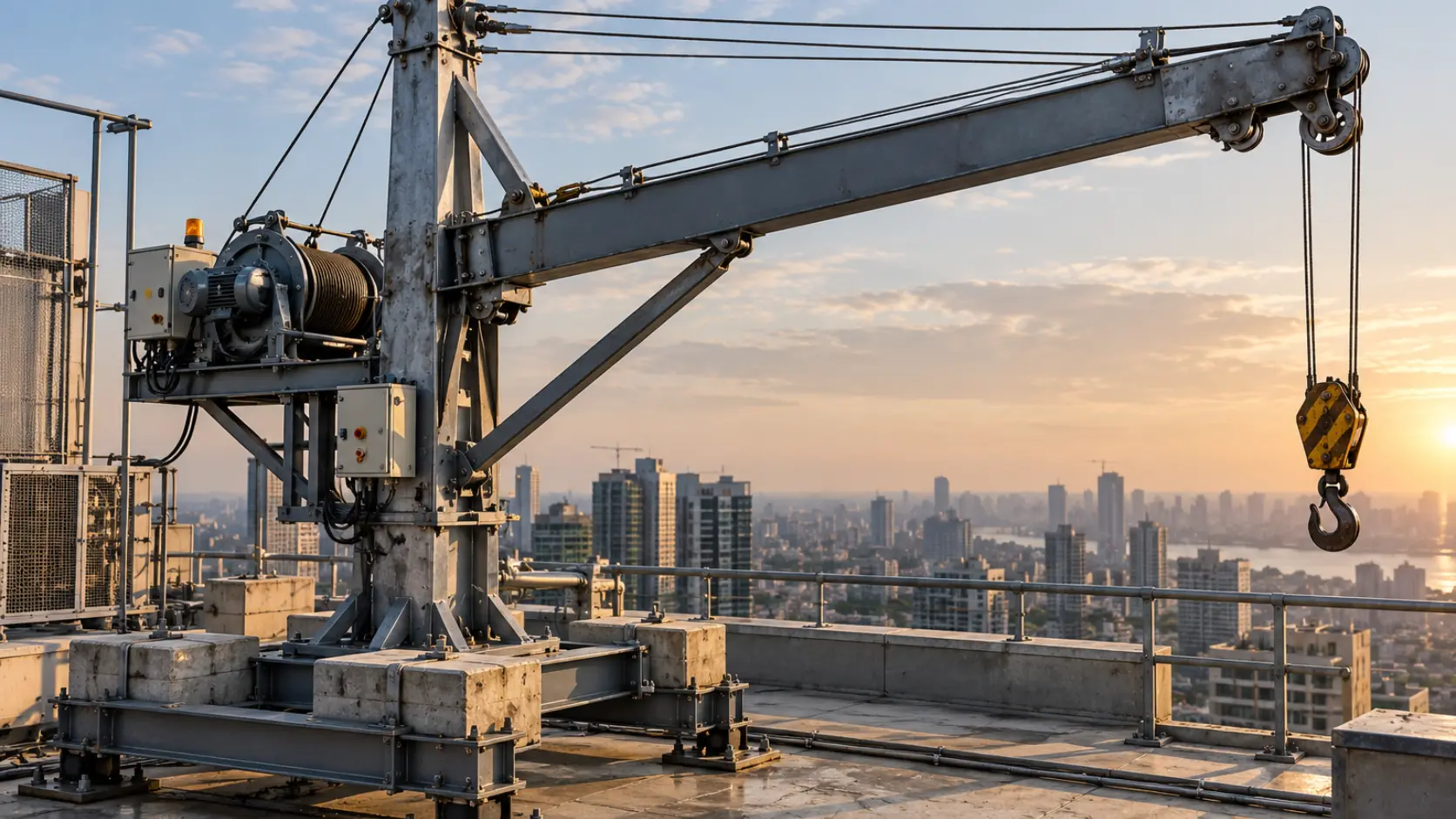 A derrick crane is a lifting machine that uses a moving arm (boom) connected to a fixed frame or mast or another engineered support arrangement, depending on its design.
It lifts items straight up and moves them across a set area. Different derrick crane designs have different structural arrangements, operating limits, and installation requirements.
In construction, Derrick cranes are particularly relevant when it comes to rooftop lifting, high–rise crane dismantling, and industrial projects where mobile ground cranes cannot reach the spot.
Unlike a mobile crane, which generally requires a suitable ground-level setup location. A derrick crane can be installed directly on a strong roof frame.
The key advantage is not that a derrick crane replaces every other crane. It is that it can provide a practical lifting arrangement when access, installation space, or structural constraints make other options difficult.
Where are Derrick Cranes Used?
Derrick crane applications depend on the crane configuration, rated capacity, working range, and installation conditions.
Common uses include:
- Tower crane dismantling: Taking down large cranes from high-rise tops.
- Rooftop lifts: Moving AC units and steel beams to roof levels
- High-rise work: Lifting materials where street space is tight.
- Building extensions: Lifting selected materials during rooftop redevelopment and structural modifications.
- Plant repairs: Moving machines inside crowded factories.
Engineers must review each application before choosing a crane for a project-specific lifting assessment.
1. Tower Crane Dismantling at Height
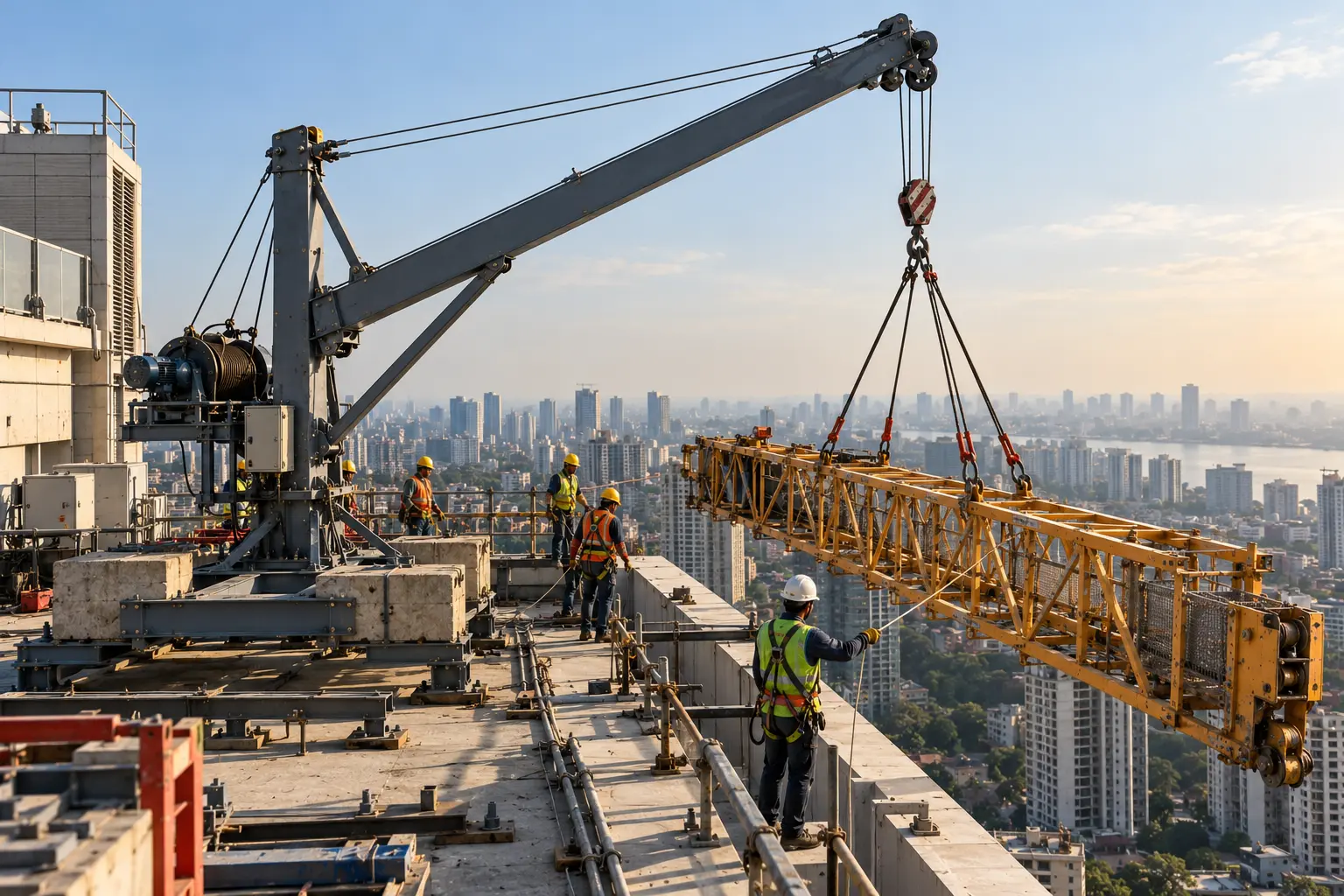
One of the most recognized uses of derrick cranes is taking down tower cranes on tall buildings.
When a tower crane completes its work on a high-rise building, the project team must determine how its components will be removed safely. Mobile ground cranes may not reach that high or fit on narrow streets below.
In certain situations, a derrick crane can provide an alternative dismantling arrangement
The project team must check:
- Tower crane size and removal steps.
- Weight of each heavy part
- Derrick crane lifting limits at full reach
- Roof space and support strength
- Safe lowering path to the ground
Workers must follow strict safety steps approved by engineers. Planning this removal early prevents delays near the end of the project.
2. Rooftop Material and Equipment Lifting
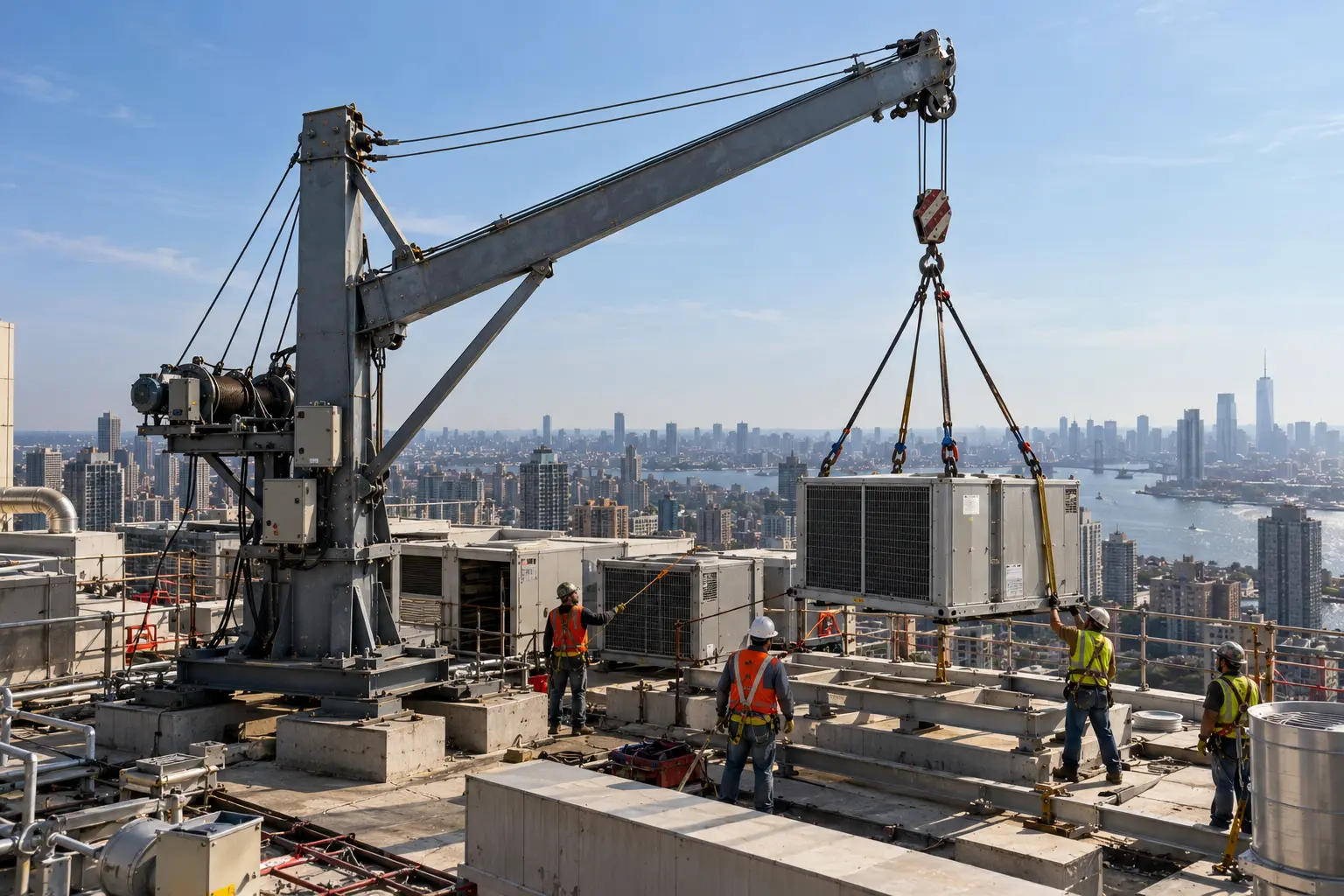
Rooftop work often continues after the main building structure has reached its planned height. Air -conditioning systems, ventilation equipment, steel supports, maintenance platforms, and other mechanical components may still need to be installed.
A rooftop derrick crane handles these lifts when ground access is blocked.
Typical lifting requirements may include:
- HVAC and ventilation equipment
- Steel Beams and Supports
- Roof plant machinery
- Extension materials
- Repair tools and supplies
Planners aligned the crane with available roof space. The roof structure must support the added weight. Standard roofs cannot carry crane loads without extra support. Structural engineers must check and approve the setup.
The feasibility of a rooftop derrick crane therefore depends on both its lifting performance and the building’s ability to support the proposed installation. So, using a rooftop derrick crane depends on both its lifting power and the building’s support capacity.
3. Urban Construction Sites with Restricted Access
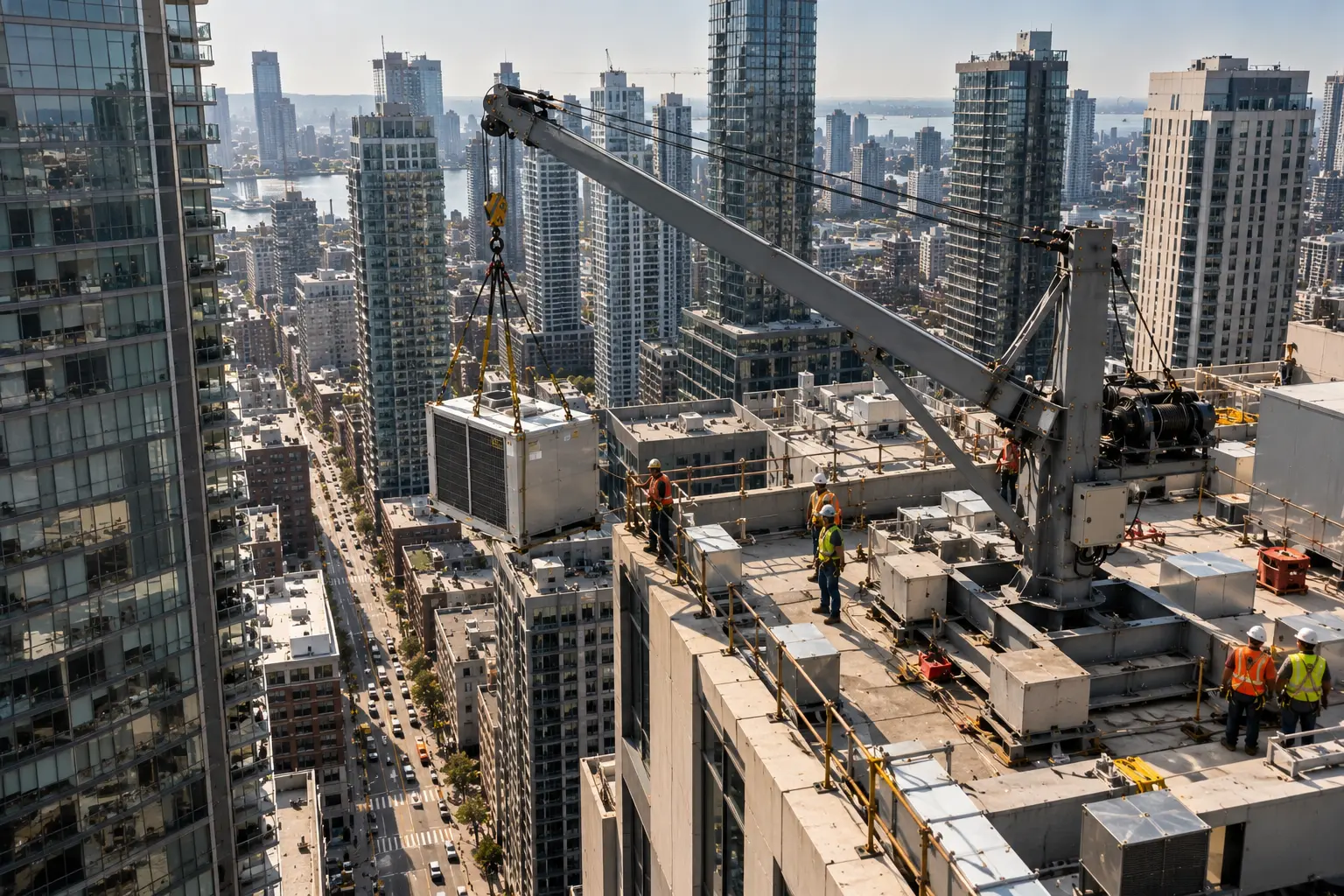
Dense urban construction projects can present significant equipment access challenges—neighboring buildings, Narrow roads, and small yards stop big ground cranes from setting up.
In these situations, Derrick cranes may be worth evaluating for specialized lifting operations.They help on sites with:
- Roofs surrounded by high-rises
- Restricted renovation spaces
- Parts brought up in small pieces
- Building add-on
High lifting points with zero ground access
A compact frame solves access limits. You still need proper power, clearance, and solid support. When mobile cranes cannot set up on a street, a roof derrick offers a practical path forward.
The important question is not whether a Derrick crane is inherently better. It is whether its configuration fits the actual limitations of the site.
4. Industrial Maintenance and Shutdown Projects
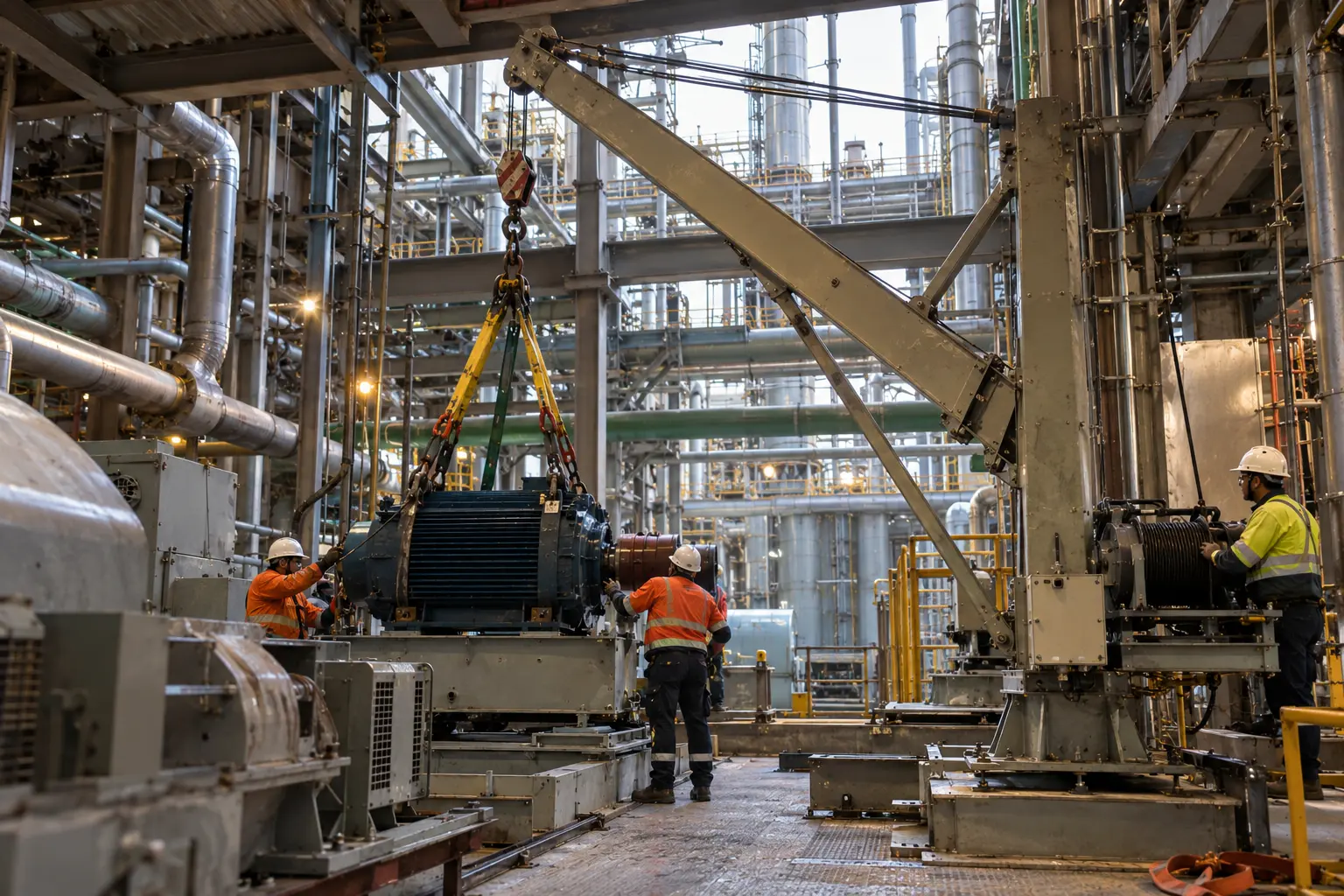
Industrial plants often need new machines or structural fixes in spots blocked by existing structures.
During planned shutdowns, machinery and structural components may need to be removed or repositioned within a limited operating area.
Depending on the lifting requirements, derrick cranes can be evaluated for selected industrial maintenance operations.
Potential applications include:
- Replacing machinery in hard-to-reach areas
- Handling plant maintenance lifts.
- Moving structural beams during plant upgrades.
- Setting up equipment during facility shutdowns.
- Lifting items in elevated, narrow locations
In these projects, crane selection must account for available headroom, working range, component dimensions, load movement, and the space needed for installation and dismantling.
A derrick crane is not automatically suitable for every industrial lift; its operating limits and support requirements must be assessed for the specific job.
5. Building Additions and Rooftop Renovations
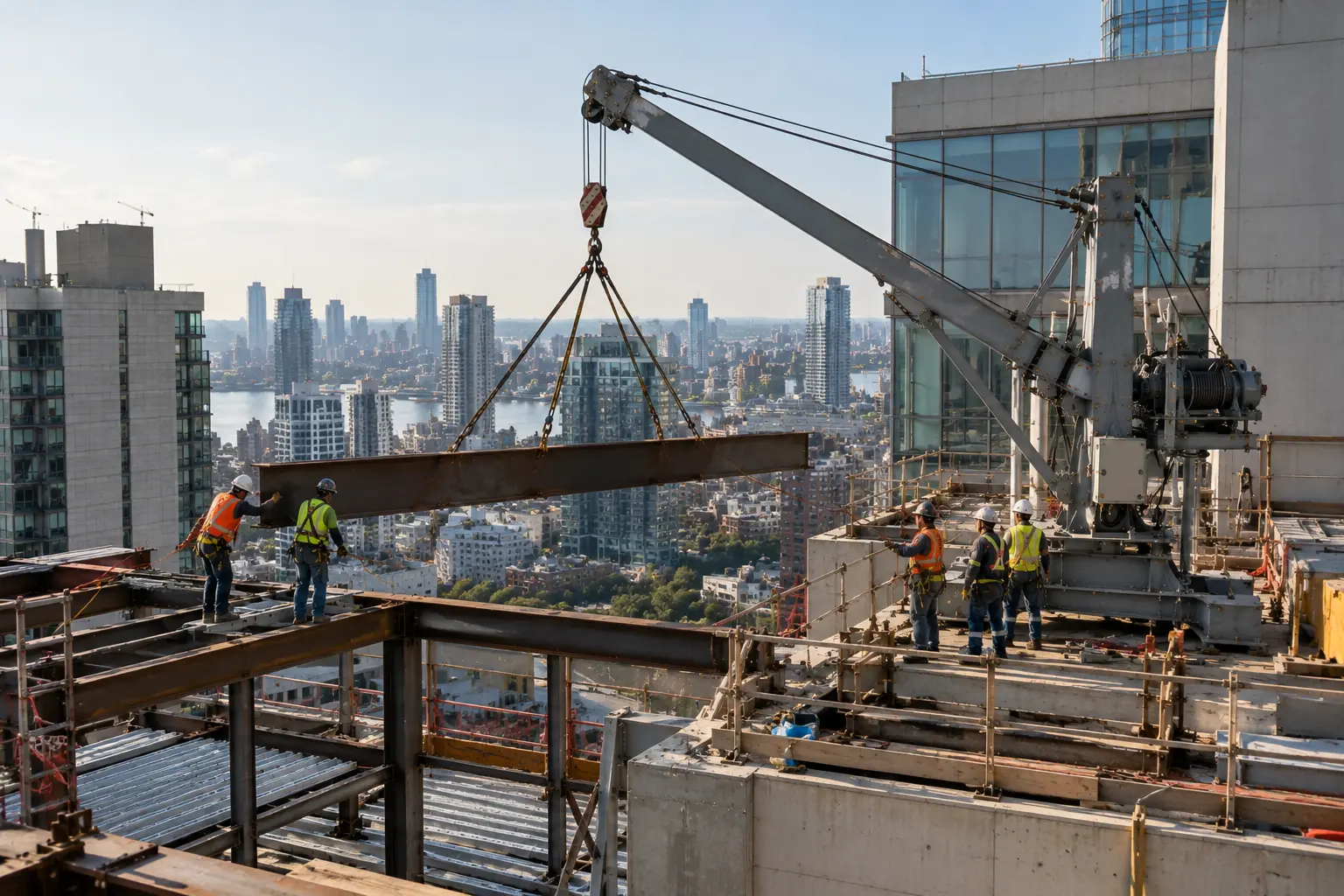
Working on existing buildings brings unique challenges compared to new construction sites.
A rooftop extension may require structural steel, mechanical equipment, or other materials to be positioned above an occupied or operational building. Ground access might be limited, and the roof may not support a standard tower crane.
A derrick crane can be a great fix if the building frame is properly prepared.
Before selecting equipment, check:
- The weight and dimensions of all planned lifts.
- Available layout room and swing clearance.
- Routes to bring in and assemble crane parts.
- Building load capacity and support details
- The plan for taking down the crane when finished
A real-life example shows how this works:
In October 2026, Liebherr shared that a derrick crane was brought up in pieces onto the roof of the Opus 12 tower in Paris La Défense to install new machinery. The building roof could not support a standard tower crane, and tight ground access ruled out normal setups. A customized derrick crane arrangement solved the problem.
This example shows how access and structural constraints can drive equipment selection, not just maximum lifting capacity.
Source: Liebherr's report on the Paris high-rise rooftop lifting project.
Derrick Crane Capacity: What should you check?
A derrick crane’s top weight limit is only part of its performance.
The load that can be lifted depends on the crane model, working range, configuration, and the manufacturer’s load chart. A maximum capacity figure should never be assumed to apply at every operating position.
Cangraft Equipment lists these common models and details:
Source: Cangraft's derrick crane models and specifications.
5 factors that should decide your Derrick Crane selection
Choosing the right crane depends on real site conditions, not just top-capacity figures.
1. Load Weight and Working Range
Start with your heaviest load and its pickup/drop positions. A crane that lifts a load close by may not lift it further out. Check official load charts for exact limits.
2. Available Installation Space
Rooftops and narrow sites limit base space, swing angles, and assembly access.
Map out the site area first; include space to bring in parts, build the crane, and take it down later.
3. Structural Support and Anchorage
When the crane is installed on a building, the structural engineers must check if the roof can support all loads. The assessment must cover how weight transfers into the building and how anchors hold the crane in place.
4. Assembly and Dismantling Strategy
Derrick cranes are great when equipment must be moved in smaller pieces.
The method of transporting components, lifting them into position, assembling the crane, and later dismantling it must be planned before the operation begins.
5. Project Duration and Utilization
For a short-duration rooftop project, renting is often better than buying. A long-term or recurring requirement might make buying a better choice.
Consider the overall setup costs, including transport, installation, rental days, and removal.
For options and models, check:
https://www.cangraftequipment.com/derrick-crane-for-sale-rent-and-used-cranes-in-india.html

