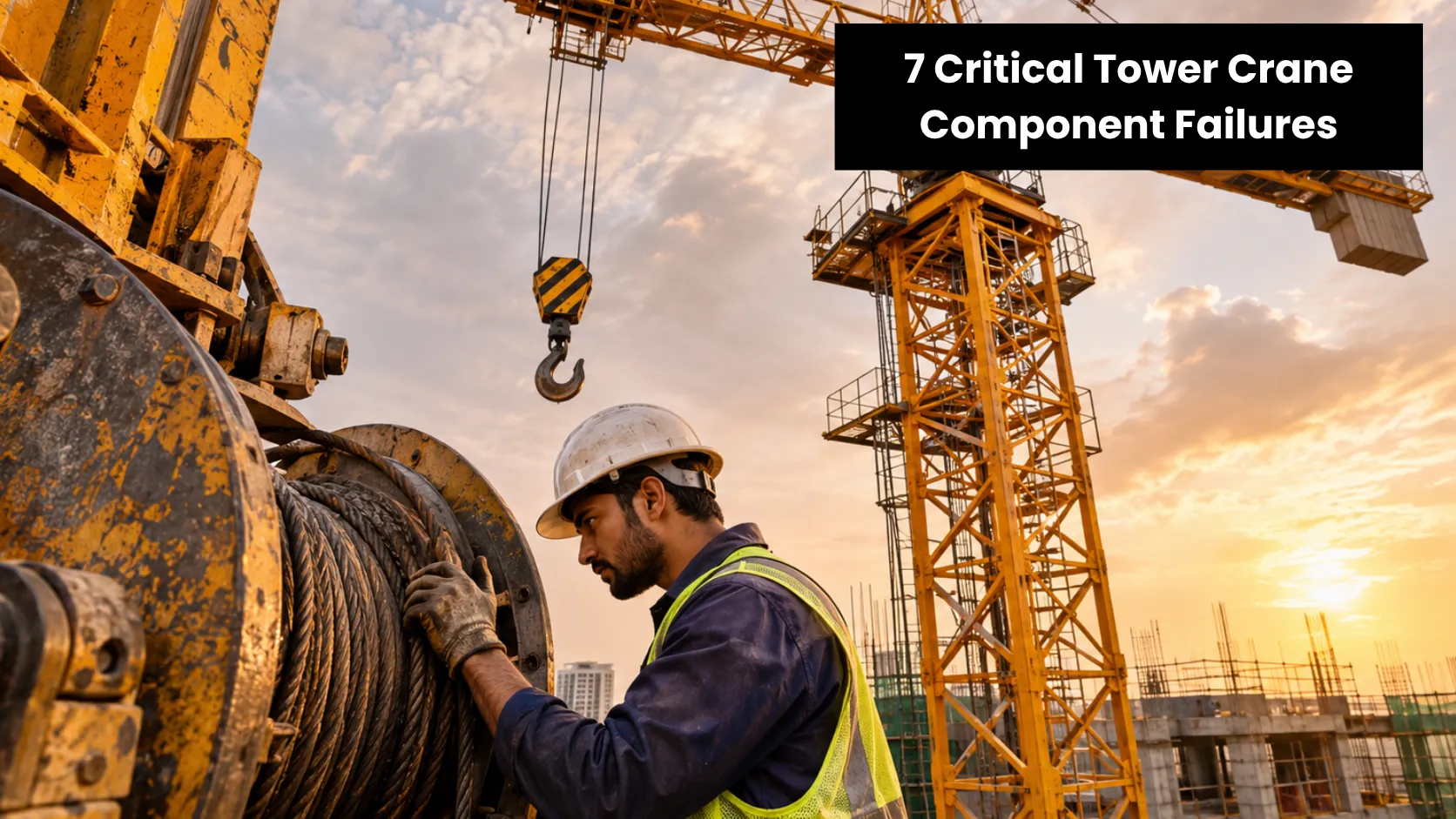
Tower cranes lift and move steel, formwork, concrete skips, and structural materials around a site. When there is a stop, lifting sequences are interrupted, workers have to wait, deliveries have to be re-routed, and project milestones are put under pressure.
This may be caused by a component that showed warning signs earlier but was ignored, like it could be a rope, an unstable brake, a damaged connection, or a frequent electrical defect. Knowing which tower crane parts are vulnerable helps the site team plan maintenance before a defect gets worse.
These seven component groups deserve attention in an inspection and spare-parts plan:
1. Damaged Hoist Wire Ropes and Sheaves: What to Look For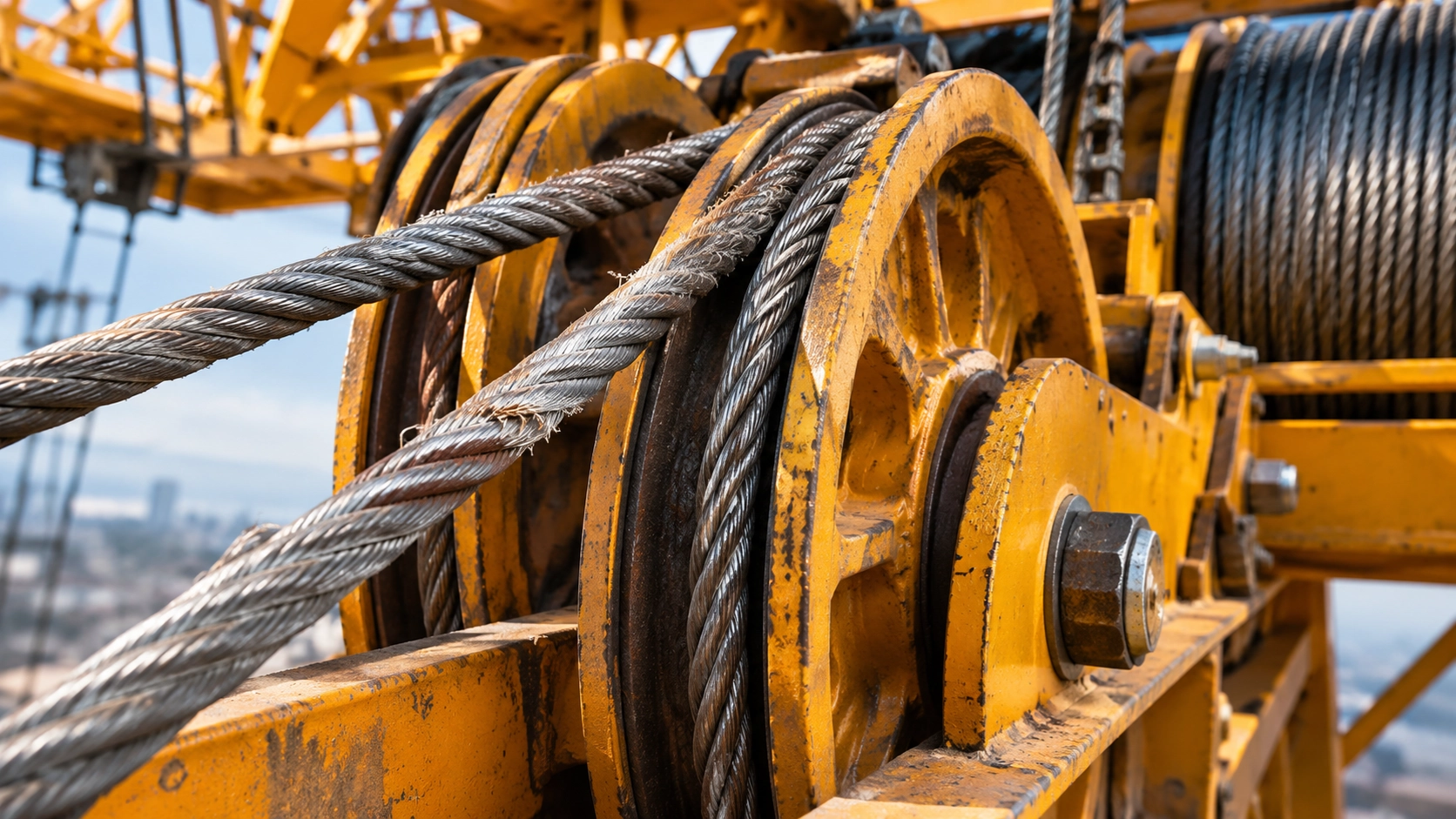
The hoist wire rope carries all the load while sheaves are used to guide it through the lifting procedure. Repeated bending, friction, poor recycling, contamination, or rusting can accelerate the wear and tear. Broken strands, kinks, crushing, flat spots, diameter reduction, or an irregular rope surface require inspection against the manufacturer’s rejection criteria.
A worn or incorrectly positioned rope can interrupt lifting. Create a load-control risk. Standard damaged sheave grooves and seized bearings can snap the rope.
What to do: Inspect rope, drum, terminations, sheaves, and rope tracking. Replace a rope with the type and specifications approved for that crane. Do not rely on appearance; a competent person must assess defects and decide whether the rope can remain in service or not.
2. Brake Assemblies: Small Wear, Serious Stopping Problems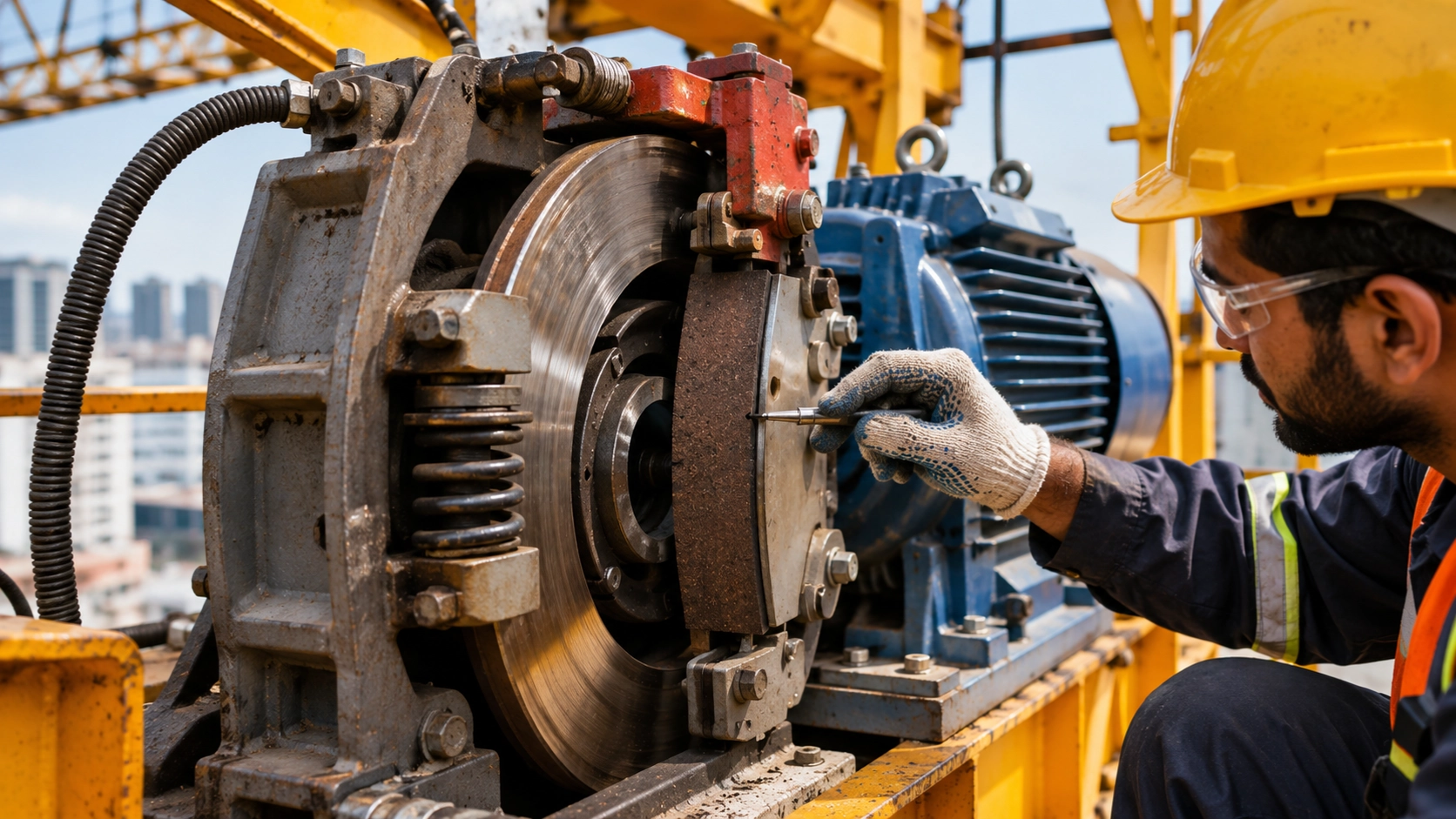
Hoists, trolleys, and swinging brakes each support controlled movement. Worn linings, contamination, incorrect clearances, and a faulty release mechanism can cause slipping, delayed stopping, jerky movement, or inconsistent holding.
A faulty hoist brake compromises load control. A maintained slew brake or release mechanism can also affect how the crane responds when it’s left out of service in wind. The UK health and safety Executive has issued a safety alert on the risk.
What to do: Check brake condition and function at manufacturer-specified intervals. Investigate movement, noise, heat, or stopping behavior immediately. Keep records against brake and motor identifiers where applicable. Never continue lifts when a brake defect is suspected.
3. Slewing Ring and Drive Pinion: Common Crane Rotation Problems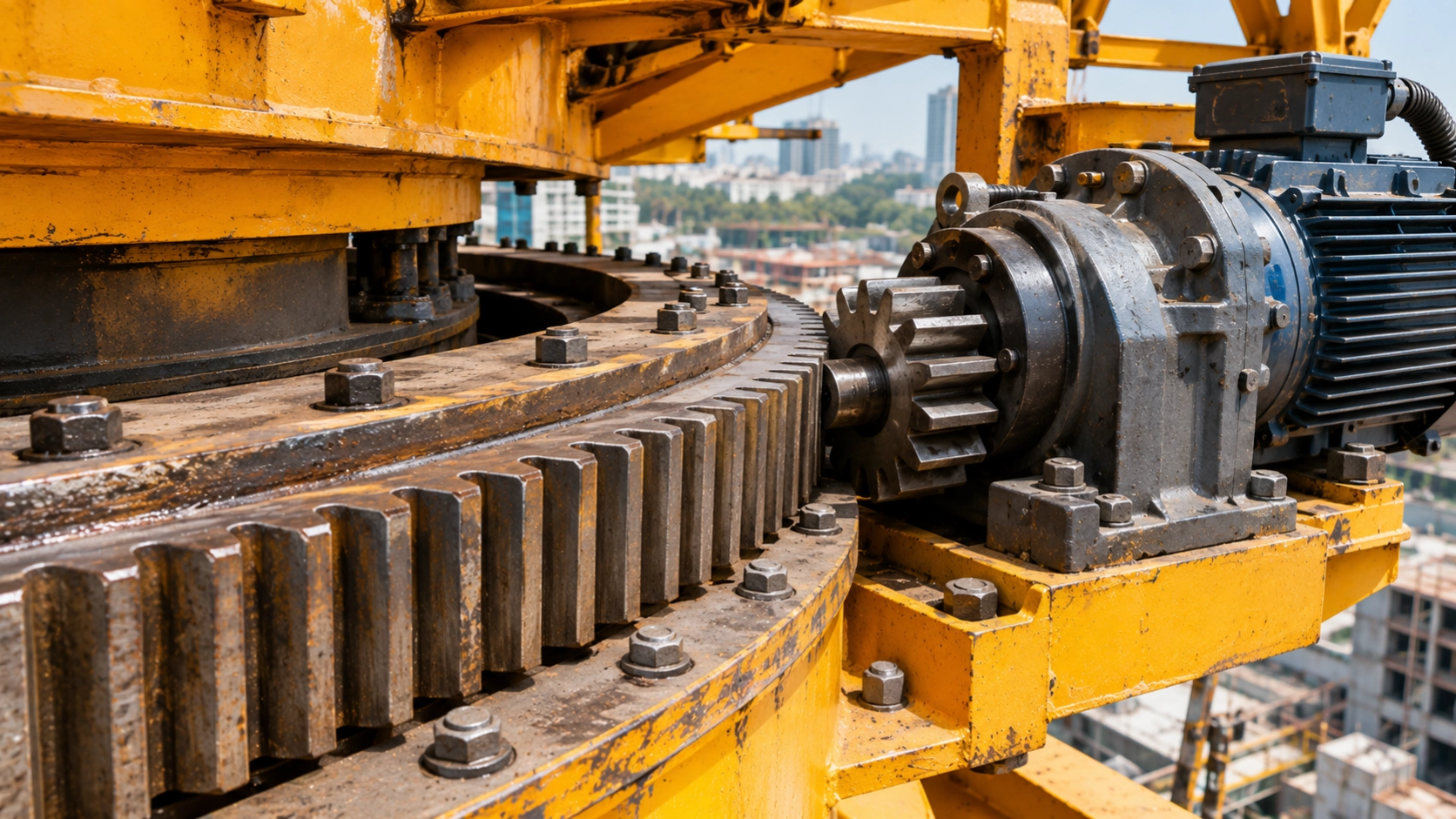
The slewing ring allows the rotation of the structure, and the drive pinion and gear assembly transmit the motion from the slewing drive. Lubrication, contamination, corrosion, damaged gear teeth, bearing damage, or installation can affect rotation.
Warning signs include grinding, vibration, lubricant leakage, and uneven movement or abnormal backlash; ignoring them can turn replacement into extended downtime and compromise a critical component.
What to do: Follow the manufacturer’s lubrication schedule and inspection criteria. Have play, gear condition, bearing condition, and installation bolts assessed by qualified personnel. Do not correct alignment bolt tension or gear engagement through guesswork.
4. Mast Joint Bolts and Wall Ties: Common Problems to Watch For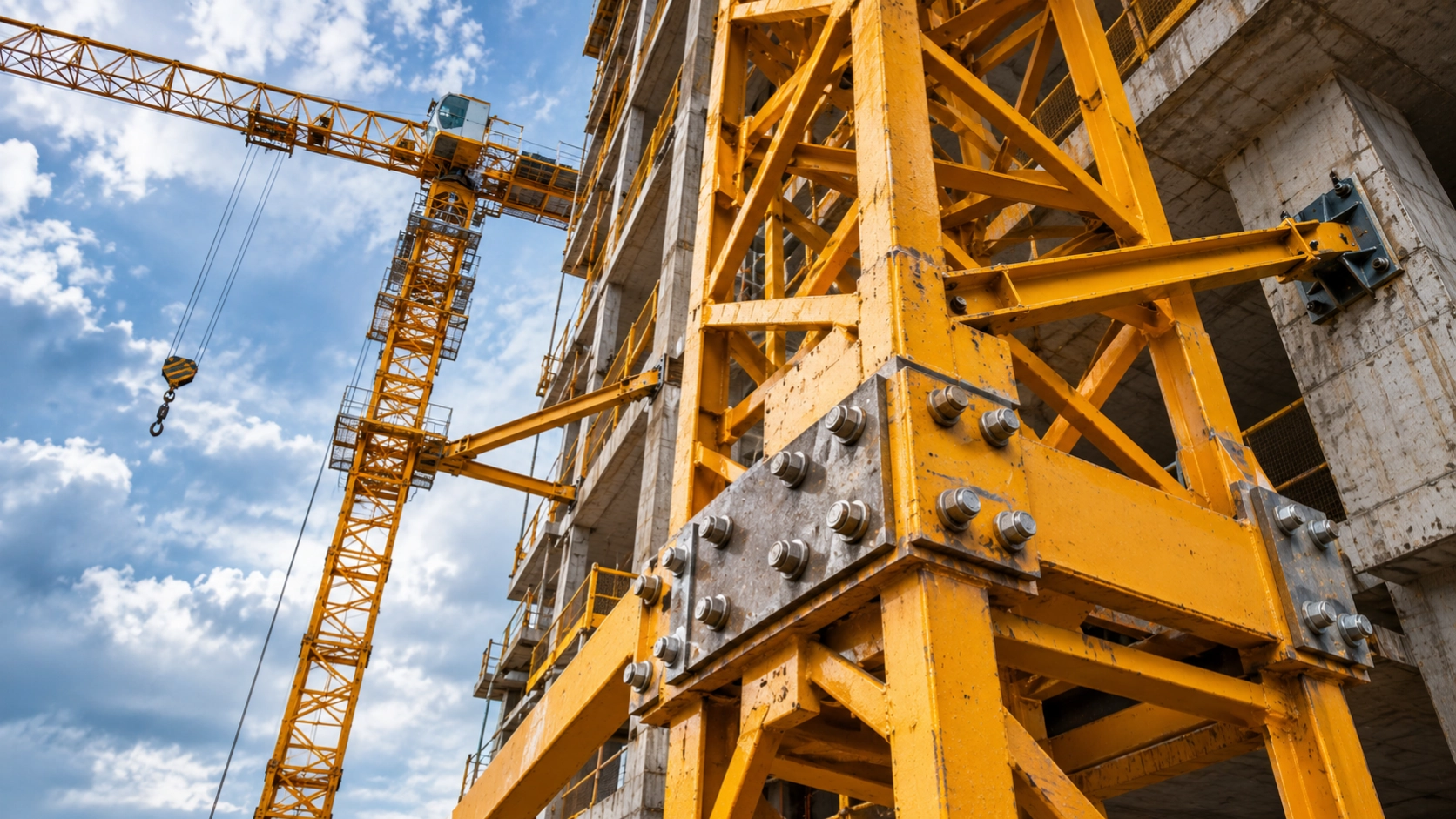
Mast sections transfer loads through pinned joints; wall ties and fixing arrangements provide support for the crane positioning. Damaged connectors, corrosion, cracks, incorrect tightening, or a defective tie can affect the load path.
Look for missing or displaced fasteners, corrosion, visible damage, unusual movement, or inspection findings. These are not issues: connection problems can put crane stability and the work area at risk.
What to do: Check the mast joints, pins, tie frames, and anchor points as required by the erection design and manufacturer. Record component identification and inspection history. Never swap bolts, retighten critical fasteners by feel or alter a tie arrangement without approval from the responsible engineer or manufacturer.
5. Crane Motors and Power Systems: Problems That Can Affect Performance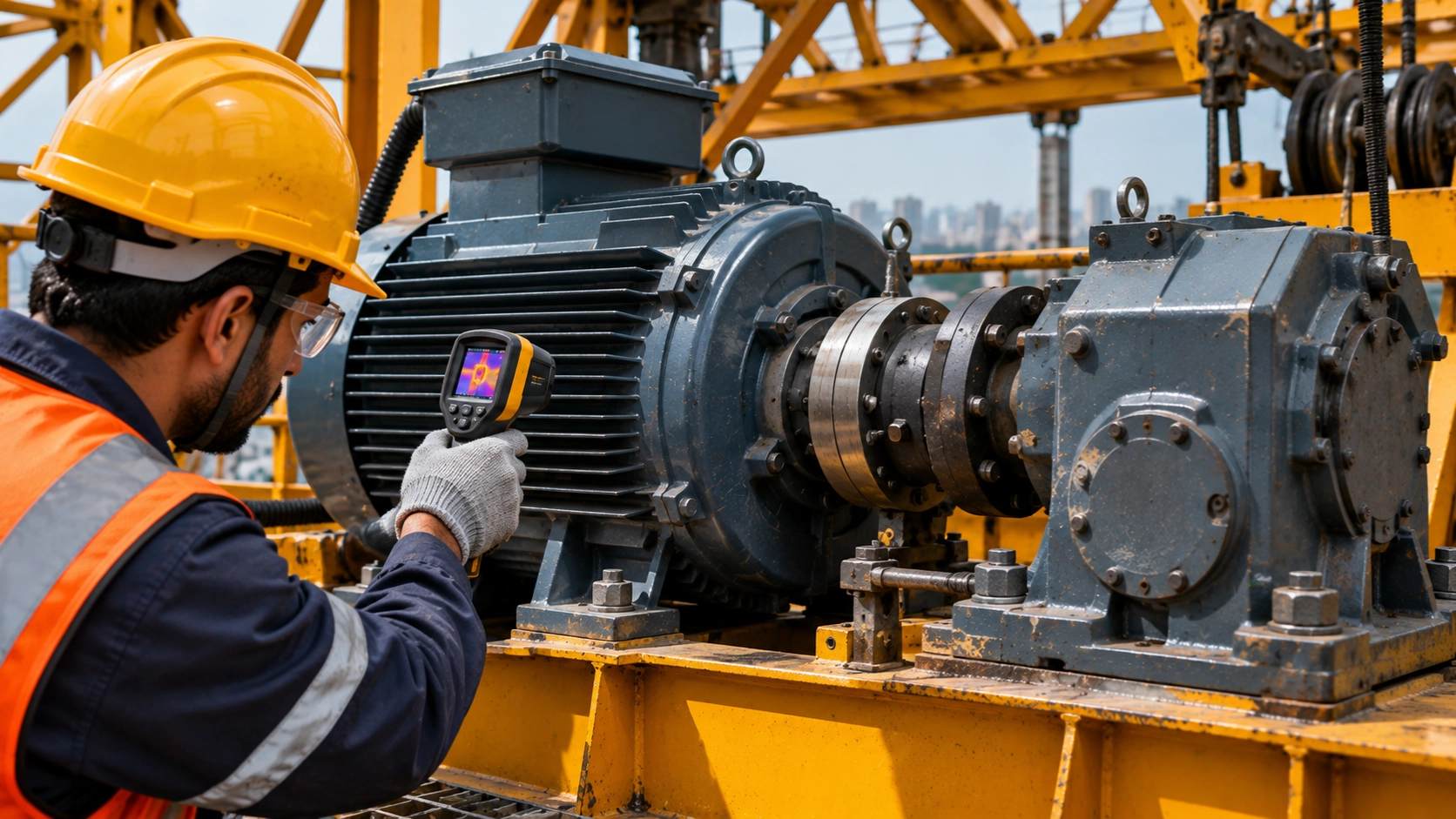
Hoists, trolleys, and slewing drives depend on motors, gearboxes, rods, and couplings. Overheating, lubricant loss, bearings, damaged gear teeth, or misalignment can cause increased friction and vibration.
Watch for noise, high temperature, oil leakage, vibration, a burning smell, or slow movement. A drive that repeatedly trips needs investigation, not repeated resetting.
What to do: Check lubrication, leaks, mounting condition, and ventilation as specified by the manufacturer. Ask a technician to check the drive before ordering a motor or gearbox. Rated power, speed, torque, brake arrangement, mounting, and control compatibility all matter.
6. Crane Safety Devices: Small Failures That Can Lead to Big Problems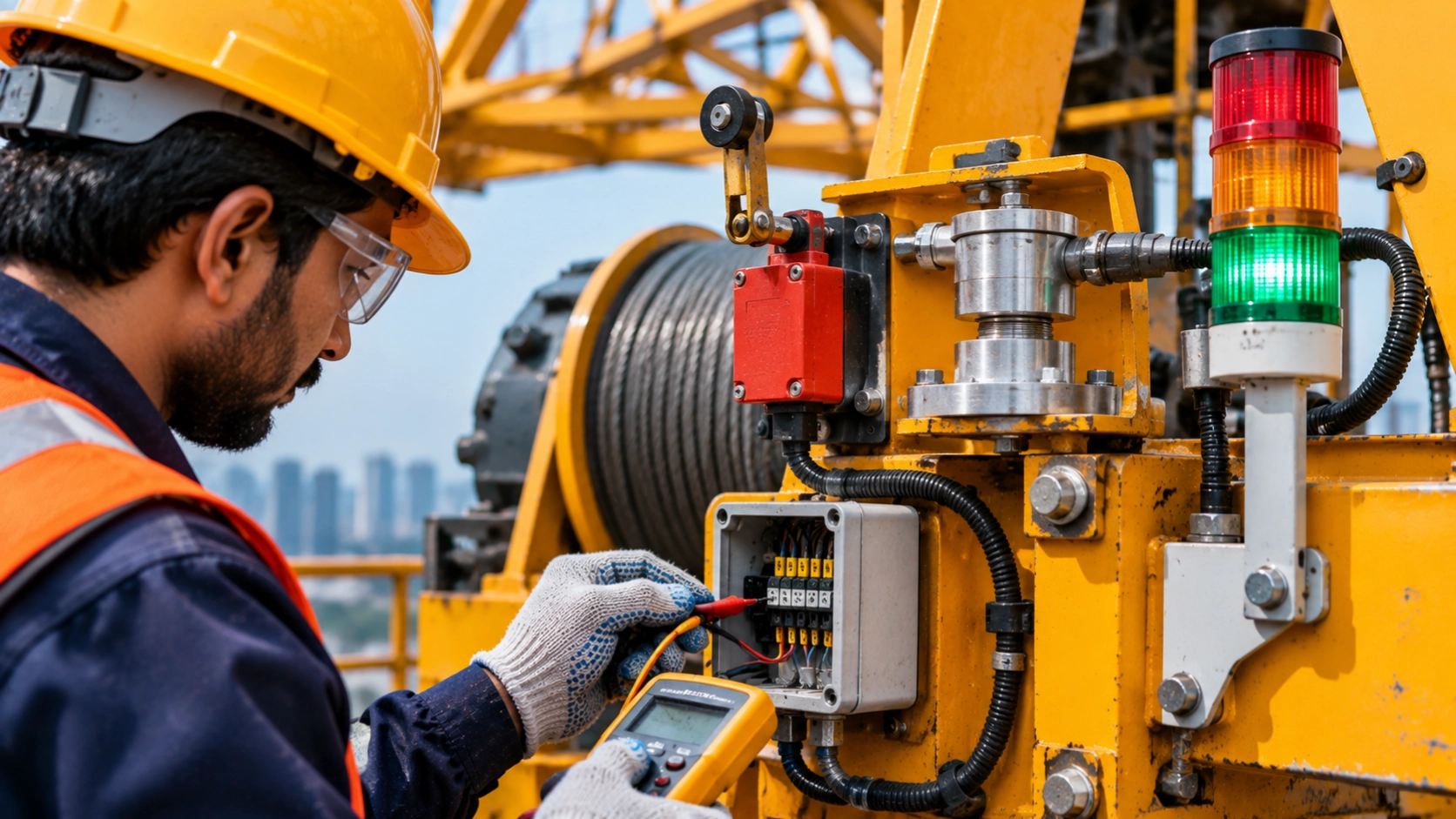
Limit switches can restrict travel at defined boundaries. Load-monitoring devices, including the safe load indicator (SLI) help operators stay within rated capacity. Faulty sensors, damaged cables, poor calibration or loose connections can cause readings, nuisance cut-outs, or missed warnings.
A repeated alarm isn't automatically a sensor issue; it may reflect a genuine operating condition or a calibration problem. Treating alarms as an inconvenience removes a layer of protection.
What to do:. Align limiting and indicating devices as required by the manufacturer and applicable inspection regime. Investigate readings before returning the crane to service. Never bypass a limit switch, overload protection or safety interlock to keep production moving.
7. Tower Crane Electrical Failures: Signs You Should Not Ignore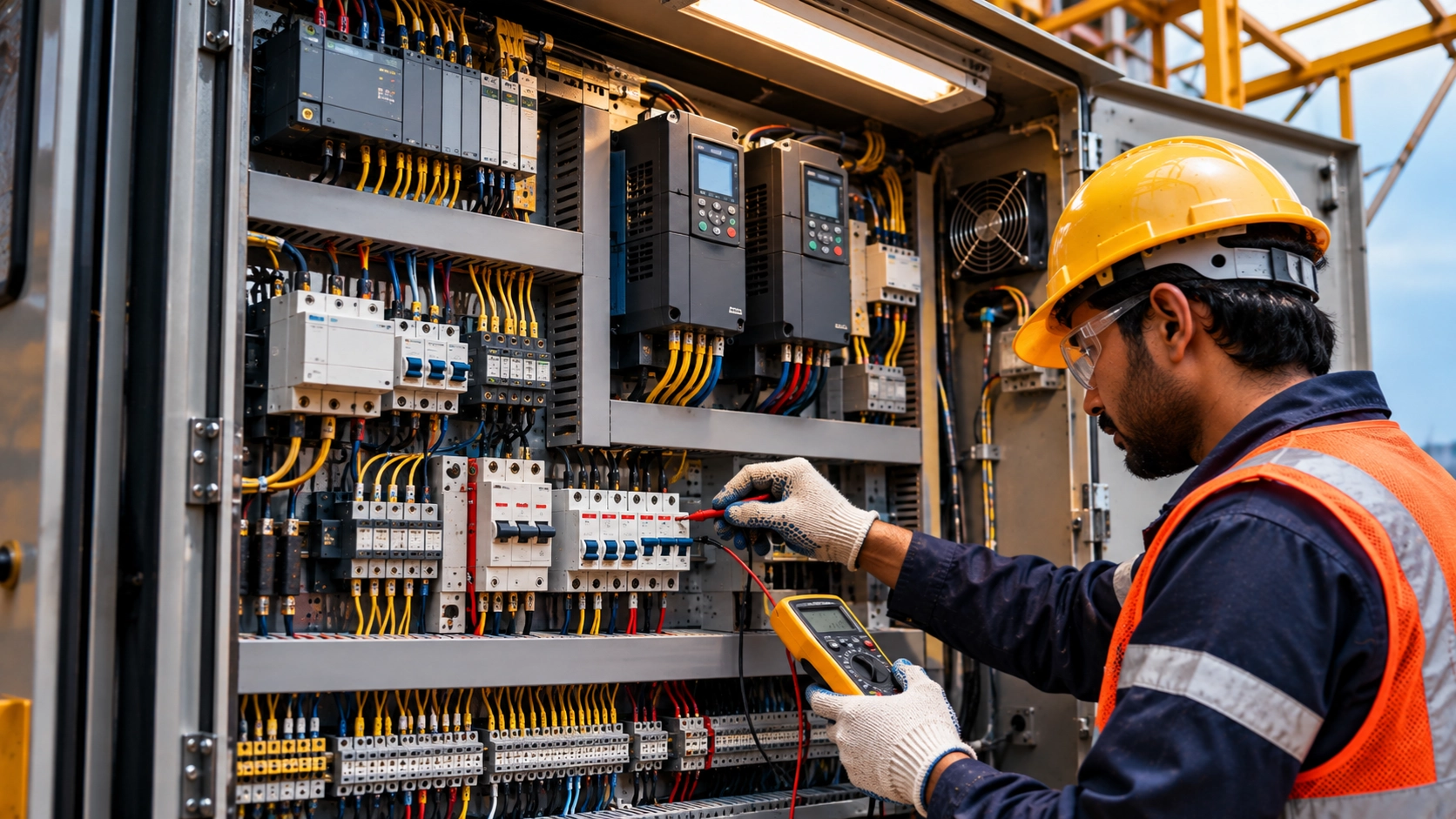
The electrical system coordinates commands, drive speeds, interlocks, sensors, and safety functions. Dust, moisture, vibration, loose terminals, damaged insulation, or component failure can cause trips, unresponsive controls, or shutdowns.
A reset may hide a fault until it returns during a critical lift. Watch for repeated fault codes, heat, a burning smell, damaged cable jackets, flickering displays, or loss of control response.
What to do: You need to do a inspection by an electrical technician. Follow inspection and environmental protection. Keep the equipment before electrical work. Do not open panels, bridge interlocks, or replace PLC, VFD, or control components with unverified alternatives.
Checklist Before Buying Tower Crane Spare Parts
Before ordering replacement parts, make sure they match your crane's specifications. Check:
- Crane make, model, and serial number.
- Original part. Dimensions.
- Voltage, power, speed, and load capacity.
- Reason for component failure.
- Compatibility, with your crane model.
- Installation, testing, and warranty requirements.
Keep a record of replaced parts to track recurring failures and avoid downtime.
WorkSafe Western Australia's 2025 Tower Cranes Code of Practice highlights the importance of component inspections and matching replacement parts to original specifications. This is guidance, not Indian law.
Final Insight: Keep Your Tower Crane Running Without Unplanned Delays
A crane part can affect your entire project schedule. Replacing it with the component helps reduce breakdowns, repair costs, and downtime.
Need a replacement part or expert maintenance support? Cangraft Equipment offers tower crane parts, repairs, maintenance, and refurbishment services.
Share your crane model and part requirements to get started!

